A Name on Paper, a Future in Sight
Refugee mothers celebrate their children’s birth registration breakthrough

For children, a birth certificate is an official recognition of their existence and legal identity. Birth registration serves as a tool for their protection against statelessness, violence and exploitation while facilitating access to essential services such as health, education and legal and social protection.

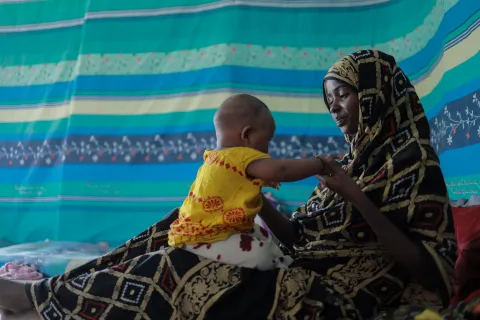
Ekram Bashir and her daughter Merwa fled Somalia in search of safety. She lives in a refugee camp near Jijiga and is one of the many mothers across the Somali Region of Ethiopia who are benefiting from the refugee birth registration interventions, a joint effort to close the civil registration gap and ensure that every child – regardless of origin – has the right to legal identity. Merwa is nearly three years old and she just received her birth certificate. “Now, my daughter has her name on paper,” Ekram said proudly. “Our hope grows with every official document we receive – birth certificate is more than recognition,” she added happily.

Muna Mohammed Abdi and her daughter Suhur, who has just completed the registration process, are also benefitting from the programme. “Once her birth certificate is issued, Suhur can access services,” Muna said enthusiastically. The mother added, “The paper will give my girl her future.”
In Ethiopia, where refugees, including children, are sheltered fleeing conflict and hardship, birth registration is a cornerstone for their protection. Although civil registration services have been introduced in most refugee camps, it is not without obstacles. Operational bottlenecks, procedural complexities, resource limitations, cultural barriers and lack of awareness about the benefits of birth registration among refugees hinder timely registration of births and issuance of certificates to refugee children.
To address these gaps, with funding from the Dutch Government through the PROSPECTS program, UNHCR and UNICEF have partnered with the Refugees and Returnees Service (RRS) and the Immigration and Citizenship Service (ICS) to provide technical and financial support to ensure access to birth registration for refugee children.

“We know how important it is for a child to be recognized,” said an RRS registration officer. “It’s not just a formality, but it means protection, access, dignity and identity, resonating the global focus of leaving no one behind.”
For many refugee parents, a birth certificate means more than just a document as it gives their children an identity in an uncertain world, which for some results in forced displacement. Ethiopia’s commitment to including refugees in its civil registration services, along with strong multi-sectoral collaboration among relevant stakeholders, sets a powerful example of effective service provision and successful programme implementation.