Committed to serve
Despite conflict and insecurity, health workers in Ethiopia's Amhara Region remain committed to reaching children with lifesaving vaccines
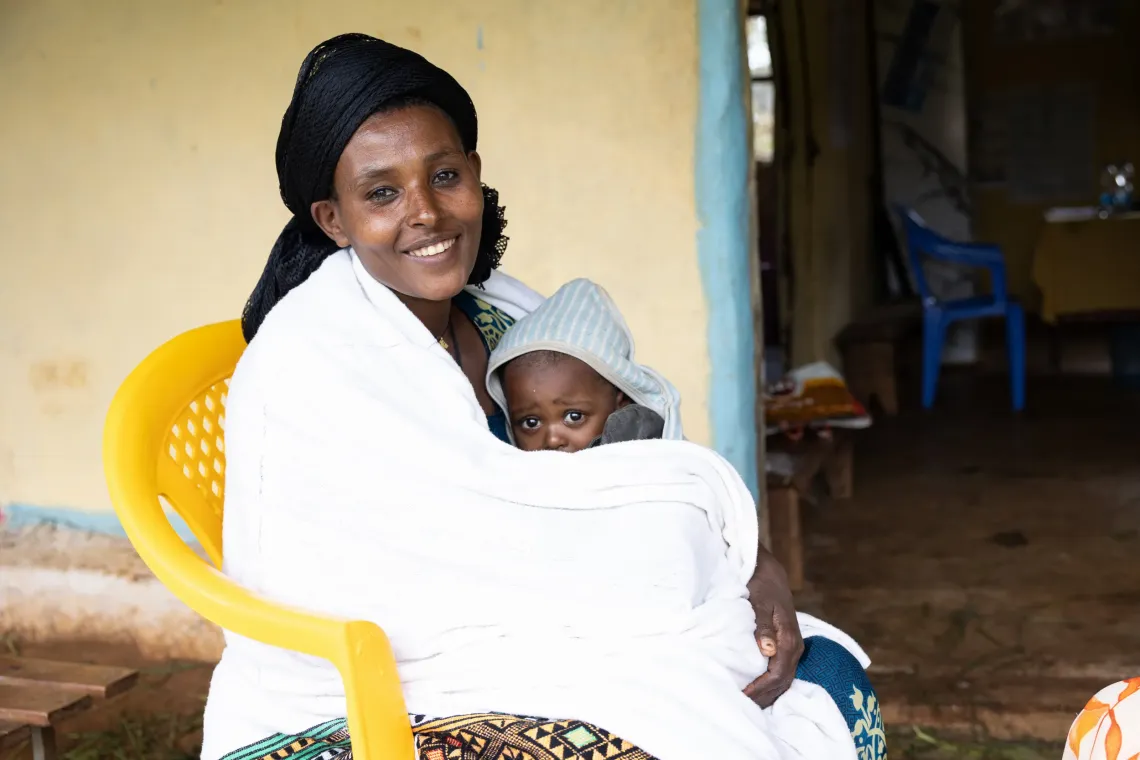
Awi Zone, Amhara Region, Ethiopia – “I was worried that my child could get sick,” says Felegush Defersha, recalling the difficult journey she has endured over the past two years. “My child had never been vaccinated until I came here.”
More than two years ago, conflict intensified across villages in Zigem Woreda (district), where Felegush and her family had built a modest but stable livelihood through farming. As violence spread, health services were disrupted, leaving many children, including her daughter Wudinesh, without access to routine immunization.
“Many mothers were giving birth at home, and we couldn't get vaccinations for our children,” says Felegush.
As insecurity continued to threaten communities, Felegush fled her home, leaving behind her belongings and livelihood. She sought refuge in Guangua Woreda, where many families displaced by conflict and instability had settled.
But Guangua was not entirely safe either. Sporadic insecurity continued to disrupt health services, forcing children like Wudinesh to wait even longer for the vaccines that could protect them from life-threatening diseases.
Felegush rented a small house and held on to the hope that life would eventually improve for her daughter. It did.
“I was worried that my child could get sick. My child had never been vaccinated until I came here.”
Despite significant security challenges, health workers across Guangua Woreda and the wider Awi Zone continued providing essential maternal and child health services through health facilities and community outreach. Working closely with village health leads, community leaders, and other local influencers, Health Extension Workers conducted house-to-house enumeration to identify children who had missed routine vaccinations, those suffering from malnutrition, and children whose births had not been registered.
It was during one of these visits that they found Wudinesh.
“We were conducting a house-to-house enumeration to identify unvaccinated children and those with malnutrition,” says Alemnesh, a Health Extension Worker in Sigadi village, Guangua Woreda. “We discovered that Wudinesh was a zero-dose child [meaning she had never received any routine vaccines]. We immediately started vaccinating her according to the national immunization schedule for her age.”
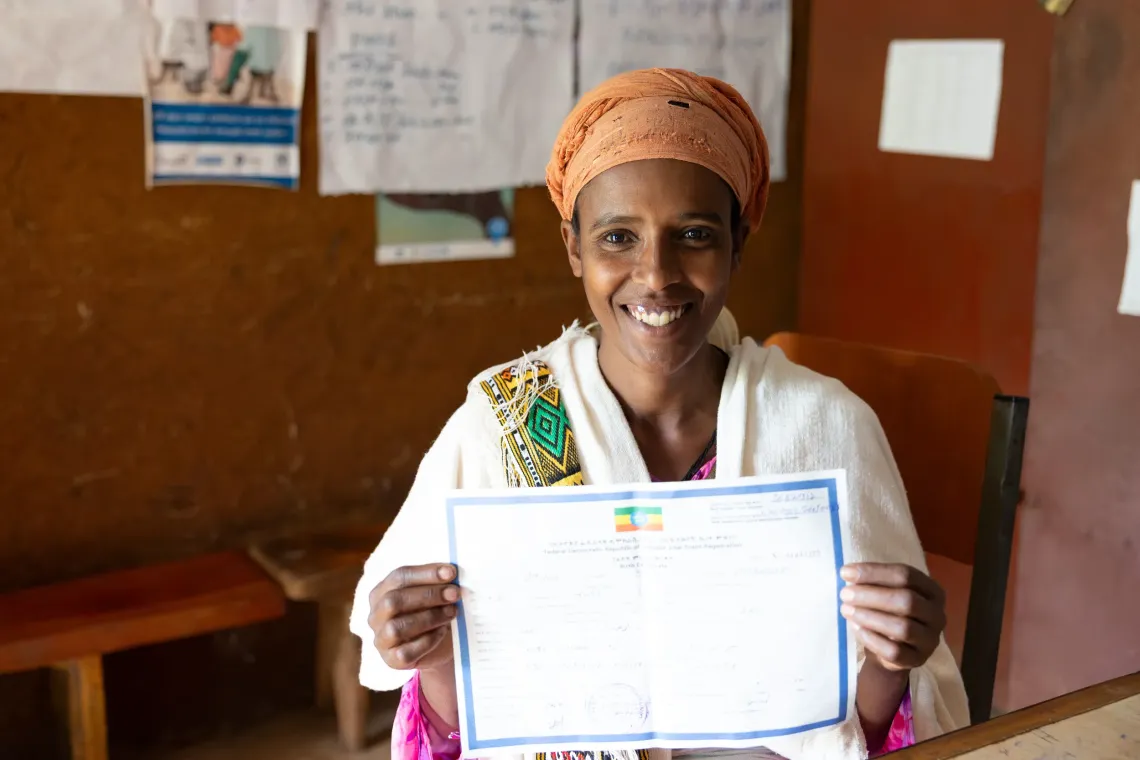
Alemnesh and fellow health workers identified and reached more than 3,000 zero-dose children and nearly 2,000 under-vaccinated children across Awi Zone through two rounds of catch-up vaccination campaigns following house-to-house enumeration. They also identified more than 33,000 children whose births had not been registered, helping them obtain birth certificates and legal identity.
In areas where kebele administrators were unavailable because of insecurity, Health Extension Workers also took on additional responsibilities, including registering children's births.
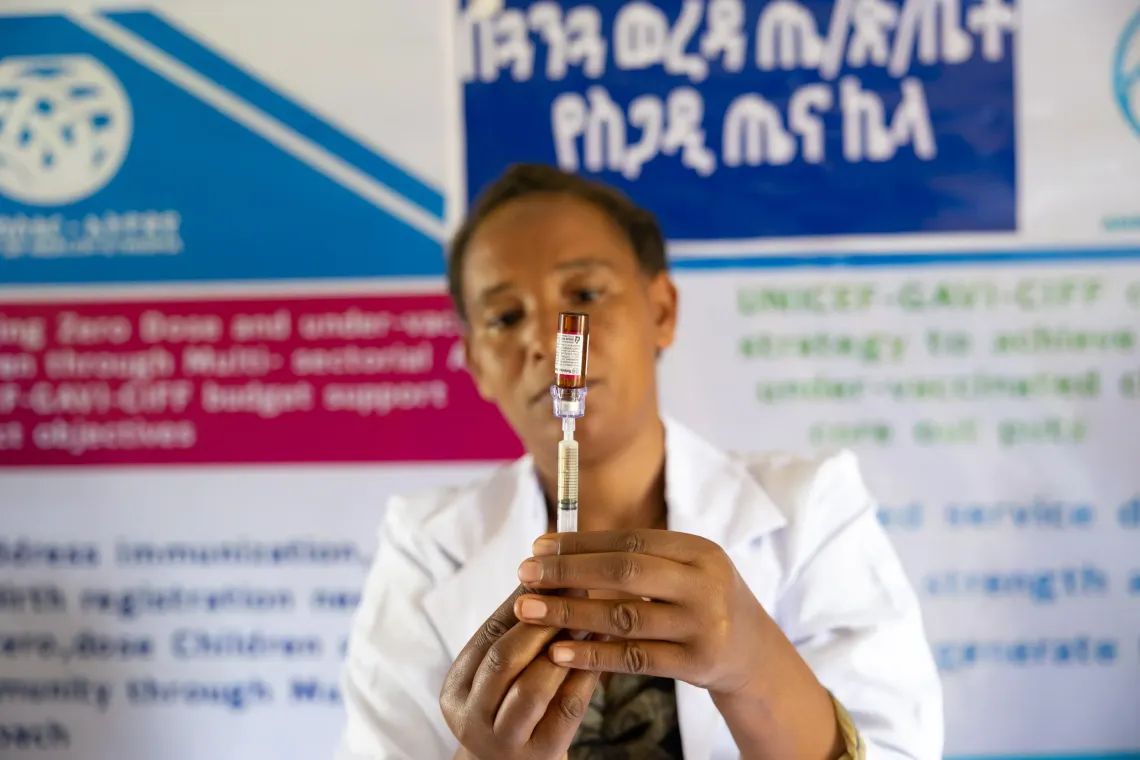
While frontline health workers remained committed to serving their communities, health officials at various levels negotiated humanitarian access with all parties to the conflict to reach underserved and insecure areas. Where sustained access was not possible, vaccination teams adopted a "hit-and-run" approach, entering communities, vaccinating as many children as possible, and departing quickly to minimize security risks.
With support from Gavi, the Vaccine Alliance, and the Children's Investment Fund Foundation (CIFF), UNICEF helped ensure last-mile vaccine delivery by using locally available transportation, including donkey carts and motorbikes, particularly in areas affected by chronic fuel shortages and restrictions on vehicle movement.
UNICEF's support followed a multisectoral approach. Health workers conducted house-to-house visits to identify zero-dose and under-vaccinated children, such as Wudinesh, while providing integrated services that included immunization, nutrition screening, vitamin A supplementation, and deworming. Children identified with severe acute malnutrition were enrolled in the Outpatient Therapeutic Programme (OTP) and provided with Ready-to-Use Therapeutic Food (RUTF). Health workers also identified children whose births had not been registered and facilitated their access to birth certificates.
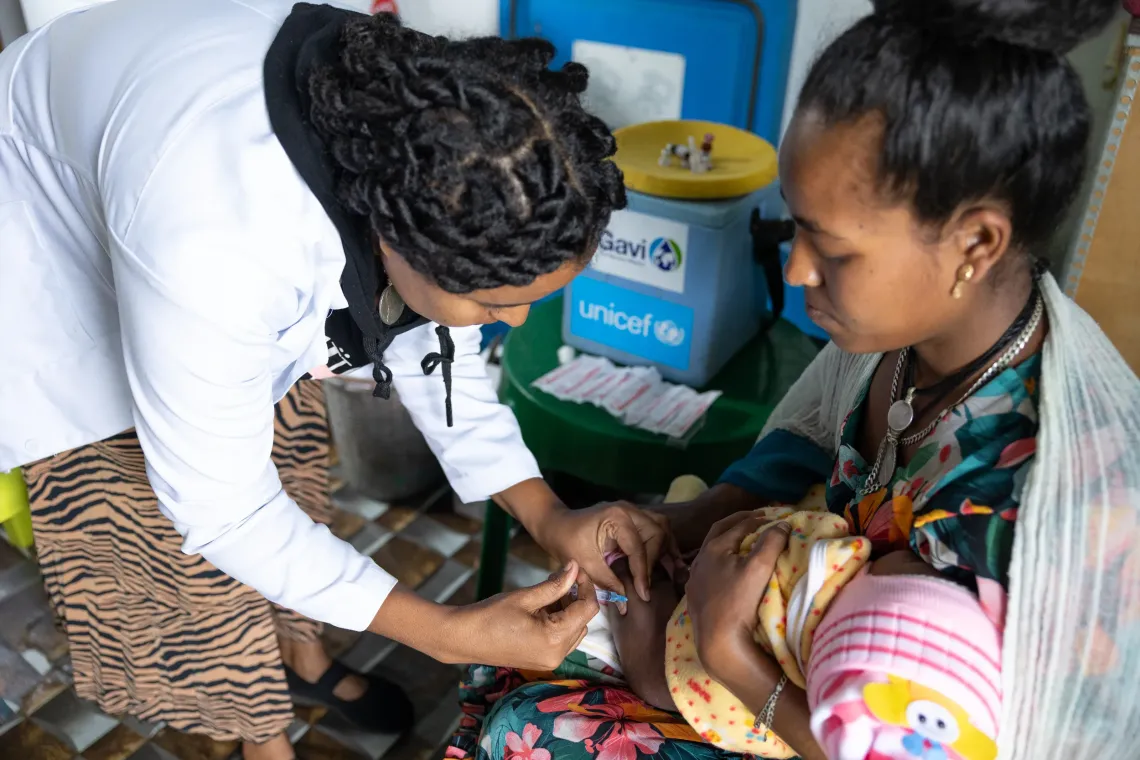
“Even during conflict, the dedication of our health workers has shown that life-saving services can still reach children and families,” says Abebaw Sinishaw, Gavi-CIFF Project Coordinator. “Working closely with local networks at the village level, they coordinate outreach activities and help ensure that as many children as possible are reached.”
Today, Wudinesh is protected against vaccine-preventable diseases. Following appropriate screening, she has received nutrition services, and her birth has been formally registered.
“I am happy that my daughter has finally been vaccinated,” says Felegush. “I never expected to receive these services here, and I am truly grateful to the health workers.”
Although she remains displaced, Felegush hopes to return home one day. In the meantime, she has found acceptance within the host community, and the relative peace in her current surroundings has renewed her hope for a brighter future for her family.