Kindness and love matters!
A foster family care help refugee children to rebuild their lives

Nguenyyiel refugee camp is the largest camp in the Gambella region, Ethiopia, hosting South Sudanese refugees after an escalation of violence forced many to flee the world’s youngest nation in 2016. The camp currently hosts more than 110,000 refugees. Recurrent conflicts forced women and children to seek safety in Ethiopia and some crossed the border, on their own, like 17-year-old Nyabhan.

When conflict erupted in the little village of Walgak, South Sudan, Nyabhan was only 9 years old. Traumatized by the violence, she fled for safety separated from her family. Along her journey, she met a woman who helped her cross into Ethiopia and her final destination became Nguenyyiel refugee camp. The women who helped her flee to Ethiopia supported Nyabhan for few years but left unexpectedly making matters worse for the young girl.

It was in this situation that a child protection committee (CPC) member from the refugee community discovered her situation and reported her to Thijin Ganying, a case worker working for Plan International, a UNICEF partner organization working in the camp.
“Nyabhan came with a caregiver to Ethiopia and then she was abandoned,” says Thijin. “But we managed to place her with an amazing foster family.”

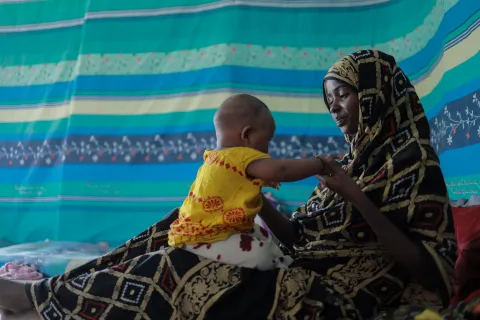
Nyadieng and her family were happy to receive Nyabhan caring and sharing their love.
Despite having her own challenges, Nyadieng, a mother herself, took in Nyabhan to keep her safe. “This is the least I can do. We are all in difficult situations, but we need to help and protect our children, even if they are not our biological children.” Nyadieng was enrolled in parenting training to enhance her caregiving skills.

The alternative foster care arrangement that UNICEF supports in the camp aims to create a stable environment for separated children like Nyabhan until a long-term solution is sought. This approach ensures the children’s safety and well-being, fostering a sense of belongingness and resilience within the camp.


Since living with her foster mother, Nyabhan has gradually adapted and found ways to manage the emotional impact of her past. She is now attending school and made new friends. “Yes, I am sad that I don’t know where my parents are, but I am blessed to stay with Nyadieng and her family,” she said. “Now I feel safe, and I am also back in school, learning and playing with my friends.”

Every day Nyabhan returns from school, Nyadieng gives her blessings patting her head according to their tradition. The foster mother’s kind heart calms the young girl’s soul giving her hope for a better future. After all, kindness and love are the two things that matter most to children.
In the Ngunyyiel Refugee Camp, UNICEF with funding from the Korea International Cooperation Agency (KOICA), supports the alternative care arrangement. So far, the programme benefited a total of 228 separated children of which 104 are girls. This arrangement allows children to get support within their local community, preserving their cultural identities, and nurturing strong community ties. It also offers children affected by violence a stable, supportive environment while a long-term solution is sought.