“Feeding a child is like building the next generation”
The community health workers and leaders at the heart of Ethiopia’s nutrition and health progress

In Ethiopia, 39 per cent of children are stunted, and 11 per cent suffer from wasting, while access to essential nutrition services has declined. Addressing these issues requires shifting beyond facility-based approaches to community-driven solutions.
To tackle this crisis, the Ministry of Health rolled out the Enhanced Community-Based Nutrition (eCBN) programme. With UNICEF support, this initiative aims to strengthen local support systems and focuses on food, health, water, sanitation, hygiene, social protection, and education. It empowers communities to take proactive measures and implement local solutions to improve nutrition and health for children, adolescents, and women.

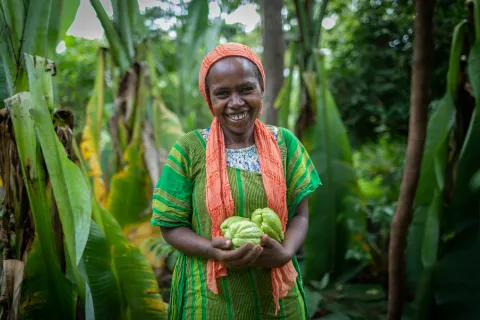
Zemenay Nigussie leads a nutrition conference for more than 30 mothers with their children. Known for her problem-solving skills, she was elected as one of nine Village Health Leads serving their rural community in Sire, Oromia.
“Feeding a child well is like building the next generation,” she passionately tells the crowd, emphasizing the importance of incorporating at least five of eight diverse food groups to improve children's diets. “I want our community and country to prosper—and that can only happen when we have nourished and healthy children and adults.”
Village Health Leaders monitor every household's health and nutritional status, following up with families to ensure they seek the nutrition and health care they need. They also offer guidance on nutritious food, gardening, and maintaining good sanitation and hygiene.


Abebech Melese is the sole Health Extension Worker in her village, caring for over 4,800 people, including nearly 800 children under five. Living within the community, she deeply understands the local health and nutrition challenges.
"Years ago, there was no health post here, and many children suffered from diseases and malnutrition," she recalls. Today, Abebech is proud of the progress: "The rate of worm infections and malnutrition has dropped significantly. Right now, I don’t have a single child that needs treatment for severe acute malnutrition with complications.”
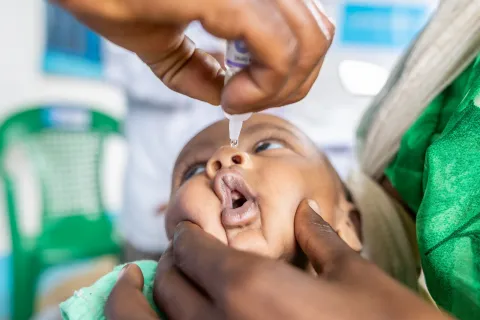
Health Extension Workers provide preventative, promotive, and curative care, including nutrition and health check-ups, and counselling. They also provide vitamin A, deworming, iron folic acid, treatment for uncomplicated severe acute malnutrition, vaccinations, and family planning services.


Every quarter, they set up a one-stop shop of comprehensive nutrition and health services. Families and children receive growth monitoring, Vitamin A, deworming, nutritional supplements, treatment of severe acute malnutrition, vaccines, and family planning. They also participate in cooking demonstrations and training in life skills and income-generating activities.

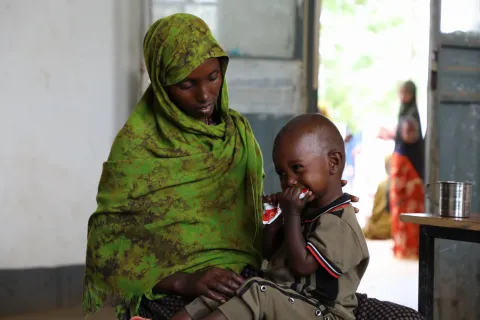
Wude Demeke, 28, is relieved when she receives the news that her 11-month-old daughter, Maleda, is no longer malnourished. “I didn’t know I wasn’t feeding my child properly before,” Wude says. “Now I’m confident in providing her with the right nutrition.”
Initially shocked by the diagnosis of severe acute malnutrition during a routine immunization visit, Wude felt worried and upset. The Health Extension Worker guided her on using Ready-to-Use Therapeutic Food (RUTF), and the Village Health Leads taught her how to prepare balanced meals through a food demonstration.

Serkalem Sisay, 20, brings her 9-month-old son, Adan, to the health post for growth and promotion monitoring. Sarlakan herself benefited from similar services during her pregnancy and breastfeeding, receiving multiple micronutrient supplements and immunizations.
“The health post is a huge relief,” she says. “Back in my village, the nearest health centre was two hours away by foot. Today, it took me only five minutes to walk here with my baby.”


Chaltu Getu, 22, brings her 1-year-old son, Bereket, for a vitamin A supplement. Joining her is her neighbour, 24-year-old Yitagesu Fekadu, and her 5-year-old daughter, Tsunat.
“You can't even compare the health of a vaccinated child to one who isn't,” says Etagesu, who ensures that Tsuant receives all her childhood immunizations and follows good feeding practices. “Some mothers are overwhelmed with work and house chores, but every mother wants the best for her children. I always advise them to pay close attention to their children's health, to take the time to care for them, and to bring them for health services.”
The eCBN programme is designed to provide multisectoral services with a focus on reaching zero-dose children. UNICEF is working with the Ethiopian government to expand the programme nationwide, aiming to positively impact over 15 million children under five and support their growth and development.
With generous funding from the Eleanor Crook Foundation, The End Fund, The Power of Nutrition, and Rotary International, UNICEF supports the Federal Ministry of Health in rolling out the eCBN programme.