Mothers in Afar Region Continue to Seek Vaccination and Nutrition Services
Strengthening Immunization and Maternal Health Services in the Afar Region

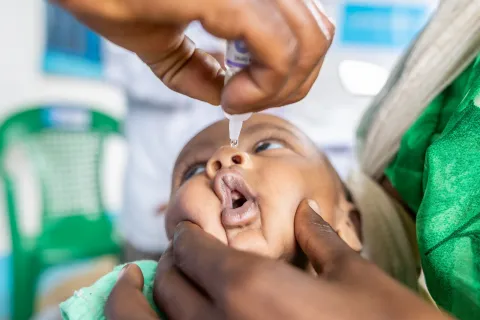
Taasude Kebele, Kori Woreda, Afar Region: The thin shade of the outreach site offers little relief from the Afar sun. Still, mothers continue to arrive, carrying their children and waiting patiently in the heat. Their purpose is clear: to safeguard their children’s health through vaccination and nutrition services.

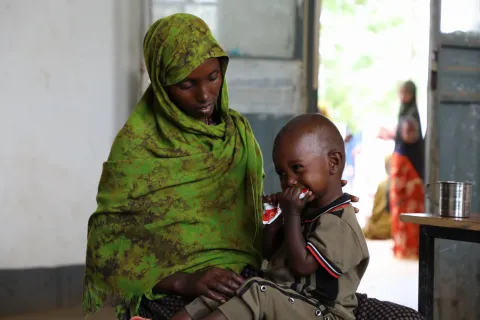
Afreda Ibrahim, 35, cradled her one-year-old son, Halo Tahir, close to her chest. She had heard from other women in her pastoralist community that a mobile health team had arrived. For Afreda, the journey had a single purpose: to ensure Halo received his vaccinations.
Afreda believes vaccination protects children from diseases such as measles and the common cold. She says this understanding came with time. Her five older children were never vaccinated.
“I have seen the difference in my children who are not vaccinated,” she explains. “They were often sick, especially with colds and fever.”
Her family depends on rainwater from open wells. When the rains fail, they gather what they can carry and move in search of water. Health posts remain in one place, but outreach services allow pastoralist families like Afreda’s to continue accessing vaccinations for their children.

Kedija Wasie, 30, held her one-year-old daughter, Fatuma Mohamed, as she joined the line. She had learned just the day before from health workers that vaccinations would be available, and she was determined not to miss the opportunity.
“Vaccination helps protect children from measles and other common illnesses,” Kedija says quietly as her daughter waits. She is calm as the health worker prepares the injection.
“I trust the health workers,” she adds. “I know vaccination helps keep my child healthy.”
Kedija has five children, and all of them have received their vaccinations. For her, keeping her children on schedule is simply part of caring for them.
“If the outreach service were not here, I would go to a health centre,” she says. “I would not stop vaccinating my children. Mothers here understand why it matters.”

Hass’na Ali, 20, sat patiently with her one-year-old daughter, Kedija Kedir, in her arms. She has two children, and she has made sure both receive their vaccinations.
“I came so my child can be vaccinated,” Hass’na explains. A local health worker, Mohammed Ali, had informed her about the outreach service, and she planned her day around it. Vaccination, she says, protects children from measles, diarrhea, eye infections, and “Bokoke,” the common cold.
Her daughter is receiving her third vaccination, all of them delivered through this outreach service. Although she did not bring the vaccination card with her, Hass’na is unconcerned.
“If you come to my home, I can show it to you,” she says, keen to reassure health workers that her child’s vaccinations have been completed as scheduled.

Kelelew Getahun is an Expanded Programme on Immunization (EPI) service provider at the outreach site in Taasude Kebele. On a typical day, he attends to between 50 and 60 mothers who travel across the pastoralist landscape to reach the service. The outreach visit takes place once a month.
“We provide a range of essential services,” Kelelew explains. “These include screening and basic treatment, deworming for parasites, and treatment for pneumonia using amoxicillin.”
“There is strong demand and a high level of awareness in the community,” Kelelew says. “Mothers ask about the services and want to know when we will return.”
He adds that there are also challenges that the team continues to manage on the ground.
Kelelew notes that maintaining consistent supplies of medicines and therapeutic nutrition remains a challenge in remote areas. Health workers are often required to prioritize and adjust treatments to ensure services can continue.
“Our focus is always on reaching children in need,” he explains. “We work with what is available and try to support as many families as possible.”
He points to the waiting families and notes that many children are classified as moderately malnourished. When identified early, these children can be supported through appropriate nutrition services to prevent their condition from worsening. Different therapeutic foods are used depending on the severity of malnutrition.
Like many remote areas, Taasude Kebele continues to face ongoing operational pressures, requiring health workers to adapt their approach over time through careful planning and flexibility.
Kelelew explains that some families may seek care in town when circumstances allow, while many others rely primarily on nearby public and outreach services. For pastoralist households, daily priorities such as food and water often shape how and when care is accessed.
Delivering services in remote areas also relies on strong logistics and coordination. Kelelew notes that partners, including UNICEF, support the outreach teams with vaccine carriers, fuel, and cold‑chain equipment. These systems help ensure vaccines are stored and delivered safely, even across long distances.
The mothers of Taasude Kebele are not passive recipients of care. They walk long distances, ask questions, and remember their children’s vaccination schedules. They return for services whenever they are available, with or without cards, rain or shine.
Yet the mothers’ determination is being tested by changing operational realities. In some of the most remote areas, mobile outreach services have been reduced or paused, making access to care more difficult for communities that already face long distances and harsh conditions.
And still, mothers continue to come, seeking services for their children whenever they are available.
Afreda, Kedija, and Hass’na do not speak in the language of policies or plans. They speak in words shaped by daily life, words like “Bokoke,” like “fever,” and like a simple request shared by many mothers here: please, do not stop coming.