
Briana and Mishell grow up amid challenges and community support in Esmeraldas
Protective communities in Esmeraldas
- Español
- English
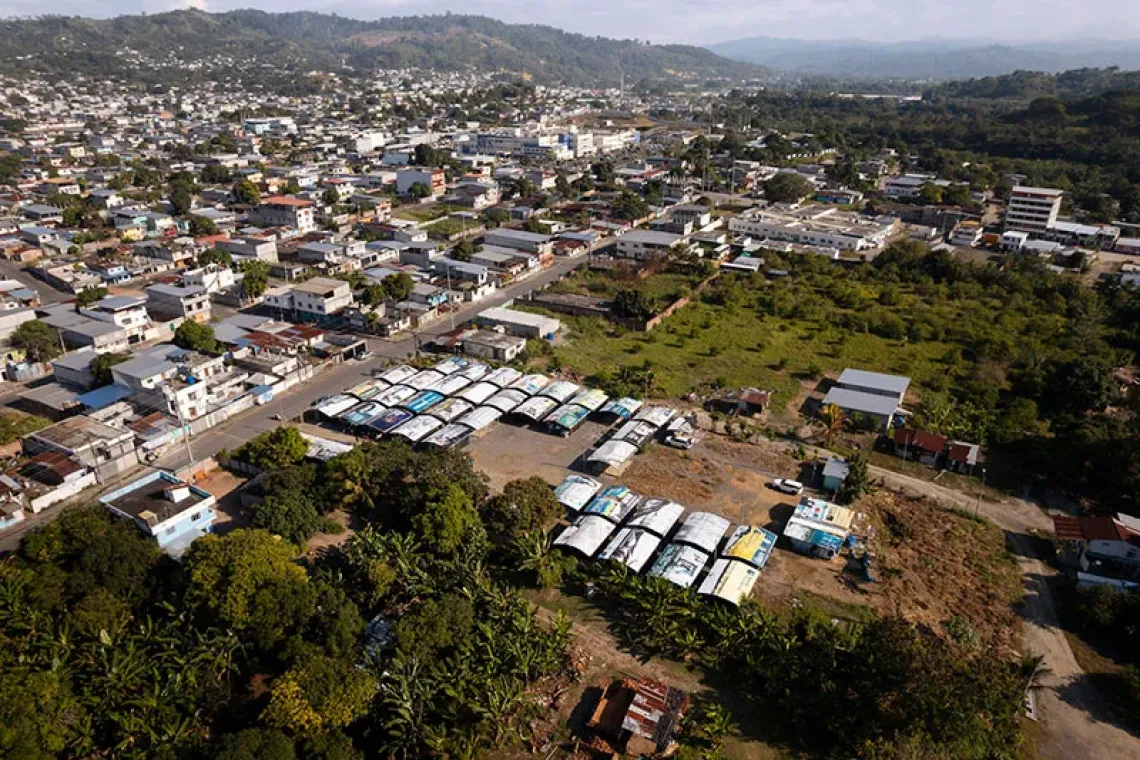
Briana is 12 years old and has an infectious energy. Two years ago, the overflowing of the Teaone River changed her life: her family lost their home and had to start over in the 50 Casas neighbourhood in Esmeraldas. Since then, Briana has moved forward with a strength that shows in her daily life. Every morning, she wakes up early to take the bus that brings her to the “Carlos Concha Torres” school, and after school she plays soccer at the academy of the team Independiente del Valle, where she was admitted thanks to her talent and dedication. On the field, Briana never gives up.
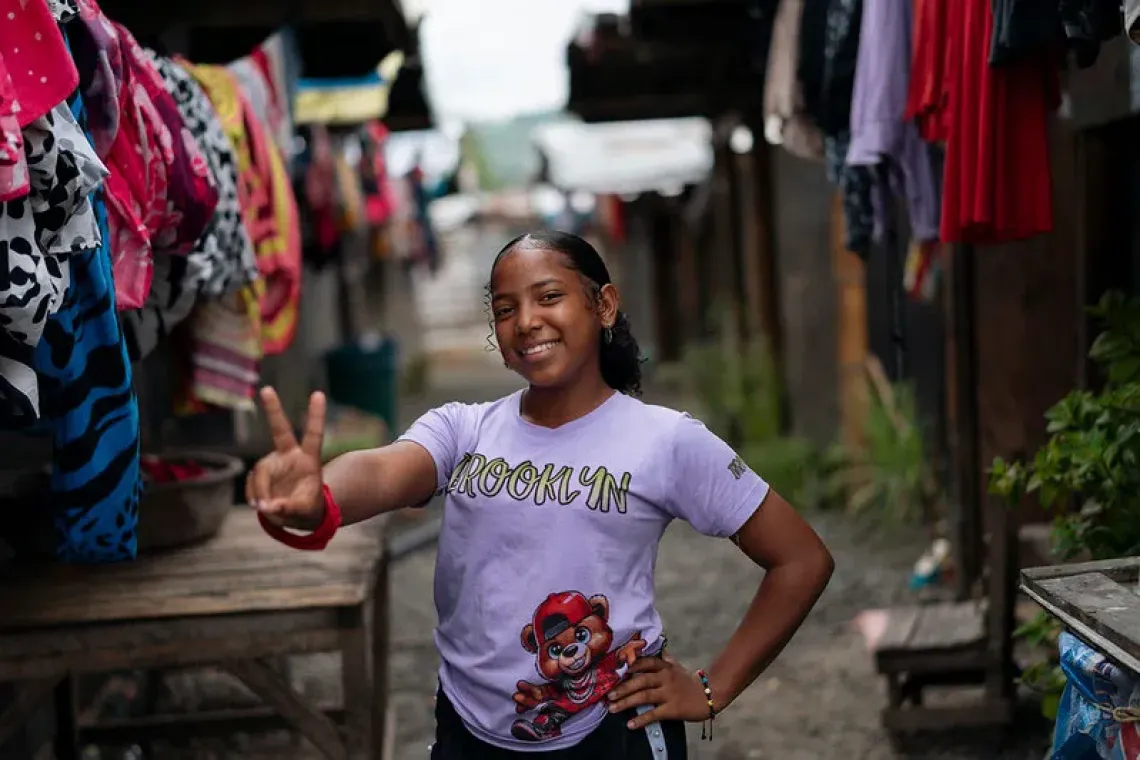
Living nearby is 18-year-old Mishell. She also lost her home due to the flooding and, together with her mother and brother, she moved to the 50 Casas neighbourhood. Recently graduated from high school, Mishell already knows her next step: she will study Commerce at a local university. Her greatest role model is her older sister, whom she has seen persevere in her studies despite economic hardships. That determination now guides Mishell’s decisions and fuels her desire to build a different future for herself and her family.
For both of them, insecurity is also a constant concern. In recent years, the situation has worsened in Esmeraldas, where 22 homicides of children and adolescents were recorded in 2024. This province is one of the most affected by armed violence in Ecuador. Briana and her family experienced the most devastating consequences of this reality: in 2022 her father was murdered and now fear overwhelms her when she hears gunfire. Mishell is also worried about the lack of safety in her neighbourhood and about not having a living space that offers greater privacy.
In Esmeraldas, insecurity and violence are compounded by the risks of natural disasters such as earthquakes and floods. This combination of factors exposes many children and adolescents to greater vulnerability, affecting their right to protection, growing up healthy, accessing education, and enjoying safe public spaces.
Protective Communities for children
The Protective Communities programme, developed by UNICEF, began in Esmeraldas in 2024 to support children and adolescents growing up in vulnerable contexts. Since its implementation in the province, the programme has worked with adolescents, mothers, fathers, caregivers, teachers and community members to strengthen environments where children can grow up safer and with more opportunities, benefiting more than 4,200 children and adolescents.
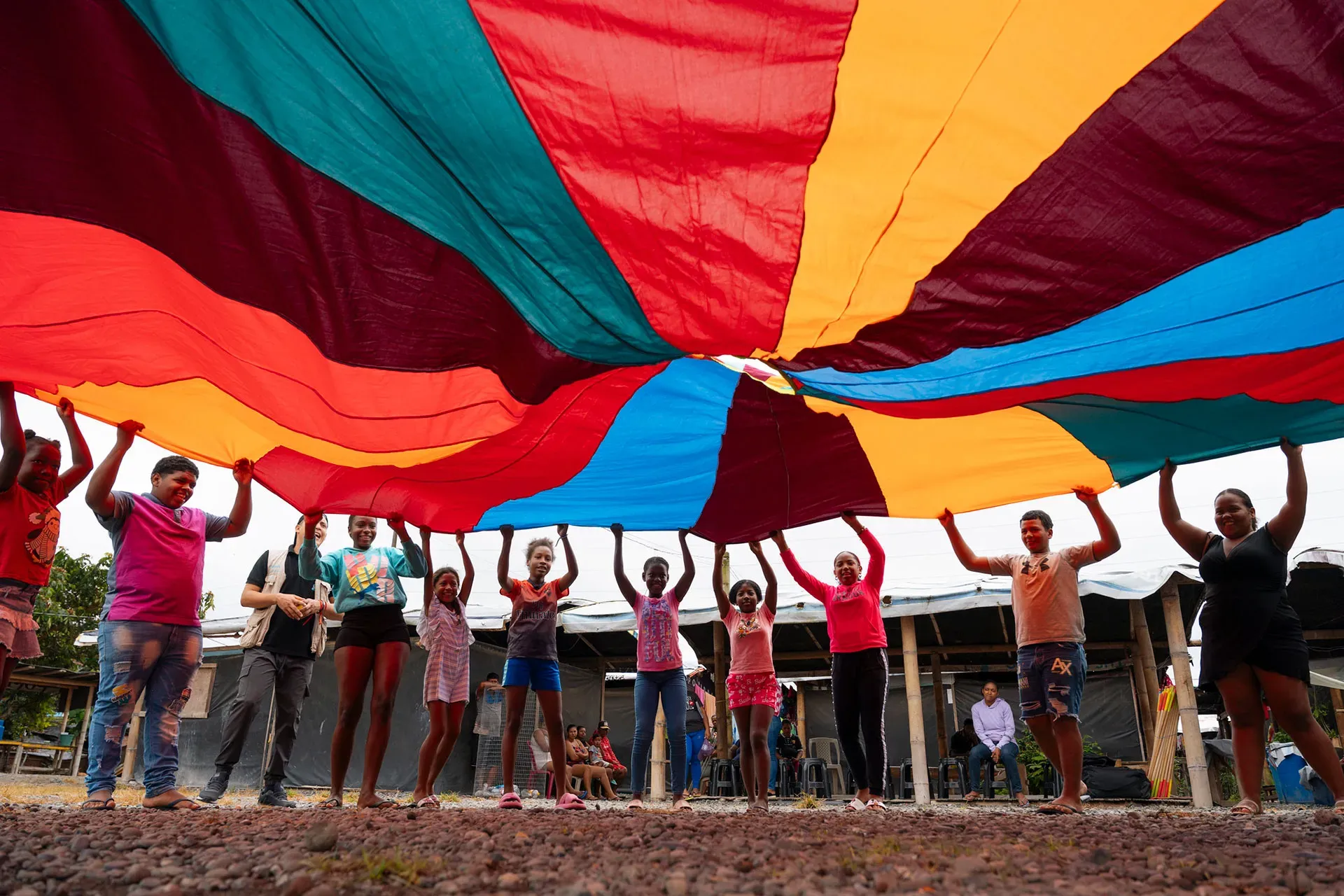
With adolescents and young people, Protective Communities focuses on building life skills that strengthen coexistence and contribute to the prevention of violence. Through participatory spaces, the programme promotes the recognition of emotions, the exercise of their rights and the development of skills such as communication, peaceful conflict resolution and the ability to cope with difficult situations and recover from adversity. These skills help them navigate their daily lives more confidently, even in complex environments.
“I learned about teamwork, communication, and empathy,” Briana says with a wide smile after participating in one of the programme’s activities. “I really liked the workshop about our rights,” adds Mishell, who joined the Protective Communities programme in 2024.
With families, the programme promotes dialogue and provides tools to raise children without violence, strengthening positive parenting, emotional care, and relationships based on respect and affection. With communities — particularly community leaders — the programme works to identify and prevent risks of violence in local environments, while also building protection networks that help ensure children can grow up in safe spaces.
“The protection of children and adolescents is built collectively. When families, caregivers, teachers and communities get involved, it becomes possible to create protective environments that support children’s development and reduce the risks they face,” says José Luis Guerra, Child Protection Officer at UNICEF Ecuador.
Mishell and Briana want to grow up in a city where walking without fear is part of everyday life, where streets, schools and communities are spaces of care and opportunity. Their dream — shared by many children and adolescents — is a reminder that building a safer city is not only a wish, but a collective task that must begin today.
UNICEF’s Protective Communities programme is implemented in the cities of Esmeraldas, Manta and Lago Agrio, benefiting more than 8,400 children, adolescents and their families. This programme is made possible thanks to the Humanitarian Aid of the European Union and the people who donate to UNICEF.