UNICEF annual report: overview of progress and challenges in Europe and Central Asia
Regina De Dominicis UNICEF Regional Director for Europe and Central Asia reflects on 2023

Throughout 2023, children across the world faced deeply challenging circumstances, and children in Europe and Central Asia were no exception.
A mere six weeks into the year, I saw children and families in Türkiye experience some of the worst earthquakes in the country’s history, affecting 15.2 million people, killing thousands and devastating lives.
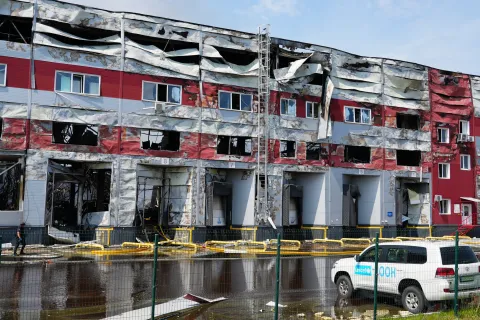
The ongoing war in Ukraine continued to cause immense suffering and wreaked havoc on children’s mental health and learning. Forty per cent of Ukraine’s children cannot access continuous education and one in five youth have intrusive thoughts and flashbacks – manifestations of post-traumatic stress disorder.
In my first months as Regional Director and Special Coordinator for the Refugee and Migrant Response in Europe, tragedies at sea led to children losing their lives as they attempted to cross the perilous Mediterranean migration route. Thousands of survivors remain detained in dire conditions unfit for a child.
More than 20 million children in the region continued to live in poverty. Families struggled to afford the basics, as a cost-of-living crisis persisted. The most marginalized children lacked access to quality education, shelter, food and health care, making our work with our regional partners including the European Union even more vital.
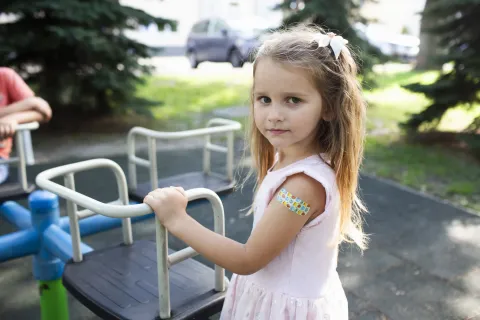
Following a backsliding in vaccination during the pandemic and an increase in vaccine hesitancy, over 600,000 children were not immunised against measles in 2023, leading to outbreaks and a 30-fold increase in measles cases.
In the aftermath of World War II, UNICEF’s work began in this region. For more than 75 years, we have worked with governments, partners, children and their families to uphold the child rights. In 2023, our work remained just as critical. I couldn’t be prouder of our extraordinary teams and partners who worked tirelessly to reach children across the region.
In the aftermath of the Türkiye earthquakes, UNICEF was immediately on the ground to provide humanitarian assistance. Together with the Government and partners we reached 4.7 million people including 2.4 million children with life-saving services and support. We are continuing to help rebuild education, health care and social protection systems.
Across Ukraine, we reached more than 1.3 million children with access to education and more than 2.5 million children and caregivers with mental health care and psychosocial support. We provided more than 5 million children and women with access to primary health care and 5.5 million people with access to safe water. We have reached thousands of Ukrainian children and families in hosting countries through national systems and municipalities.
In 2023, UNICEF provided essential support to children and their caregivers seeking refuge, safety, peace and better opportunities in Greece, Italy and Türkiye and in Armenia.
UNICEF continued to make headway in reducing the number of children in residential care facilities and supporting family-based care including foster care in the region. Across Europe and Central Asia, 15 out of 23 countries reported more than two-thirds of formally cared-for children are now placed in family-based care.
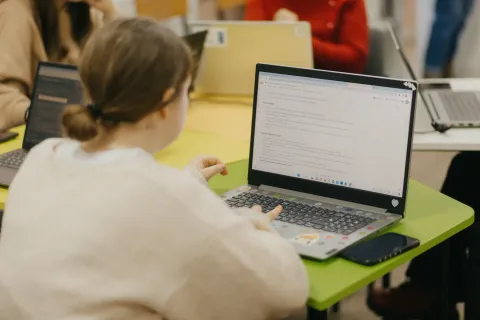
We supported the expansion of the digital learning opportunities in the region including in Kazakhstan, Kosovo, Montenegro, Serbia and Poland.
We continued our work with partners to address air pollution and reduce its damaging impact on children’s health and development and with communities to create climate mitigation and adaptation strategies and strengthen disaster risk preparedness.
In 2024, we will continue to build on our engagement with governments, the private sector, civil society, other UN agencies and of course children and young people themselves to accelerate and scale results on both the humanitarian and development front.