Gamifying Shkodra: How a board game helped us reclaim our city
Together, we designed a board game inspired by something familiar: Monopoly! But this time, we flipped the script. The game wasn’t only about civic participation, but also about raising awareness of the pressing challenges our city faces.

“Why bother? It’s not like we can change anything.”
These words often are tossed around by the young people in my small city of Shkodër, Albania. “Besides,” they add, “nobody else is speaking up.”
Growing up in Shkodër, I learned early that most young people saw only one way forward: do well in school and leave the country as soon as possible. For a long time, that seemed like a good plan for me too. Like many others, I felt disconnected from the decisions shaping our city. It seemed like real power belonged to others – policymakers and politicians far away from our daily lives – and we couldn’t change anything.
At 13, while interning for the first time at GO2 Albania, a local NGO focused on sustainable urban development, I found myself beginning to question this way of thinking. I had started paying closer attention to how decisions were made in my city – usually without young people’s input or involvement. I caught myself wondering why people my age never showed up to public meetings. The answer, I realized, wasn’t lack of interest. It was something deeper.
As young citizens, we had grown so used to the idea that our voices didn’t matter, we no longer cared if the decisions being made affected us. It wasn’t apathy, as the older generation so often argued – it was resignation. We had inherited a culture that kept us unaware of our right to be included in policy making processes, uninformed about how to raise our voices, and discouraged from learning about the decisions being made in our name.
This wasn’t just a political issue. It was cultural. But as young people, we couldn’t lecture each other into caring. We had been left out of decision-making for so long that the conversation itself felt foreign. If we wanted to change the way young people in Shkodër saw their place in the city, we had to change how they experienced civic life.
During my time at GO2 Albania, I was introduced to the concept of the “Right to the City”: the idea that every citizen should have a say in shaping their urban environment. I also saw how creative tools, like urban-themed games, were being used to teach these rights in a more accessible way. It struck me that a game could do something a speech or workshop never could: it could invite young people to step into the process and truly feel what it meant to make decisions.
That’s when the idea for Gamifying Shkodra began to take shape.
During an UPSHIFT workshop, supported by UNICEF, I teamed up with two of my friends, Amanta and Esti, both passionate youth activists for our community. Together, we designed a board game inspired by something familiar: Monopoly! But this time, we flipped the script. Instead of competing for money, players took on the roles of local stakeholders: the municipality, citizens, investors, NGOs. They negotiated, collaborated, or clashed, trying to design a city that worked for everyone while facing realistic urban challenges like floods, pollution, or inequality. Through the game, young people weren’t just learning about civic participation – they were learning that their choices and their voices could shape the city.
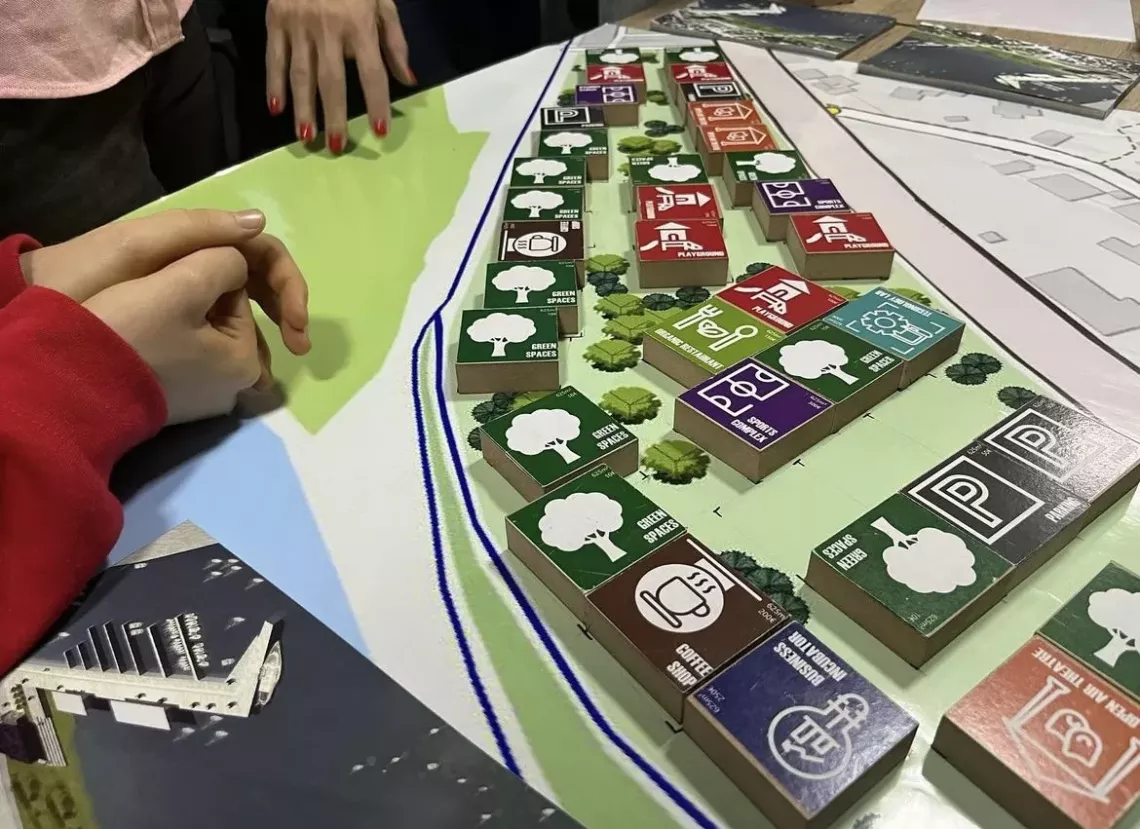
The game wasn’t only about civic participation, but also about raising awareness of the pressing challenges our city faces. Air pollution, poorly planned public spaces, lack of green infrastructure, and the growing risks of urban floods were woven into the scenarios young people had to navigate. We wanted young people to see how environmental issues and urban planning decisions affect their lives every day, and how their voices could influence those outcomes. Our goal was to make them aware that building a better, greener, more inclusive Shkodër is part of creating sustainable cities everywhere and also a core objective of the Sustainable Development Goals (especially SDG 11).
Since that first workshop, Gamifying Shkodra has reached more than 300 young people from different schools and backgrounds. They have been empowered to participate in public hearings, city hall meetings, and discussions with the Local Youth Council, equipped with a toolkit to support their advocacy efforts. We’ve played the game in classrooms and community centres, and welcomed students, teachers, activists, municipal representatives, and even the staff of UNICEF Albania, including their Deputy Representative, Ms. Edina Kozma. What I am most proud of is not just the numbers, but the cultural shift taking place. My friend Enisa told me after a game session, “I always thought city planning was something politicians did behind closed doors. I didn’t know we had a say in this too.”
Gamifying Shkodra has shown me that real change often begins with something small: a question, a conversation, or even a game. When young people are given the right tools and experiences, they begin to see themselves differently. They start breaking free from the cultural narrative of indifference and stepping into roles as active, engaged citizens. And once they believe their voices matter, that belief doesn’t end when the game does. It ripples outward, into the streets, the conversations, and the future of Shkodër itself.