Creating a family environment for children evacuated from child care institutions from Ukraine
Each day matters in a child’s life.

Each morning 18 Ukrainian children in Łódź start their day with a minute of silence. They are commemorating those who have lost their lives in the war that is raging in their homeland.
This daily ritual is a sad reminder of what the children have been through, but also an acknowledgement that they are safe, living together in a small group home supported by UNICEF.

In Ukraine, we would take the children and hide in the shelters. They were really scared. Not all of them understood what was happening and why we needed to hide.
Now that we are here in Poland, the children feel safe.
The group of 14 boys and four girls, ranging from 7 to 17 years old, all have intellectual disabilities. They came to Poland with Valentyna and three other caregivers in March 2022 as war broke out. They are just some of the 90,000 children who lived in institutional care in Ukraine before the war. Thousands of these children have since been evacuated into neighboring countries, including Poland.
The children - often in large groups accompanied by a few adults - are vulnerable. Ensuring care and protection for them is an enormous challenge for governments. Particularly where the style of care for children in residential institutions is vastly different to Ukraine.

Poland has closed down its large institutions for children years ago and they are no longer perceived as appropriate form of care for children. There are existing policies and standards to ensure children grow up in foster care or family style group homes
“Children evacuated from institutions in Ukraine should be provided with the same quality of care and protection as Polish children. This means having small care facilities - not large institutions where there are frequent problems with development and well-being. Children from institutions are most vulnerable and we are working with authorities in Poland to make sure that their stay in Poland provides them with best opportunities to develop and socialize. Each day matters in a child’s life."
When they arrived in Poland Valentyna, three caregivers and the children were placed in a large institution with 80 other children. This was a concern as children in large facilities are at increased risk of sexual and physical abuse, a lack of stimulation and mental health support.
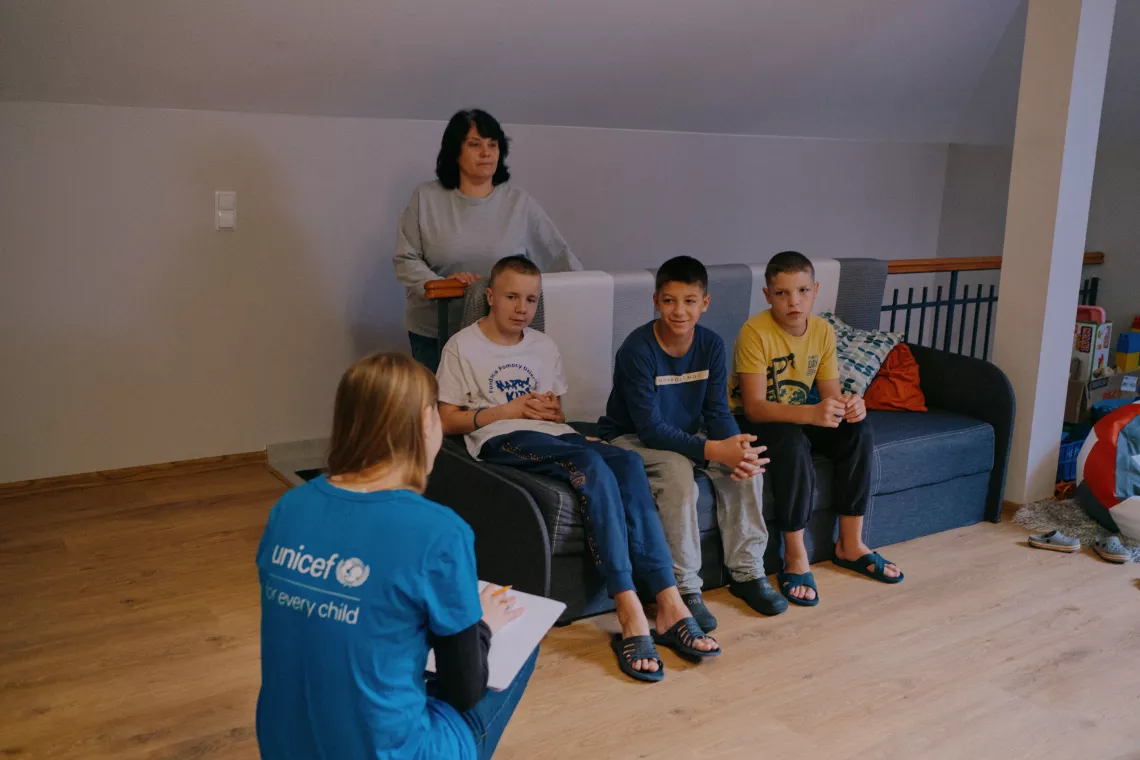
In October, the group was supported by the local municipality and UNICEF to relocate to their own house on a residential street. Additional caregivers from Ukraine were hired to ensure individual care. Here there is more space, a large kitchen, a vegetable garden, places to do school work and a huge park nearby where the kids love to run and play. While the aim is to return to Ukraine, here the group can grow, learn and play. Children attend local schools every day and make new friends. The municipality of Lodz arranged for their health screening and follow up medical interventions.
UNICEF is partnering with Łódź municipality to support small group homes such as this one. This improves the living conditions of children and their caregivers. It also gives UNICEF an opportunity to monitor the children’s wellbeing and ensure they receive medical care and necessary medical interventions, including surgeries.
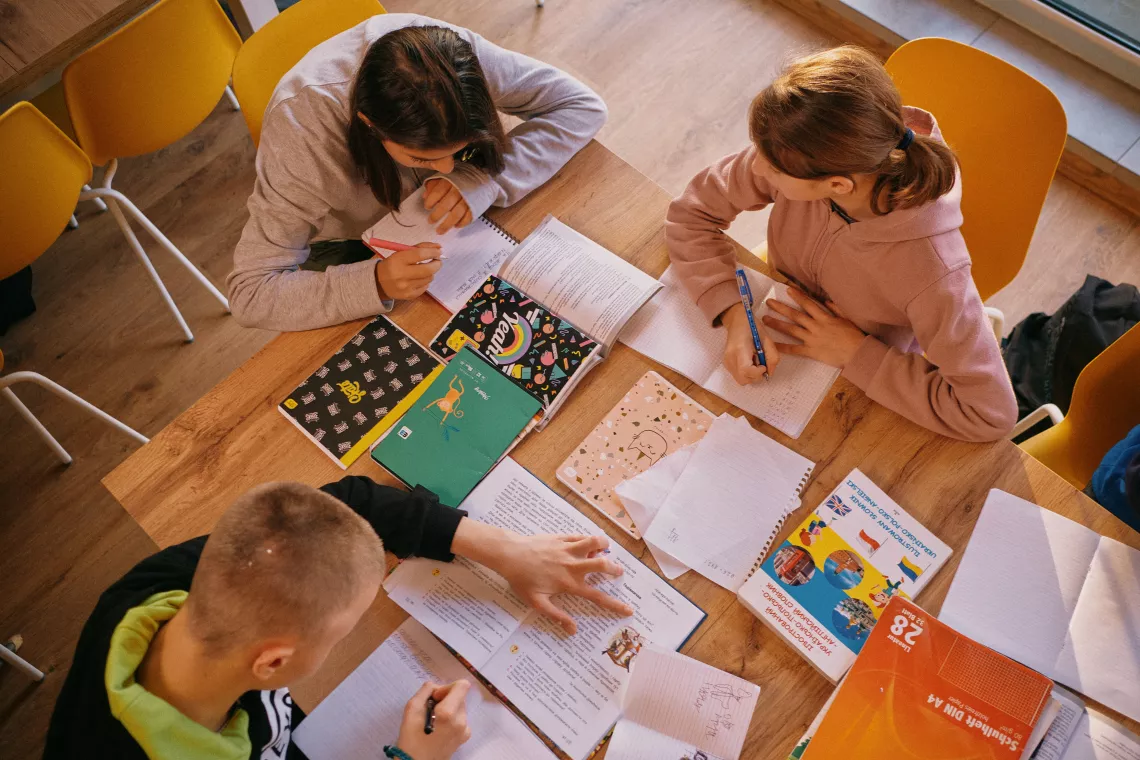
In Łódź, the children prepare their own breakfast. They help each other make sandwiches and they tidy up. Performing those seemingly mundane tasks teaches them how to take care of the home, of the community they are part of, and of themselves.
Until they return to Ukraine Vaentyna says the house “finally feels like home”.
Caregiver Olha has noticed a difference too.

The children are helping each other a lot. When we go for a walk I see older kids taking smaller ones by the hand. They comfort each other when they have a bad day, hug each other or play together.
We are one big family here.
This work to support refugee children and families in Poland has been made possible with contributions from the people of Australia through the Australian National Committee for UNICEF and from people of United States through the US National Committee for UNICEF, as well as Global Thematic Funding.