How a mother of three provides solace to her children as they navigate displacement in Poland
The story of Natalya and her 15-year-old daughter, Tasya.

- English
- Українська
- Polish
“I want to see the people I haven’t seen for so long. I just want to see them and hug them,” shares 15-year-old Tasya. Even three years after her family was forced to flee their hometown in Ukraine, Tasya’s greatest dream remains unchanged: “I want to go to the places that are so dear to me,” she says.
When her mother, 43-year-old Natalya, hears this, she can’t hold back tears. Forced to flee with her three children when the war escalated, Natalya has done everything she can to help her children adjust to life in Poland, but the longing for home is something that never leaves them.
For Natalya, it is also a reminder about how much life has changed. It’s been nearly thirty years since she was a teenager growing up in a peaceful Ukraine. “When I was 15, my biggest worries were about my grades at school,” she recalls. “I thought about which university I would go to and what profession I should choose. I worried about exams, though I was a straight-A student.”
Tasya’s adolescence is unfolding in a completely different context. The war has shattered her sense of security and confidence in the future. “You can’t be sure of anything now. The worst things can happen at any moment,” she says. “This feeling affects me a lot in my daily life.” For her, the challenges of adolescence - the pressure to succeed, fear of failure, and navigating relationships - are compounded by war and displacement.
“Of course, I worry about things that many young people do, like the development of artificial intelligence and whether we will be able to compete with AI on the job market. But it’s also about bullying, and the worry that I won’t get into any university at all in my situation, and the fear that something might happen to my friends back in Ukraine,” she shares. “All of this puts a lot of pressure on me.”
Amid these fears, Natalya’s support has been Tasya’s anchor. Natalya works hard to create a safe environment at home, reminding Tasya and her siblings that no matter what happens, they always have someone to lean on. “Girls at this age need their parents’ attention the most,” Natalya says. “It is my job to show Tasya that no matter what happens, she is not alone.”

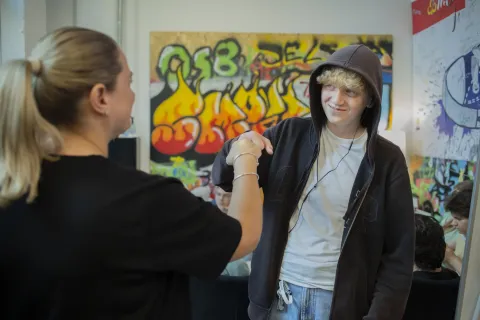
Tasya has also found support in her community. She attends extracurricular activities at the EduHub in Warsaw, where she was able to find a sense of belonging. “I attend classes on self-development, emotional intelligence, and I have also started finding peace in creative workshops where I can make things with my own hands,” Tasya explains. She also joined UPSHIFT, a UNICEF programme that teaches teenagers practical skills and empowers them to solve community challenges that affect them directly. “Our project wasn’t selected for the finals, but we still want to implement it. We aim to help young people choose a future profession by organizing meetings with business representatives, where they can learn about different career paths,” she explains. "With support from her mother and her wider community, she is finding ways to rebuild her confidence and develop the skills she needs to thrive.
Adolescence is a critical time for shaping identity, aspirations, and roles in society. For young refugees like Tasya, this process of growing up is also about language barriers, unfamiliar social circles, and too much uncertainty about the future. That is why mental health support and opportunities for skills development are essential in empowering adolescents like Tasya and ensuring they thrive now, so they can play their part in the recovery of Ukraine once the war is over.
Natalya says that just a few years ago she never could have imagined that a generation of children would face another war in Europe. Yet despite all the challenges, Tasya remains hopeful. She dreams of returning to Ukraine, visiting the places that are dear to her, and reconnecting with the people she loves. But until then, she is determined to make the most of the opportunities she has in Poland.
“Every day, I’m learning to adapt and grow,” Tasya says. “I know my future depends on how I handle these challenges now.”

“Thanks to finding a safe space at EduHub, where I can develop my skills and make friends, I feel much less afraid now than I did at the very beginning,” Tasya says. “Finally, I feel ready to start to plan my future.”
This work to support refugee children and families from Ukraine in Poland has been made possible thanks to generous contributions from public and private donors from around the world.