In Focus: From surviving to thriving
Supporting health and well-being throughout childhood and adolescence in Europe and Central Asia

Highlights
Every child has the right to health and well-being from their earliest days, throughout their childhood, and during their adolescence.
From the moment they are born, millions of children in Europe and Central Asia miss out on the support they need to protect their health and achieve their full potential.
The region has more than halved the proportion of children dying before their fifth birthday in recent decades, but this progress masks high disparities among very young children. Those from marginalized communities are still at a greater risk of dying in their first month of life than other children, often as a result of conditions that could have been prevented or treated if their families had timely access to good health care and support.
The Europe and Central Asia region also has the lowest exclusive breastfeeding rate worldwide, increasing the risk of infections and obesity later in life. Child obesity is also soaring as a result of sedentary lifestyles and poor diet, adding to concerns about the marketing of junk food. Meanwhile, the promotion of alcohol and tobacco consumption has a negative impact on children and adolescents.
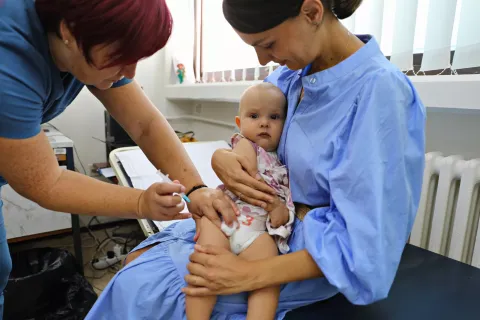
There are concerns about immunization, with many countries reporting falling rates in the aftermath of the COVID-19 pandemic. The region now accounts for almost half of the world’s reported cases of measles. In 2023 alone, 123,000 children in the region did not receive any of the recommended vaccines.
Children’s health is shaped by the environment around them. Many children in the region are at risk from pollution and toxins in the air they breathe, the water they drink and the ground beneath their feet. Young children are also particularly vulnerable to the growing threat of climate hazards such as heatwaves. Isolation and exclusion are contributing to a mental health crisis in the region, with suicide becoming the leading cause of deaths among adolescents and young people.
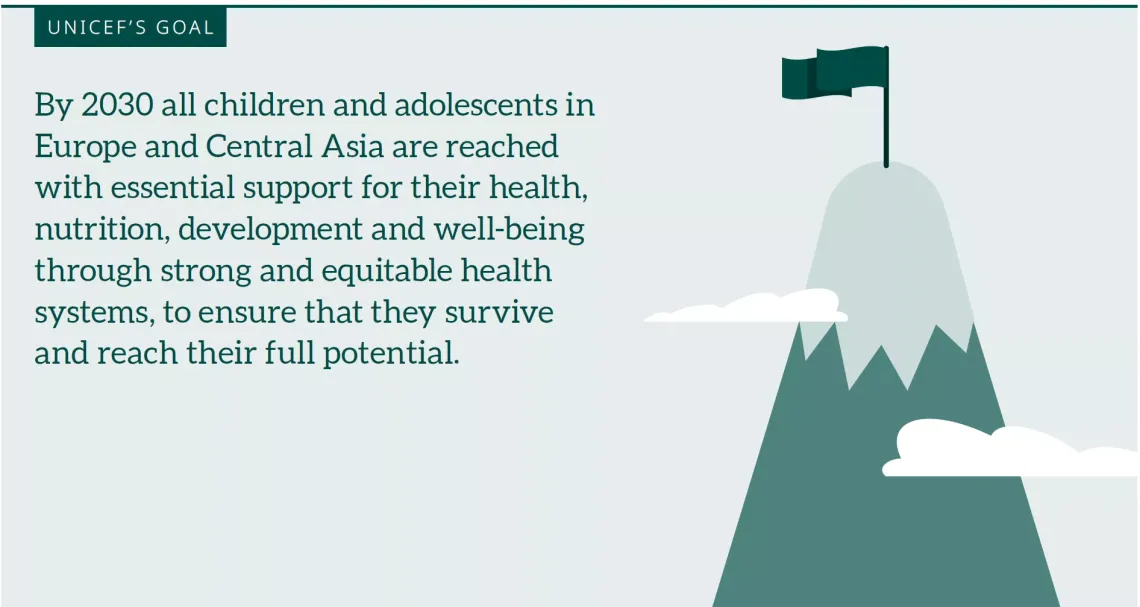
UNICEF works across the region to uphold the right of every child to be healthy and reach their full potential. All children, including those who are the most vulnerable, must have the best possible support for their physical and emotional health and well-being throughout their lives. We aim to ensure that children do far more than survive: every child should thrive.
Files available for download
Key facts


Key policy frameworks

Convention on the Rights of the Child (1989)
Article 6.2: Ensure the survival and development of the child.
Article 24:
- 24.1: Recognize the right of all children to the highest attainable standard of health.
- 24.2: Reduce infant and child mortality, ensure pre-natal and post-natal health care for mothers, and ensure that everyone is supported to use basic knowledge on child health and nutrition, including the advantages of breastfeeding.

Challenges
The survival and long-term well-being of children in the Europe and Central Asia region are often determined by who and where they are. A glance at overall child mortality and health service coverage shows a region in good shape, but a closer look – particularly at income, ethnicity and geography – reveals serious inequities between and within countries. Some children are far more likely to miss out than others. They include the poorest children, those in hard-to-reach areas, children who have lost one or both parents, children in single-parent households or in Roma communities, those who live in conflict zones or who have been affected by migration, and children with disabilities.
The problems often start early, as shown by the disproportionate share of children dying in their first weeks of life – deaths often linked to poor quality care for mothers and their babies. The early challenges also include developmental delays and disabilities that go undiagnosed and unaddressed in the absence of services to identify them, and a lack of the nurture that is critical for young children. Only half of young children from the poorest and most vulnerable households are likely to benefit from early stimulation and responsive caregiving.
Many young children do not have the protection and bonding provided by breastfeeding in a region with one of the lowest breastfeeding rates worldwide. While the region has surpassed global targets for child wasting – the most life-threatening form of malnutrition – stunting remains a risk and can cause irreversible physical and cognitive damage. It affects more than 1.8 million children under five in the region, with the highest rates reported in Azerbaijan, Tajikistan and Ukraine.
There are serious concerns about immunization, with coverage disrupted by the COVID-19 pandemic, the war in Ukraine, inequitable access, and by vaccine hesitancy fuelled by myths and misinformation. While the number of ‘zero dose’ children – those who have never been vaccinated – is falling, there are still 123,000 children in the region who are not fully vaccinated and protected against preventable diseases. Over 90 per cent of countries in the region have reported falling immunization rates and more than 1.8 million children in the region have missed their measles vaccination over the past three years. The region now accounts for around half of the cases worldwide.

The measles challenge in Europe and Central Asia
Cases of measles are rising in Europe and Central Asia. There were more than 61,070 confirmed cases in the Europe and Central Asia region in 2023, up from just over 900 in 2022. And by September 2024, the European region had registered around 95,200 cases of measles, highlighting the insufficient response of the system to prevent the spread of this epidemic. This devastating – and entirely preventable – disease weakens children’s immune systems and can be fatal.
Rising cases are linked to falling immunization coverage across the region as a result of reduced demand for vaccines – fuelled in part by misinformation and mistrust which worsened around the COVID-19 pandemic, but also by the disruption to health services and by ongoing weaknesses in primary health care systems. To reach every child, UNICEF is working with countries across the region to:
- identify and reach all children, particularly those who have missed vaccinations
- prioritize funding for immunization services and primary health care
- build resilient health systems by investing in health workers, innovation and local manufacturing
- strengthen demand for vaccines, including by building confidence.
UNICEF works with governments, Gavi - the Vaccine Alliance, the World Health Organization and other partners to generate evidence, identify ‘zero-dose’ children and missed communities and understand problems related to supply and demand, as well as the causes of vaccine hesitancy. We use this evidence to support governments across the region in their efforts to immunize every child.
Children are the most vulnerable to the health impacts of climate change and environmental degradation. Half of all children in the region, for example, are now exposed to frequent heatwaves – double the global average – putting them at risk of heat stress and other health problems. Young children are also particularly vulnerable to air pollution: as well as having less developed lungs, they breathe faster than adults and take in more air relative to their body weight.
Most early deaths and child illnesses in the region could be prevented if all families had access to good quality primary health care. Quality health services are needed from conception through birth and a child’s early years to ensure that their perinatal care is good, that every newborn has the care and nutrition they need, and that preventable diseases are addressed. But survival alone is not enough to ensure that children thrive as they grow – health care should include the systematic monitoring of child development, parental counseling for nurturing care, and support to children with developmental difficulties and their families through early intervention services.
Children need to be protected from all of the causes of overweight and obesity, which is linked to a rise in non-communicable diseases such as diabetes and cardio-vascular problems. As they enter adolescence, they also need support to make informed decisions about their physical and sexual health, and support for their mental health and well-being.
The mental health of children and adolescents in the Europe and Central Asia region is under pressure, and there is a lack of tailored assistance for those in distress. The isolation and exclusion of children and young people has been heightened in recent years by measures to contain the COVID-19 pandemic, and sustained by social media that can trigger anxiety. Half of all mental disorders diagnosed are thought to develop before the age of 14. Suicide is now the leading cause of deaths among adolescents and young people in the region: more than 1,300 aged 15 to 19 take their own lives each year.

UNICEF’s work for children
UNICEF advocates for and supports the strengthening of primary health care (PHC) systems across the region, so that every child has equitable access to good quality health care. We are working to reach children with improved health services, scaled-up community health platforms, and stronger PHC systems. At every stage, we look beyond purely medical interventions to support holistic approaches to children’s development and well-being. Our work includes support for the development of health-related strategies, plans and budgets, the reinforcement of the skills of health personnel, and the empowerment of families and communities so that they can demand health services that work with and for them.
Improving health services
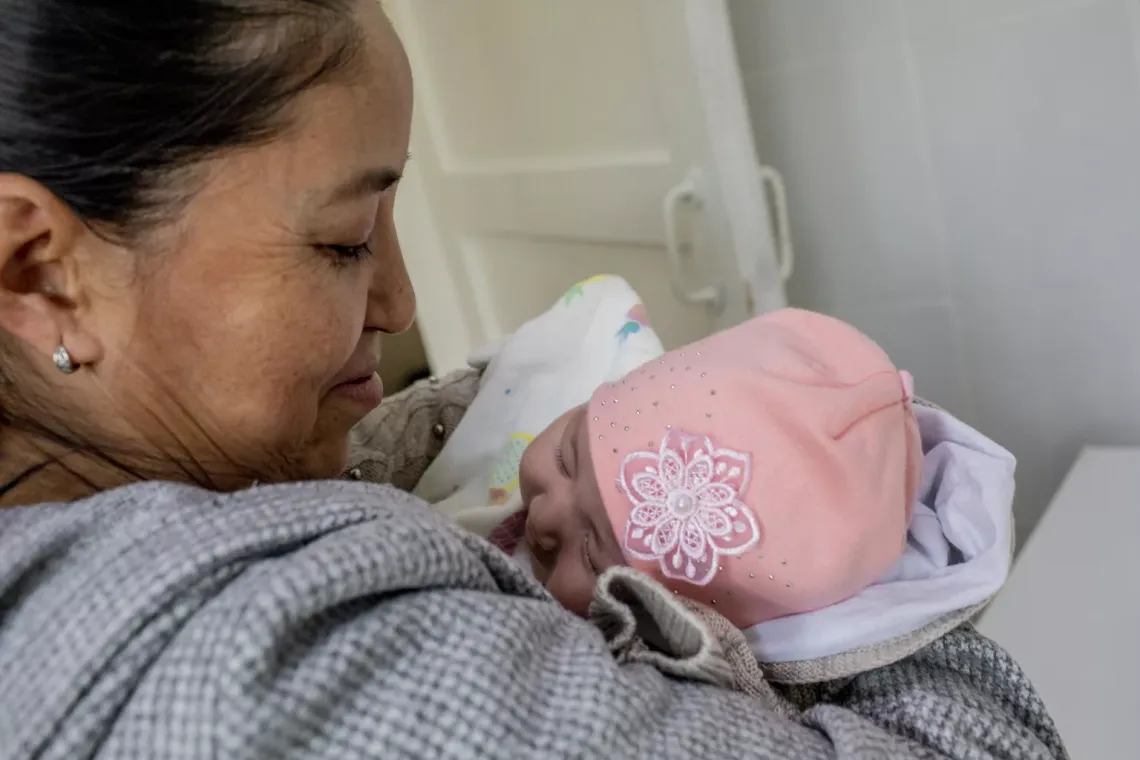
UNICEF supports the improvement of health services for children from their earliest hours of life, aiming to prevent neo-natal deaths by helping governments ensure that every birth is safe, every newborn has the care and nutrition they need, and that every parent is supported and ready to help their baby thrive.
We address the misinformation that is eroding immunization coverage and exposing children to the risk of contracting – and dying from – easily preventable diseases. We support governments to collect and analyze crucial data on who is not being vaccinated and why, to support the effective promotion of immunization and counteract vaccine misinformation. We work closely with front-line health workers to equip parents and communities with the knowledge they need on the importance and safety of immunization, and support chatbots, campaigns and other measures to promote this life-saving measure.
We prioritize infant and young child feeding (IYCF) across the region, aiming to ensure that every child has the best nutritional start in life. This includes support for the early initiation of breastfeeding, exclusive breastfeeding until the age of six months, and the timely introduction of complementary foods and liquids for children aged six months to two years.
UNICEF supports a shift to a new approach to health care for young children, which looks beyond their physical health to include developmental monitoring and early childhood interventions, as well as support for parents. Recognizing that a strong bond between a parent and a young child is the best foundation for children, we work with parents to build safe and stimulating home environments. Our free app, Bebbo, for example, answers parents’ questions on a range of topics, from nutrition to play and the mental health of caregivers, and has more than one million users across 15 countries in the region.
We support efforts to reach children through primary health care and home visiting – particularly those who are the most marginalized – with the care they need in their own communities and homes. This work relies on strong partnerships between health professionals and families, and a shared understanding that every interaction they have is a chance to help children thrive and to equip parents with knowledge, skills, counselling and support.
We support the promotion of psychological well-being and the prevention and treatment of mental health issues among children and adolescents. Youth-friendly mental health and psychosocial support (MHPSS) needs to be available from the community level through to specialized care, particularly for vulnerable groups. UNICEF supports Ministries of Health and other line ministries to modernize their MHPSS practices, develop their capacity and respond to the growing needs of children and adolescents, using every available platform, including schools and digital tools.

Beyond health: building nurturing care into the primary health system in Serbia
The well-being of parents and children has been enhanced in Serbia by integrating nurturing care for young children into every aspect of primary health care (PHC). Results have included the greater involvement of both mothers and fathers in the early stimulation of children through play and talk, better access to – and better quality of – PHC for marginalized families, and improved skills among paediatricians and home-visiting nurses to identify health and development issues and support families. This approach has also helped to expand access to Bebbo, a pioneering app developed by UNICEF to answer parents’ everyday questions, which now reaches 100,000 users across the country.
Scaling up health platforms
We support efforts across the region to scale up what works for child health and well-being. Our support for Universal Progressive Home Visiting (UPHV) in many countries, for example, recognizes that trusted health workers who have direct contact with the families of newborn babies and toddlers are well-placed to spot any problems at an early stage and make referrals when necessary. Trained home visitors can work with parents to ensure that every child has support for their health, nutrition, development and overall nurturing care and support in a safe and stimulating home environment.
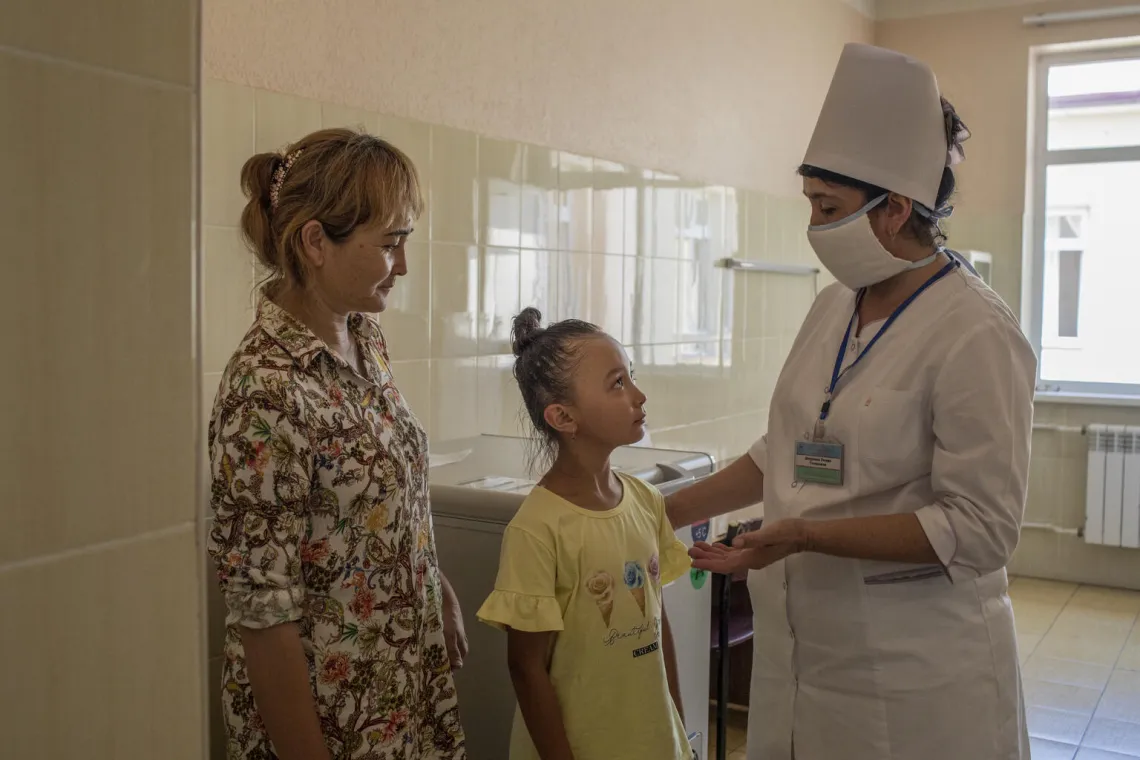
In Uzbekistan, the phased implementation of UPHV through 50,000 trained home visiting nurses has helped to enhance parenting skills, tailor the services on offer, and expand the coverage of screening and preventive health services. Home visitors also introduce the Bebbo app to parents, and initial results show that parents like such digital tools, with 85 per cent of them highly satisfied with the app. This reinforces the guidance provided by home visitors and improves parental knowledge. Parents can use Bebbo to find answers to their everyday questions, from how to calm a crying baby to the benefits of immunization.
The Bebbo app helps parents raise thriving children
“I name the objects she points to with her hand and describe everyday activities using simple words,” says Bojan Tomcic, a young father in Montenegro, as his 18-month-old daughter Vasilija runs tirelessly around the park. Bojan learned this playtime technique from UNICEF’s parenting app, Bebbo, which he credits with bringing him new insights into the world of early child health and development.
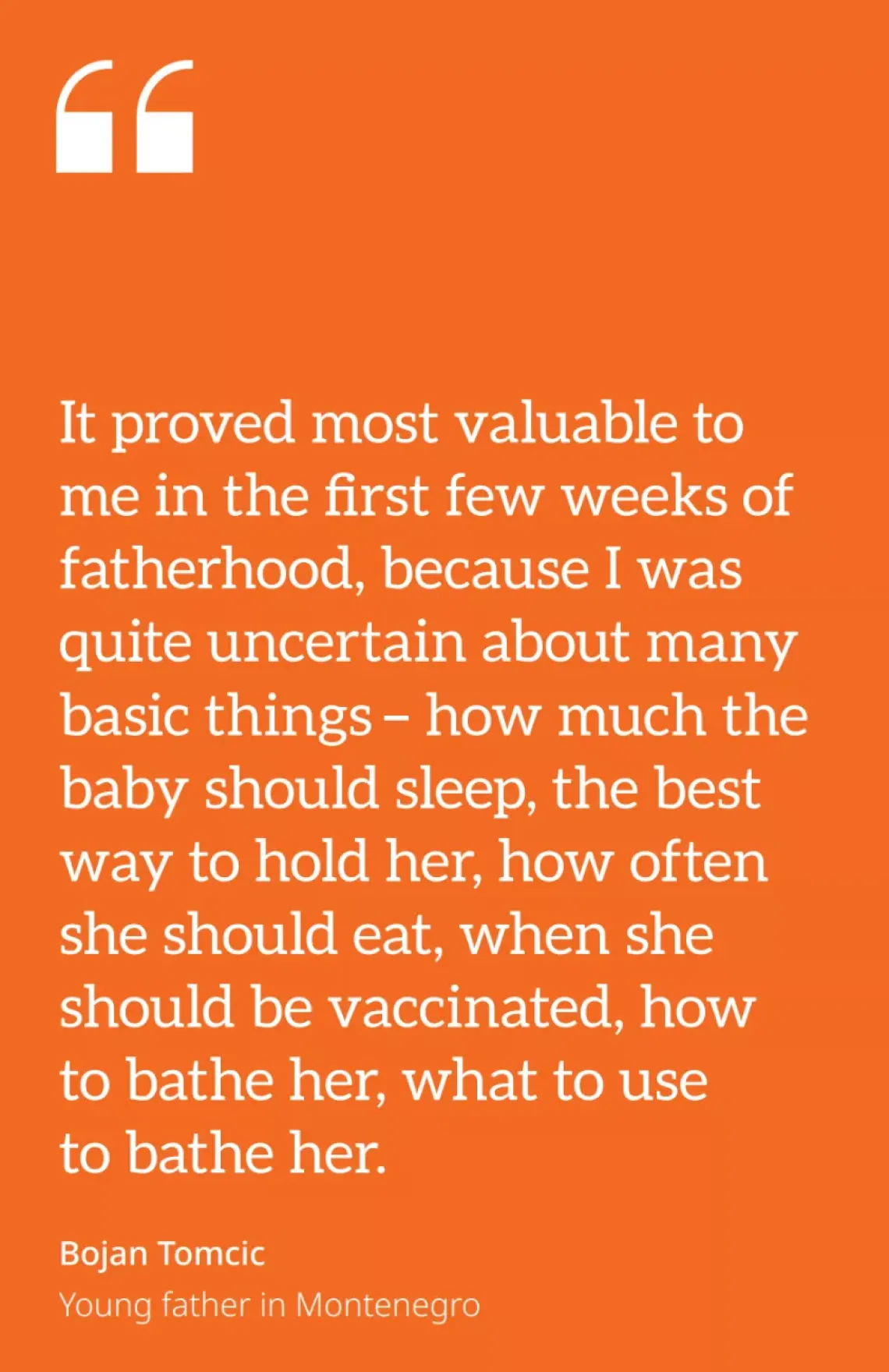
“It proved most valuable to me in the first few weeks of fatherhood,” he says, “because I was quite uncertain about many basic things – how much the baby should sleep, the best way to hold her, how often she should eat, when she should be vaccinated, how to bathe her, what to use to bathe her.”
Asked to describe the app in just one word, Bojan says: “reliable”.
“The Internet allows us to access an endless amount of information, and I often encounter conflicting views and advice on the same topic (such as when to start brushing the baby’s teeth). This only adds to the confusion as one does not know who to trust. However, the Bebbo app is backed by UNICEF and the Institute of Public Health, so I consider it the most credible source of information.”
Since its launch in Europe and Central Asia in 2021, Bebbo has become one of the most trusted sources of advice for parents worldwide. Now available in 15 languages, Bebbo offers the parents of young children expert advice and tools on young child development, from the health of their newborns to their own health and well-being. The free app includes easy parenting tips on topics like breastfeeding, baby weaning, learning, playing, child protection and much more. Interactive tools help parents track their child’s development and health check-ups. And there are suggested daily reads, as well as games to stimulate their children’s happy and healthy growth and development.
The Bebbo app is just one example of UNICEF-supported outreach to parents in the region. UNICEF is a trusted, ‘go to’ source of information on a vast range of issues related to children’s health and well-being, from frequently asked questions on immunization to tips on breastfeeding, handwashing, shielding children from the dangers of heatwaves and air pollution, and caring for teenagers who are struggling with their mental health.
Strengthening health systems
Successful scale-up relies on strong national health systems. UNICEF mobilizes political commitment to strengthen health systems across the region, put PHC at the heart of universal health coverage and governance, and to promote cross-sectoral partnerships, community leadership and mutual accountability.
We recognize that scaling up what works depends on having effective policies and adequate budgets for PHC and on the skills of all health professionals to provide holistic support to young children and their families. For that reason we analyze health systems and provide costings to support Ministries of Health, advocating for funding that promotes equitable access to high-quality care and services, that supports the integration of health care services and effective referrals, and that eases financial hardships for families that need help.
Public demand for PHC services is also crucial and depends on awareness of their benefits. To generate informed demand, we raise awareness among policy-makers, the general public and other key stakeholders – including health and teaching professionals – about the critical importance of good child health and nutrition for the creation of societies that are healthy and productive.
UNICEF supports the strengthening of national procurement and supply systems. We identify performance gaps and priority areas for investment, and support countries’ mobilization of their own resources for supplies. We aim to improve health infrastructure, digitalize supply chains and transfer our own skills in procurement, supply chains and management to ensure national long-term ownership and sustainability. UNICEF’s Procurement Services enable governments and other partners to access quality products and address critical supply needs. All of these efforts reinforce government-led health systems and help improve programme outcomes for children.
As always, we collaborate with communities and with stakeholders from all sectors to identify the health issues that matter and the solutions that work. We support the creation of skilled, well-equipped and properly paid multidisciplinary PHC workforces, and promote the effective use of digital technologies and robust research to take successful approaches to scale.
Call to action
We do not shy away from tough questions about children’s health and well-being in the Europe and Central Asia region. Why, for example, do the same disparities affect the same children in the same ways, year after year? Why are some children more likely to die before their fifth birthday than others? We argue that this is not because the region lacks resources: it is because its health systems need to be better at reaching for the most vulnerable children, wherever they are and whenever they need support.
UNICEF believes that investing in the equitable health and well-being of children, adolescents and young people is one of the smartest investments a government can make. It builds social cohesion, helping to reduce poverty and the loss of human potential by preventing and addressing the heavy burden of disease and poor mental health. We will continue to advocate for better, greater and more effective investments to ensure that every child has the timely and high-quality care that supports them at every stage of their life.