In Focus: Access to justice for children
Helping children and families hold those who violate their rights to account

Highlights
Access to justice for children is not only a specific human right, it is also a crucial way to uphold all the other rights that should be guaranteed for every child, from access to health care and education to protection from violence.
Across Europe and Central Asia, however, access to justice for children is obstructed by systems that fail to recognize their rights or to act in their best interests. Attitudes within justice systems make it difficult – or even unacceptable – for children to come forward, speak out and demand their right to justice.
Full access to justice for every child could, however, generate a powerful ‘triple win’ that benefits entire communities and nations, as well as children themselves:
- it would reinforce human rights
- it would reinforce the rule of law
- it would support sustainable development by upholding and enforcing the full range of rights for every child to ensure their health, development, well-being and inclusion.
In Europe and Central Asia, as elsewhere around the world, UNICEF champions access to justice for all children whose rights are violated. We advocate for effective child-friendly justice systems across the region that enable children to come forward when their rights have been violated, that prioritize the child’s best interests, and that use child detention and other custodial measures only as a measure of last resort.
Files available for download
Key facts






Key policy frameworks
Convention on the Rights of the Child (1989)
- Article 3: In all actions concerning children undertaken by courts of law, the best interests of the child shall be a primary consideration.
- Article 12: Children have the right to be heard in judicial and administrative proceedings affecting them.
- Article 37: No child shall be deprived of liberty unlawfully or arbitrarily. Children deprived of liberty have the right to legal assistance and to challenge their detention.
- Article 40: Every child accused of or convicted of breaking the law has the right to be treated in a manner that safeguards their sense of dignity and worth.

Challenges
For some children in Europe and Central Asia, the pursuit of justice remains hampered by a lack of access to equitable and adequate child-friendly justice systems, including a lack of specialized lawyers, prosecutors, judges and courts that are equipped to make decisions that are in children’s best interests. This is particularly true for children who have complex emotional and behavioural needs and those who are under the minimum age of criminal responsibility (MACR).
As well as those in conflict with the law – and at risk of detention – there are the children who need access to justice when rights are denied, including their right to an education because of their disability or ethnicity, and children living in poverty who miss out on the social benefits to which they are entitled. They include children who face violence at home, but also those who are separated needlessly from families that could stay together with the right support.
Few children know about their right to redress, let alone how to claim that right. And even if children have this information, they may struggle to navigate their way through the justice system without specialized support.
Marginalized children lack information and redress
Across Europe and Central Asia, children who are already disadvantaged are far more likely than other children to have their rights violated. But they are also far less likely to seek – or find – support from the justice system. Children from poor family backgrounds, for example, receive less information than others about their rights, are less likely to seek redress and have greater difficulties in paying for lawyers, court fees and transportation. Children with disabilities lack the communication aids and targeted support that would make it possible for them to participate in justice processes, while children from ethnic minorities, including Roma, experience stigma.
In parts of the region, girls are more isolated than boys and, therefore, receive less information, while social norms make it even less acceptable for them to come forward in cases of abuse.
Children deprived of liberty face severe risks
Marginalized children are more likely to be placed in detention – too often the end result of a history of exclusion and a lack of effective child protection services to address family problems. Children who come into conflict with the law may be seen as less ‘deserving’ than others, with their individual circumstances rarely taken into account. Most children under arrest in the region have been accused of petty or non-violent offences, and some are placed in ‘protective custody,’ even though depriving children of their liberty should always be the very last resort.
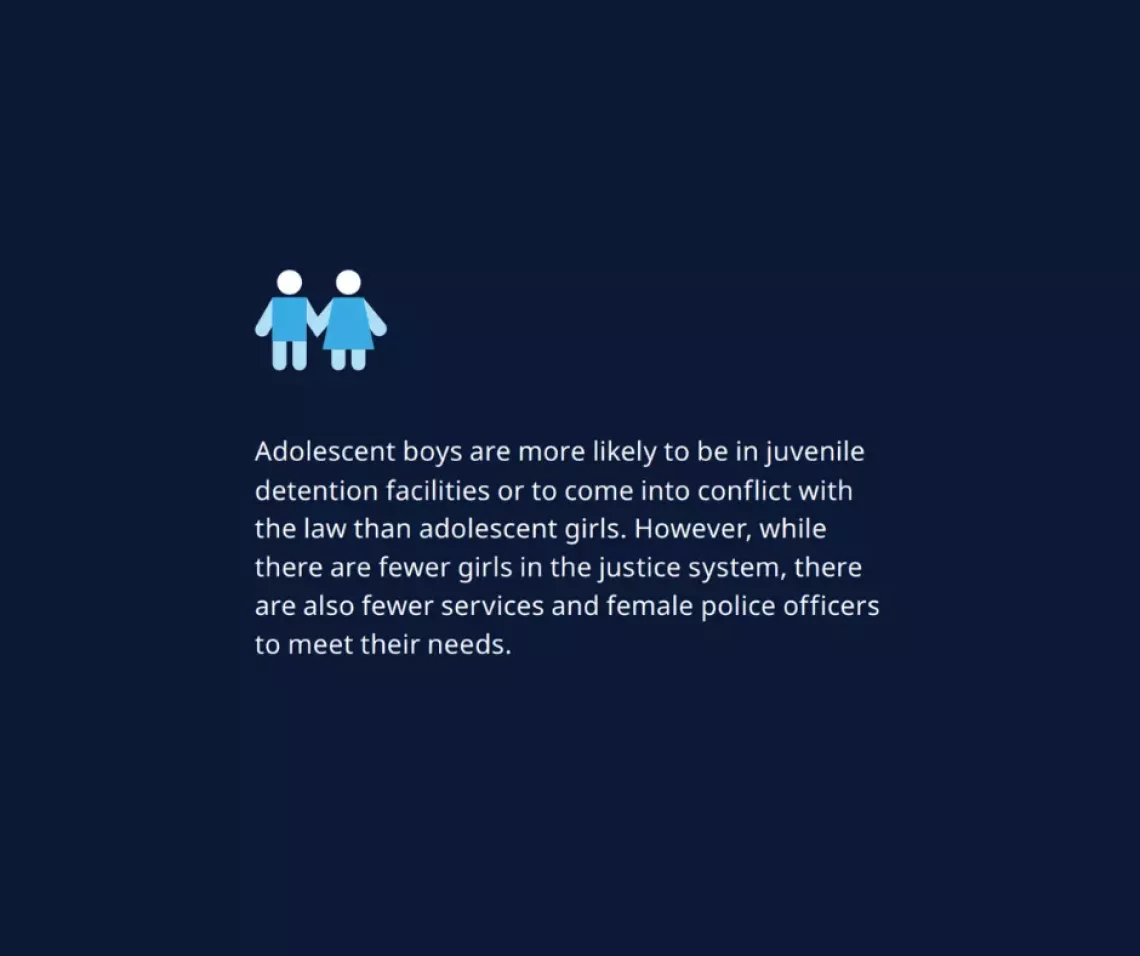
Adolescent boys are more likely to be in juvenile detention facilities or to come into conflict with the law than adolescent girls. However, while there are fewer girls in the justice system, there are also fewer services and female police officers to meet their needs.
All children under arrest or in detention are at risk of severe rights violations, including violence and even torture, with few opportunities to report these violations to authorities. Children living behind closed doors, away from their families and often without external oversight, are among the most isolated young people in society, and completely dependent on the goodwill of those in charge.
Children deprived of liberty – whether they are in residential care or detention – have few ways to speak out about or report any abuses, and gross under-reporting means that their situation is invisible. The chances of their reintegration into the community after such experiences are slim, increasing the risk that they will face sustained poverty and exclusion.
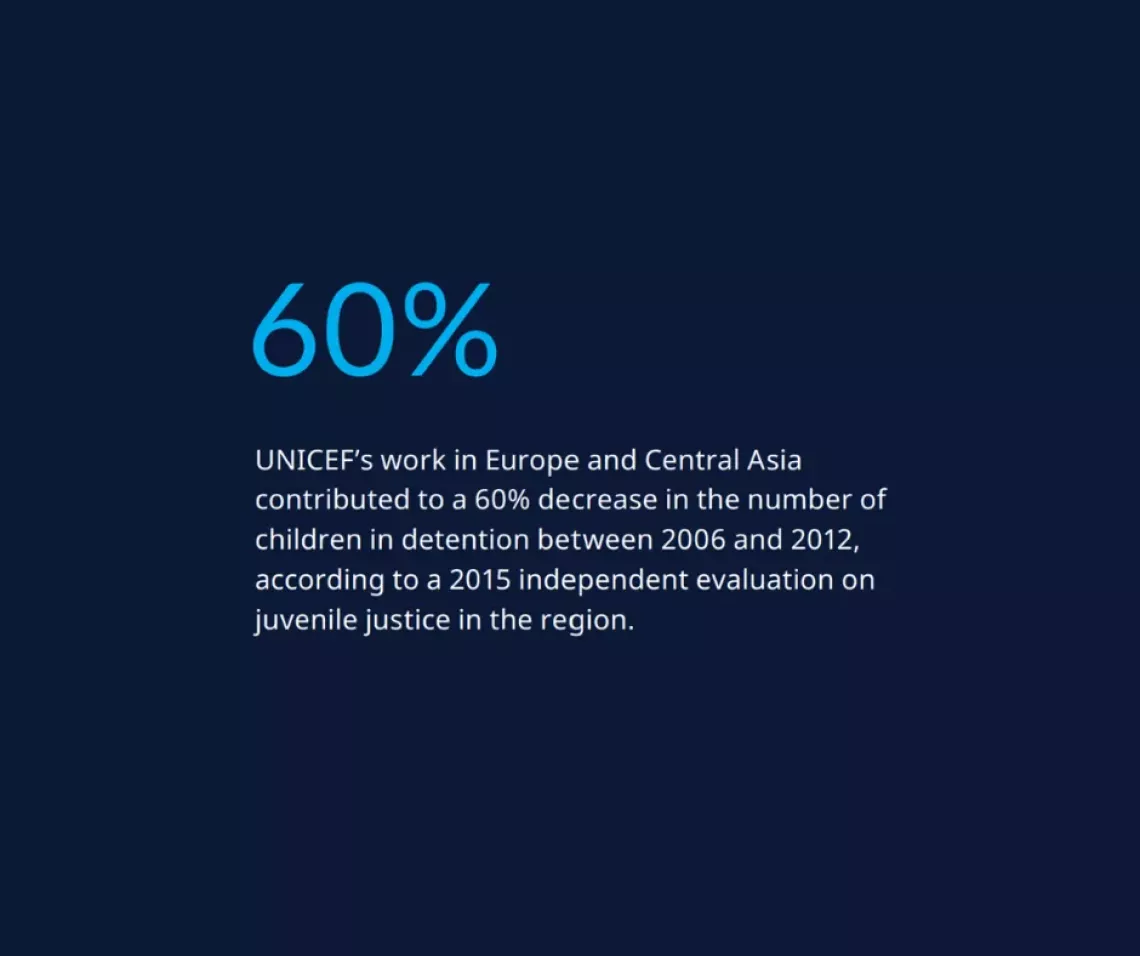
Although the total number of children in detention dropped by almost 60 per cent in 11 countries and territories across the region between 2006 and 2012, the full picture regarding child victims and child witnesses is unclear, as data systems rarely – if ever – capture their stories.
Children under the Minimum Age of Criminal Responsibility (MACR)
Children under the minimum age of criminal responsibility (MACR) have complex emotional and behavioural needs and need special support and protection. Their offending behaviour is often linked to other problems in their lives, and research shows that they often lack the maturity to understand the consequences of their actions because their ability to plan, reason and control their impulses is not yet fully developed.
These children often fall outside the criminal justice system, and are often labelled as ‘delinquent’ or ‘anti-social’. They may face punitive measures that can include deprivation of liberty in so-called ‘special’ schools, residential care or psychiatric institutions.
Children under the MACR who are exploited by criminal adults should always be seen as victims and need immediate and effective care, as well as protection from further exploitation. They are entitled to the same rights as other child victims and witnesses of crime, including access to justice.
The MACR in Europe and Central Asia is generally 14 years, which is in line with international standards. However, there are persistent challenges in addressing the needs of children under this age who are accused of crimes. UNICEF has developed guidance to help governments in the region establish a systematic response based on 10 action points. These include the responsibility of the child justice system to refer such children immediately to the social welfare system; ensuring that they are never deprived of their liberty; and supporting measures to prevent family separation, prioritizing family-based alternative care where necessary.

UNICEF’s work for children
UNICEF is the region’s leading advocate for equitable access to justice for all children whose rights are being violated. We believe that the best way to guarantee children’s access to justice is to adapt justice and social welfare systems to their rights and needs. We advocate for strong legal aid systems that ensure children and families know their rights, and that offer pathways to justice.
We support the provision of tailored responses for children accused of crimes. Our work includes support for legislative and policy reform and the development of alternatives that have helped to reduce the number of children in detention.
UNICEF’s determination to reduce the rates and length of juvenile detention has helped to narrow the equity gap in juvenile justice. Our work contributed to the 60 per cent fall in the number of children in detention between 2006 and 2012, according to a 2014 independent evaluation of progress on juvenile justice in the region.
Our support focuses, in particular, on prevention, diversion, child-friendly procedures, and alternatives to detention and the deprivation of liberty.
Prevention
Prevention is the most effective way to reduce crime rates, and benefits children, families, communities and society as a whole. We support the prevention that builds a protective environment for every child by tackling the root causes of crime, such as poverty, homelessness, domestic violence and family crises, to make crimes less likely. And we support targeted help for children and families identified as being at risk of coming into conflict with the law, as well as tailored programmes for children who are already involved
in the child justice system to prevent reoffending.
Diversion
We advocate for and support diversion measures that deal with children in conflict with the law without resorting to formal judicial proceedings or formal trials, and that include the referral of children to community-based organizations, services, programmes or activities. Such measures avoid the stigma of conviction and criminal records, reduce pre-trial detention, yield better long-term results for children and for public safety, and are cost-effective.

In Georgia, diversion is a turning point for Mariam
Mariam went into the shop to look for a birthday present for a classmate, “but nothing I could afford seemed to be good enough; she always looks perfect.” On the spur of the moment, the 16-year-old hid a bracelet under her sweater – and was caught immediately. Facing severe consequences, Mariam’s first and only contact with Georgia’s justice system was to be a turning point in her life.
That was when she first heard the term ‘diversion’. This alternative to criminal proceedings in the juvenile justice system is prioritized for children who commit offences under Georgia’s Juvenile Justice Code. UNICEF and the European Union have supported the Diversion and Mediation Programme in Georgia since its launch in 2010 and it has, to date, diverted around 5,600 children and young people from criminal proceedings.
Because it was her first offence, and because she showed deep remorse, she was enrolled in the diversion programme, where social workers helped her to understand her behaviour. Art therapy helped her with her emotional struggles, and she learned how to better navigate life’s daily challenges.
Social workers who match diverted children with activities that interest them noticed her love of reading. As a result, Mariam worked as a volunteer for a month at the Sulakauri Publishing House – a member of the Business Advisory Council for Children created by UNICEF. This gave her a sense of community membership.
“I didn’t feel like a ‘diverted child’ at all,” she says. “Every time I came to work, I felt like a member of the team.” As a result of her six months in the diversion programme, Mariam reset her priorities and learned to be more open about her feelings with friends and family. She is now studying for her university entrance exams.
“I learned that no one is immune to mistakes, and you have to take responsibility for your own mistakes,” she says. “I can now focus on my future, education, and career.”

Child-friendly legal procedures
UNICEF works with authorities across the region to adapt justice systems so they are age-appropriate and empowering for children. This work includes training professionals, such as police officers, social workers, judges and lawyers in child-friendly case management so that decisions are made in the best interests of each child. We also support investment in alternatives to intimidating court experiences, such as interventions by Ombudsman’s offices, as a way to resolve legal disputes. Our work has, for example, included the development of 12 guidelines for child-friendly legal aid for children, aimed at lawyers, paralegals and other legal practitioners who represent children in civil, criminal, administrative and restorative justice proceedings. These guidelines range from acting in a child’s best interests to keeping children safe.
Alternatives to child detention and the deprivation of liberty
Detaining children is never in their best interests, given its harmful effects on their development and reintegration. UNICEF works to end child detention through reforms that strengthen child protection services, promote non-custodial measures, and provide better post-release support.
Children should remain with their parents or caregivers while they are waiting to be charged or tried if possible, and non-custodial alternatives to post-trial detention should provide community-based options for the supervision and rehabilitation of children found guilty of a criminal offence. Potential alternatives include participation in community-based programmes, restorative justice programmes, drug or alcohol treatment, counselling or attendance at day centres. This is no ‘easy ride’: the aim is to hold children accountable, help them change their behaviour and become productive, law-abiding citizens.
Preventing the detention of refugee children in Poland
In Poland, the first 160 judges have been trained to prevent the detention of refugee children, including those who have fled from Ukraine, by the National School of Judiciary and Prosecution, with the support of the UNICEF Refugee Response Office in Poland and the Ministry of Justice. The project, launched in March 2023, includes training on alternative measures to detention for foreign minors, in line with the recommendations of the UN group on children deprived of liberty, which aims to eliminate the detention of children for migration reasons.
Almost 4,000 people have, to date, participated in the training, including prosecutors, legal advisors, court guardians and the 160 judges.
“This is an important step towards ensuring justice and protection for children with migration experience, who are among the most vulnerable groups of children” says Milena Harizanova from the UNICEF Refugee Response Office in Poland. “This project not only educates, but also builds a solid foundation for a more empathetic and understandable justice system for all children in Poland, regardless of where they come from.”
This support to the Polish justice system has been funded by donors from around the world, including the Bureau of Population, Refugees, and Migration of the U.S. Department of State.
Call to action
While the number of children in detention in Europe and Central Asia has fallen, there is a long way to go before every child has equitable access to the justice that allows them to claim their rights. While countries in the region are at different stages on this issue, those that already see juvenile detention as a last resort are well-placed to take the lead on full access to justice for all children, including those seeking justice; those involved in judicial proceedings as victims, witnesses and offenders; and those participating in civil or administrative justice processes.
With the right resources, UNICEF can do even more to support the adaptation of police and court proceedings to the needs of children, expand education on child rights, and ramp up our work on legal aid and social support for children and their families. As the leading UN agency for children working on this issue across the region, UNICEF is well-placed to help ensure
that the rights of children are upheld in justice systems across Europe and Central Asia.