Climate change and environmental education
The innovative approach of the Experiential Learning Network in North Macedonia

Highlights
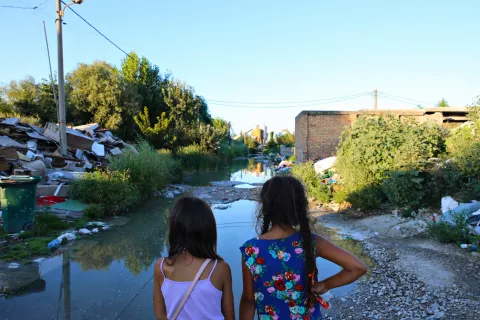
A unique climate change and environmental educational model – the Experiential Learning Network (ELN) – has been evolving in North Macedonia since 2022. The ELN was designed to respond to the educational and climate change challenges facing the country: the predominance of lecture-style teaching and theoretical learning in the classroom, and growing environmental and climate threats, including air pollution, heatwaves, floods and droughts that have a direct impact on children and young people.
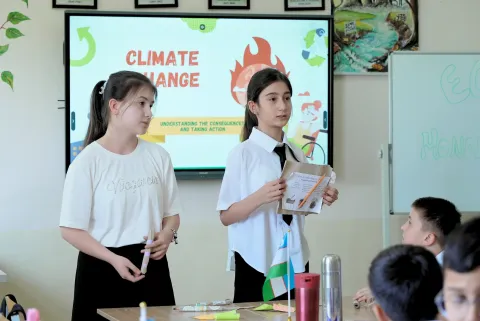
The ELN is a nationwide education programme based on strong partnerships and collaborations between education and environment authorities, environmental civil society organizations (CSOs) and schools. Leveraging the national education system as a key entry point, it offers primary and secondary school students (aged 6 to 18) opportunities to learn about the environment and climate change through a hands-on extracurricular programme.
The ELN aims to help students become better prepared for future challenges by developing ecological awareness, scientific knowledge and practical problem-solving skills. To date the ELN has reached over 7,000 students, the majority of them from small and rural communities, expanding access to experiential learning opportunities that are not always available to children beyond the country’s larger urban centres. The ELN has now become a highly regarded and sought after venue for extracurricular learning by schools across the country.
The UNICEF Country Office in North Macedonia has played a pivotal role in supporting the establishment and implementation of the ELN, working closely with the Bureau for the Development of Education (BDE)1 to ensure programme alignment with national curriculum and education standards. UNICEF has also supported the Macedonian Ecological Society, which coordinates the ELN and is a key implementation partner. The ELN itself is part of a broader UNICEF programme on environmental education, green skills development and climate action supported by the Swedish International Development Cooperation Agency (Sida).
This case study highlights the unique features of the ELN, its emerging results and the lessons learned to date, while suggesting ways forward. It draws on a desk-based review and emailbased questionnaire surveys with selected key stakeholders conducted in early 2026. In all, 30 surveys were returned and those completed in Macedonian were machine-translated into English for analysis.