Central Asian countries endorse Regional Green School Platform to advance climate-resilient education systems
- English
- русский
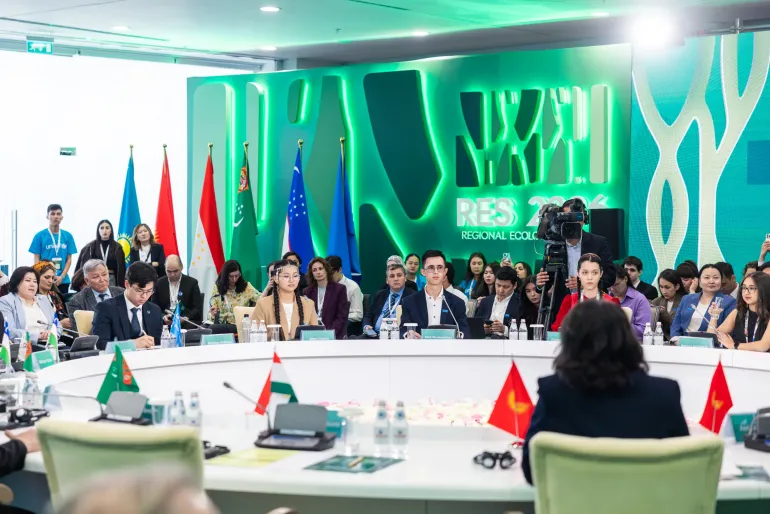
ASTANA, 23 April 2026 — Governments across Central Asia, together with international partners, today endorsed the Regional Green School Platform (RGSP) during the High-Level Session on Children, Youth and Climate at the Regional Ecological Summit (RES 2026). The RGSP is a new regional mechanism to accelerate climate-responsive education, placing children and young people at the centre of climate action.
This regionally coordinated initiative will support countries in transforming their education systems to respond to climate and environmental challenges. The platform brings together ministries, development partners and financing institutions to advance climate change education, climate-resilient and low-carbon school infrastructure, and youth-led environmental action across the region.
Convened by the Government of Kazakhstan in partnership with UNICEF, today’s session gathered ministers of ecology and education from Kazakhstan, Kyrgyzstan, Tajikistan, Turkmenistan and Uzbekistan, alongside development partners and youth representatives, to translate growing climate commitments into coordinated regional action.
Such action is urgently needed. Central Asia is one of the regions most exposed to climate risks, with children affected disproportionately. Around 23 million children in the region are exposed to multiple climate and environmental hazards, including heatwaves, air pollution, droughts and water scarcity — all of which have a direct impact on their health, well-being and access to safe, quality education.
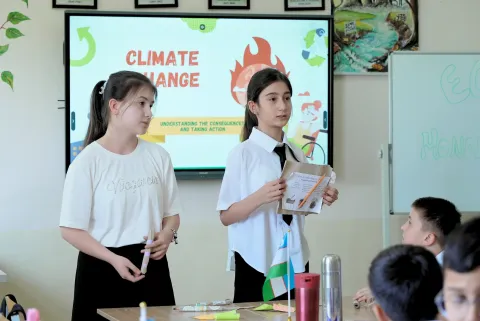
Against this backdrop, the RGSP provides a structured framework to help countries move from commitments to implementation. The platform supports the integration of climate change into education systems through three interconnected pillars: embedding climate education in curricula and teacher training; improving school infrastructure to be climate-resilient and energy-efficient; and empowering children and young people to lead climate action in their communities.
The session marked a critical milestone in regional cooperation, with countries endorsing the RGSP as a voluntary coordination mechanism aligned with national priorities and international commitments, including Nationally Determined Contributions (NDCs 3.0). The platform will facilitate knowledge exchange, policy dialogue and joint investment approaches, linking education sector reforms with climate and development financing.
Discussions highlighted the unique role of education systems not only in protecting children from climate impacts, but also in equipping them with the knowledge, skills and agency needed to drive the green transition. Ministers emphasized the need for cross-sector collaboration between education, environment and finance sectors to ensure coherent implementation at scale.
The session also featured a joint youth statement delivered by representatives from all five Central Asian countries, reinforcing the importance of youth participation in shaping climate solutions and education reforms.
“Extreme heat and other climate risks are already disrupting children’s health, learning and future opportunities across Central Asia. Addressing these challenges requires systems-level action — from climate-resilient cities and services to education systems that can both protect learning and prepare children for a rapidly changing world,” said Octavian Bivol, UNICEF Regional Director OIC for Europe and Central Asia. “The Regional Green School Platform offers a practical pathway for countries to translate commitments into action — transforming schools into safe, resilient and low-carbon environments, while empowering children and young people to lead climate solutions in their communities.”
The outcomes of the session will contribute to the RES 2026 Programme of Action and guide the next phase of regional collaboration. This will include the development of joint financing approaches and implementation frameworks to operationalize the platform.
As countries move forward, the Regional Green School Platform is set to become a cornerstone of climate-responsive education in Central Asia — ensuring that schools not only withstand the impacts of climate change but also prepare the next generation to shape a more sustainable future.
Media contacts
About UNICEF
UNICEF promotes the rights and wellbeing of every child, in everything we do. Together with our partners, we work in 190 countries and territories to translate that commitment into practical action, focusing special effort on reaching the most vulnerable and excluded children, to the benefit of all children, everywhere.
For more information about UNICEF and its work for children, visit https://www.unicef.org/eca/.