From awareness to action
Engaging youth in the green economy and climate action

Highlights
This report is based on an opinion poll conducted in 21 countries across Europe and Central Asia. It explores youth perceptions of climate action and their readiness for the green economy.
Social media is the main source of information for young people in climate change
The findings indicate that social media is the primary source of information on climate change for young people in the region. U-Report cross-country results reveal that “Social media platforms” emerged as the most popular source of information, with 68.5 per cent of respondents, followed by “Schools and higher education institutions”, with 51.1 per cent. “Television” was the third most cited source, with 30.4 per cent of respondents reporting it as their main source of information, indicating a declining reliance on TV. This data highlights the critical role of social media and educational institutions in disseminating information about climate change, as well as the significant challenge of inaccurate information regarding the impact of climate change.
Young people are unsure about ‘quick’ technological fixes for the climate crisis
Many respondents adopt a technocentric approach to addressing climate issues but are generally split about technological ‘quick’ fixes. We asked them if they agreed with the statement: “Technological fixes alone (e.g. electric cars, solar panels, energy-saving buildings, hydropower) will solve the climate crisis”. Almost a third of respondents 30.0 per cent “Strongly agree” (6.3 %) or “Agree” (23.7 %) with this statement, 40.2 per cent “Disagree” (28.6 %) or “Strongly disagree” (11.6 %), and 29.8 per cent remain undecided or neutral on this issue. This shows that more is needed to spread information and knowledge about solutions for managing the effects of climate change and promote environmentally sustainable economies and societies.
Young people do not feel their education prepares them for a green economy
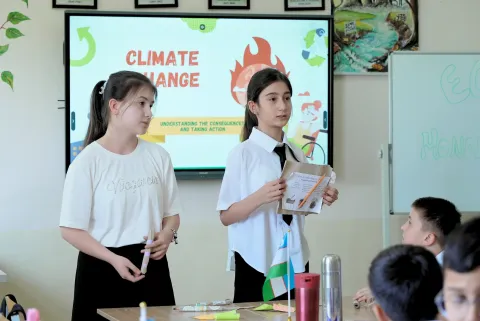
Respondents expressed concern that their education systems do not provide the necessary skills for green jobs. Just under one-in-five respondents (19.2 %) felt that their education is or was equipping them with the knowledge and skills that will prepare them for a future green economy, which is relatively low. Over one-third (38.7 %) said “Somewhat”, 31.6 per cent said “No”, with respondents feeling that their education has not provided them with the required tools and 10.5 per cent find it difficult to assess, suggesting uncertainty or a lack of awareness about green economy education.
Addressing climate change takes a multifaceted approach, but young people think government should be the most responsible for it
We asked young people who they think should be responsible for addressing climate change and preventing disasters. Nearly half (47.8 %) of respondents selected some level of government (“National governments” (29.4 %) and “Regional and local governments” (18.4 %)), and 22.0 per cent selected “International organisations (e.g. the United Nations)”, which in many cases are intergovernmental. Only 14.6 per cent selected “Business and industries”, despite the hefty impact that industrial processes have on climate change, while personal responsibility ranks slightly lower at 13.7 per cent. Environmental NGOs are considered responsible by 15.5 per cent on average. Notably, when considering all of these actors collectively, the average support increases to 58.1 per cent, reflecting a broad consensus that addressing climate change requires a multifaceted approach.
Young people feel little confidence that their government will follow through on its promises to tackle climate change
While respondents believe that governments are responsible for tackling climate change, many lack confidence that these governments will fulfil their climate commitments. Nearly two-thirds of respondents have little to no confidence that their government will follow through on its promises, with 28.0 per cent saying they were “Only a little confident” and 33.3 per cent saying they were “Not confident at all”. A mere 6.2 per cent of respondents said they were “Very confident”. One-in-five (20.3 %) said, “I don’t know what promises my government has made on climate change”.
There are not enough opportunities for young people to express their views on environmental policies and climate action
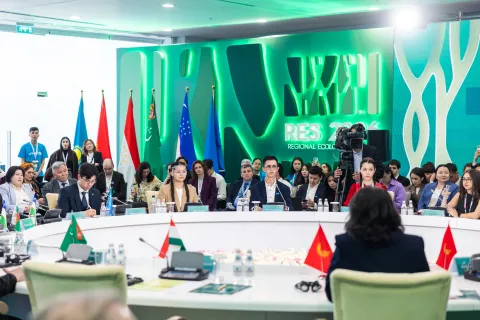
The survey results reveal a general consensus that there are insufficient opportunities for children and young people to express their views on environmental policies and climate action. Nearly half (47.7 %) of respondents said that there were “Not enough” opportunities to express their views on climate action and policies. In comparison, nearly one-in-five (19.3 %) said that they were not aware of the opportunities available for young people to express their views.
Key policy implications include enhancing communication efforts to raise youth awareness of climate policies and opportunities, establishing platforms for youth engagement in policymaking and integrating climate literacy and sustainability studies into formal education. Vocational training should align with the demands of the green economy and could focus on developing various green skills in sectors like renewable energy, sustainable agriculture and waste management. Special attention should be given to including women and girls, to adopt gender-sensitive approaches and create inclusive environments that support young women’s participation in green jobs.
Overall, this report underscores the importance of enhancing education and climate communication efforts to better equip young people for the green transition and the career opportunities it presents, while encouraging meaningful youth participation in shaping sustainable development policies. New approaches are needed to foster the human capital development of young people for a green future and green economy.