Young graduates of UNICEF entrepreneurship course win government recognition
Young entrepreneurs have critical role to play in creating jobs and economic growth in DRC

- Français
- English
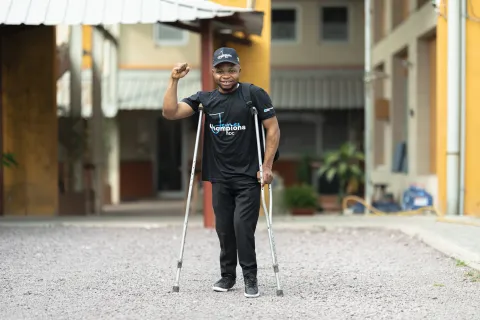
Giscard Katala, 21, has always had an entrepreneurial streak. As a child, he started a small business selling eggs from the terrace of his family home in Kananga in Kasaï. He kept his business going even as he started studying medicine at university.
In 2023, he signed up for an entrepreneurship course which got him thinking about other business possibilities. It wasn’t long before he thought about producing mayonnaise – a key ingredient of which, of course, is eggs.
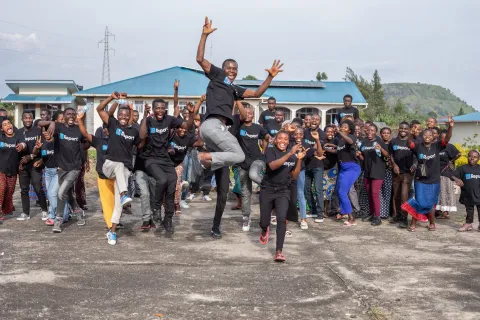
The entrepreneurship course, launched by UNICEF last year, was available in multiple languages countrywide. Because it was accessible via mobile phone and there was no need for an internet connection, this enabled more than 400,000 young people nationwide take the course. Following this, UNICEF supported nearly 1,400 young people across DRC, including Katala, with training and coaching.
Katala’s “Mayonnaise bio” produced by this firm “KTL (KaTaLa)” comes in two varieties – original and spicy – with the spicy version containing the special chili peppers grown in the Kasaï region. It’s now available for sale in local markets. Katala has a team of 15 young employees working for him and being able to generate jobs for unemployed young people is something that brings him great pride.
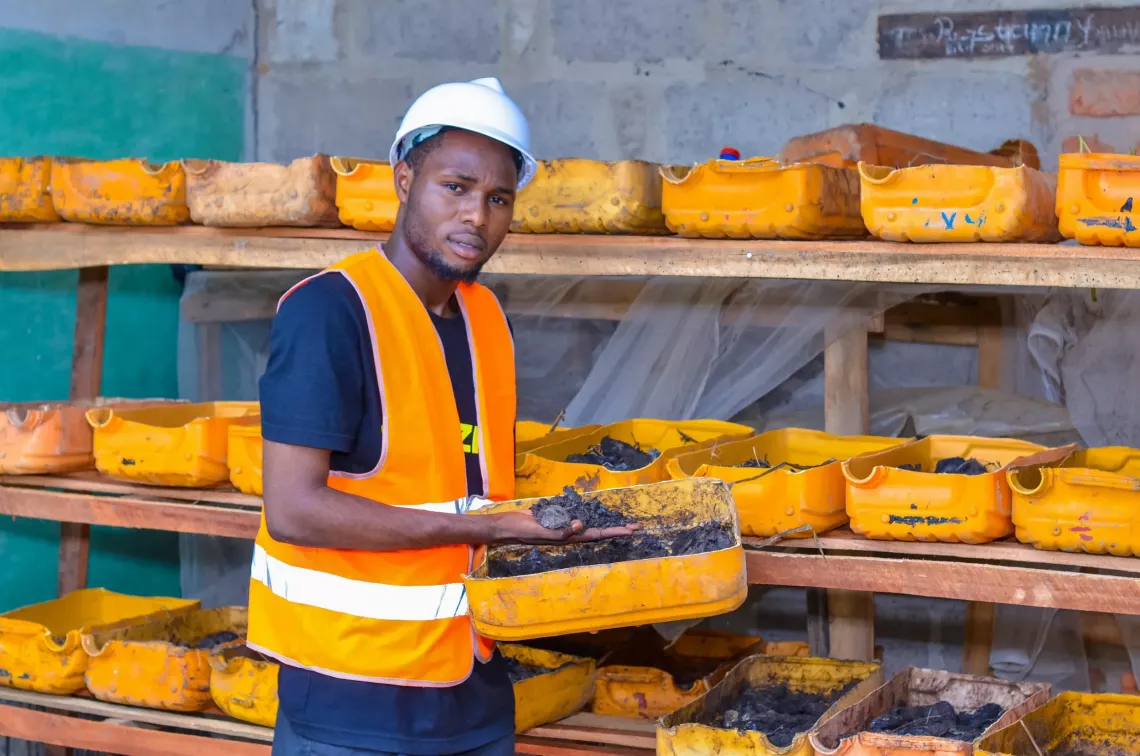
While Katala was working on his mayonnaise, 23-year-old Héritier Masambila, a third-year student at the Faculty of Agronomy at Kananga University (UNIKAN) was working on his own idea (Masambila also followed the UNICEF course and got UNICEF technical support).
Masambila was similarly inspired to start a business after encountering challenges while working on his own side hustle: raising chickens for sale. He realized that the poultry feed used by breeders in Kasaï was very expensive because it was imported. It struck him that he should manufacture his own poultry feed. UNICEF’s entrepreneurship course also gave him some of the tools he needed to launch a business. He and his team developed a feed made from organic scraps found locally. This makes it cheaper than imported brands and has the added benefit of contributing to waste collection and keeping the environment clean. The company’s name is “Bio Africa.” An additional bonus for Héritier is that his business allows him to put into practice what he is learning during his academic studies.
Based in Kanaga, both Katala and Masambila believe there are certain challenges that make starting a business more difficult outside the nation’s capital including securing secure financing, getting proper training and mentorship, gaining visibility by attending business conferences and securing high-level meetings with key officials. Neither young man has let these challenges stop them.
Earlier this year, they both took part in an online competition organized by the Ministry of Youth to mark International Youth Day on 12 August. Nearly 10,000 young people, aged between 18 and 35, entered by sharing a one-minute video pitching their businesses. Katala and Masambila were among the 20 entrepreneurs who were selected to receive financial support for their projects.
“The training with UNICEF taught me how to present my project well and I’ve won several entrepreneurship competitions,” Katala explains. “It also helped me and my team to improve the quality of our service and our packaging.”
Masambila also found the course useful.
“I now know how to better manage my team,” he says. “My presentation skills have improved, and I can really sell the importance of my business.”
Last month, 20 winners were invited to Kinshasa to meet with the Minister for Youth Noëlla Ayeganagato Nakwipone. The winners will receive financial support and benefit from being connected with the ministries relevant to their business fields.
Both Katala and Masambila have got big plans for how to invest the funds. Katala is seeking to broaden his distribution and get into other markets outside Kananga. Masambila plans to construct a building for his livestock plus buy industrial machinery with the aim of eventually becoming the go-to supplier of animal feed in DRC.