On Earth Day, learn how UNICEF’s child reporters are advocating for better protection of our planet
Children speak up about the vital need to preserve DR Congo’s unique rainforest
- Français
- English
Deep in the heart of the Congo Basin – a vast area that spans six countries including the Democratic Republic of the Congo (DRC) and that is home to Africa’s largest rainforest – indigenous communities have lived in harmony with nature for generations. For them, the forest is more than just a home: it’s a source of food, water, medicine, and essential materials for daily life.
But today that balance is under threat. Rampant deforestation, climate change and biodiversity loss are putting this vital ecosystem — and the future of millions of children around the world — in serious jeopardy.
The Congo Basin, the world’s second-largest tropical rainforest after the Amazon, plays a crucial role in regulating the global climate. Every year, its trees absorb millions of tonnes of carbon, helping to slow the pace of global warming.


Yet the DRC is among the top ten countries with the highest deforestation rates. Vast stretches of forest are lost each year, mainly due to agriculture and the production of charcoal — a key energy source for many families, but one that comes at a heavy cost to the environment.
In the face of this growing threat, children are sounding the alarm about the urgent need to protect the forest. In Mbandaka, the capital of Equateur province, a group of child reporters trained by UNICEF is using radio, video, and field reports to educate fellow citizens and spread a simple but critical message: we must act now, before it’s too late.
“One tree gives us so much: it cools us with its shade, gives us oxygen, protects the soil from erosion, feeds us with its fruit, and shelters so many animals,” explains 15-year-old Maguy Kilima on the airwaves of Radio Zoé.

She warns listeners about the dangers of deforestation and encourages people to plant more trees to fight erosion and prevent the floods that now hit the city every rainy season.
“We need to act fast to stop the erosion that’s already destroying neighbourhoods and to prevent flooding during every rainy season,” says Maguy.
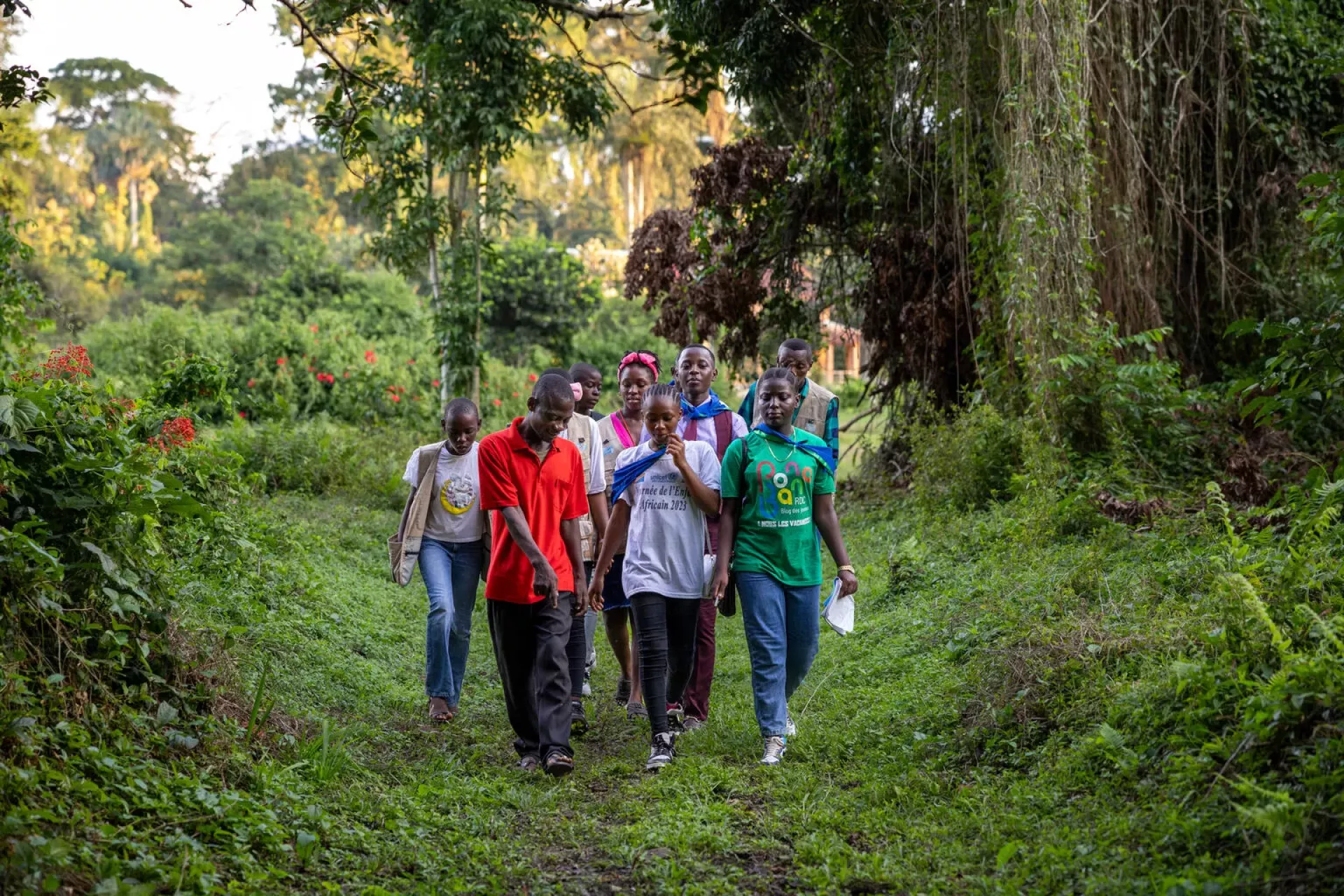
A few hours before their radio show, Maguy and her fellow child reporters travelled to Bongonde, a village where the indigenous Twa community lives. Their goal: to learn more about the deep connection between local populations and the forest.


In Bongonde, the child reporters arrive with smartphones and microphones in hand ready to learn from the Twa teens keen to share their ancestral knowledge. They exchange stories and experiences.
Three young Twa immediately offer to demonstrate their daily forest activities. Messala, 15, mimics the motions of traditional river fishing. Bolias, 16, shows how to craft a fishing hook. Yako, 14, impresses everyone by making a bow in seconds.
“They’ve maintained their tradition of living in harmony with nature,” says Israël, one of the child reporters.

But this harmony is growing increasingly fragile. As cities like Mbandaka expand, forest areas continue to shrink, forcing indigenous communities to gradually abandon their traditional lifestyles.
“When I was a child, I used to hunt and forage,” recalls a Twa man, gesturing toward the fields where he grows cassava, rice, and vegetables — signs of necessary adaptation. “Now we clear forest land to farm,” he adds, with a trace of sorrow in his voice.
The forests of the Congo Basin are vital for the well-being of future generations. Earth Day celebrated every year on 22 April, serves as a powerful reminder of the importance of the planet – down to every individual tree – of the urgent need for action.
“We must act fast,” repeats Maguy. Before it’s too late.