Supporting Ebola patients and their families
Since the beginning of the Ebola epidemic, UNICEF has trained more than 1,100 psychologists and psychosocial workers.
- Français
- English

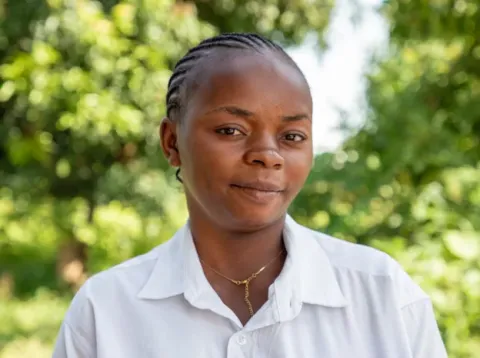
“My role is to provide support to the sick and their families”, says Jules Barthélemy Nganza, team leader and psychosocial assistant at the Ebola treatment centre in Butembo, eastern Democratic Republic of Congo (DRC). “Most patients are very anxious when they arrive,” explains Jules noting that many people continue to think of treatment centres as places where one goes to die.
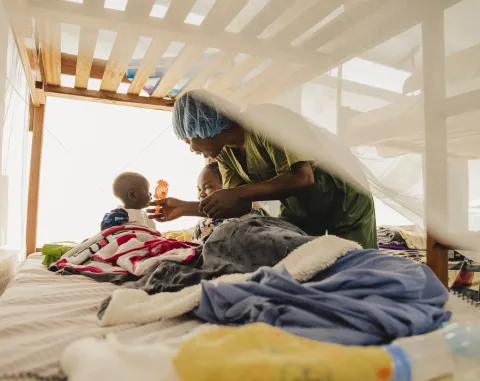
As soon as a patient is admitted, UNICEF-supported psychosocial teams intervene to explain every stage of a patients care. Patients who are admitted do not yet know if they are actually infected with the disease, the majority being suspected Ebola cases.

In order to confirm the diagnosis, a blood sample is immediately taken for testing. "We prepare them for all the possible results of the blood test," continues Jules, who is aware that waiting for the results is very difficult and stressful. "If the test is negative, a second sample is taken and if it is still negative then the patient is considered as a non-case," explains Jules.

When a sample tests positive, medical care begins immediately. Psychosocial support is particularly important because "Ebola can kill several family members at the same time," says Jules. Since the beginning of the epidemic, more than 3,100 people have been infected with the disease - just as many have been supported by the psychosocial teams.

The difficult task of telling families and friends about the death of a patient also falls on Jules and his team. Jules supports them through the initial stages of grief, being present when they view the body and explaining the steps that follow.

The Ebola virus can be transmitted by touching the bodies of people who have died from the disease. Psychologists and psychosocial workers discuss with the grieving families, explain that they cannot handle the remains and that burials must be carried out by specialized teams.
Since the beginning of the epidemic, UNICEF has trained and deployed more than 1,100 psychologists and psychosocial workers to meet the needs of affected children and families and to break down resistance within communities.
"Ebola disease is particularly traumatic," says Jules.
UNICEF’s response to the Ebola epidemic is supported by the World Bank, the European Commission – European Civil Protection and Humanitarian Aid Operations, Gavi - the Vaccine Alliance, the United States Agency for International Development, the Central Emergency Response Fund and the Government of Japan. UNICEF is also supported by the German Committee for UNICEF, the World Bank Group’s Pandemic Emergency Financing Facility, the United Kingdom and the Paul G. Allen Family Foundation.