Mobile teams step up efforts to stop mpox
In Goma, vaccination efforts are being scaled up to protect children and vulnerable communities from the spread of the disease

- Français
- English
At the former Baraka displacement site, silence has replaced the noise of daily life. Where once there were thousands of makeshift tents, filled with the chatter of children and the clatter of cooking pots, only empty space remains.
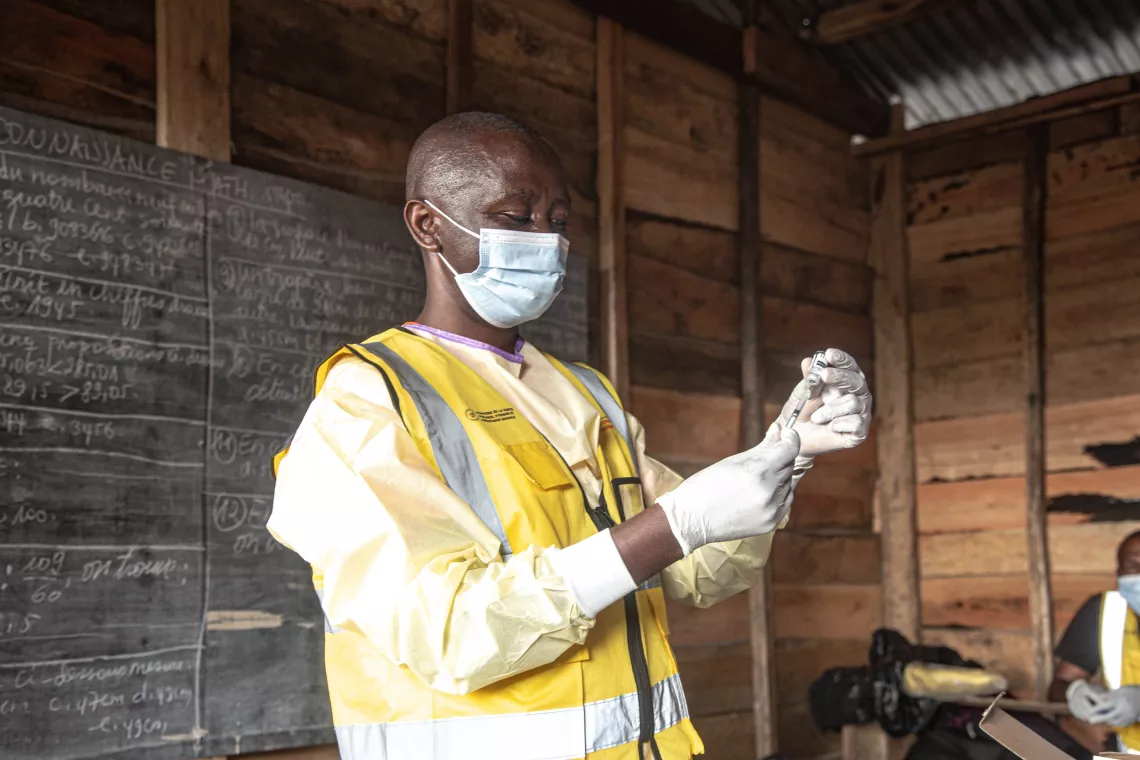
It’s through this dusty landscape that Pascal Kwizera, a vaccinator, walks with a colleague early in the morning. Their destination today: Kabingo Primary School, where a 6-year-old boy, Raphaël, was recently diagnosed with mpox.
“There was a confirmed case among the students, so we’re vaccinating all children between 12 and 17 who may have been in close contact” with him, explains Pascal as he pulls on his protective gear.
A few weeks ago, the intensification of armed clashes and the dismantling of sites for displaced people led to massive new displacements. While some families have returned to their villages, others are staying with relatives in Goma.
“Patients left the treatment centres where they were being cared for and returned to their home villages or to the community here in Goma,” adds Pascal.
These massive movements of people have increased the risk of mpox spreading. Since the beginning of the year, over 3,300 suspected mpox cases have been recorded in North Kivu province.
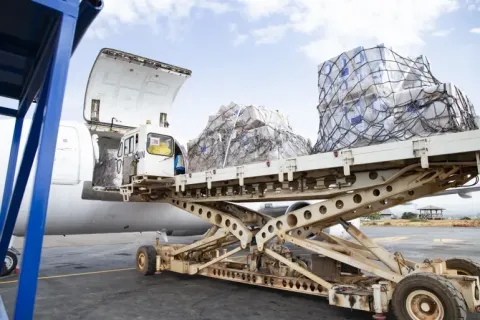
To respond quickly, UNICEF has helped deploy 12 mobile vaccination teams in Goma’s hardest-hit areas. Every day, Pascal helps vaccinate between 60 and 80 people.
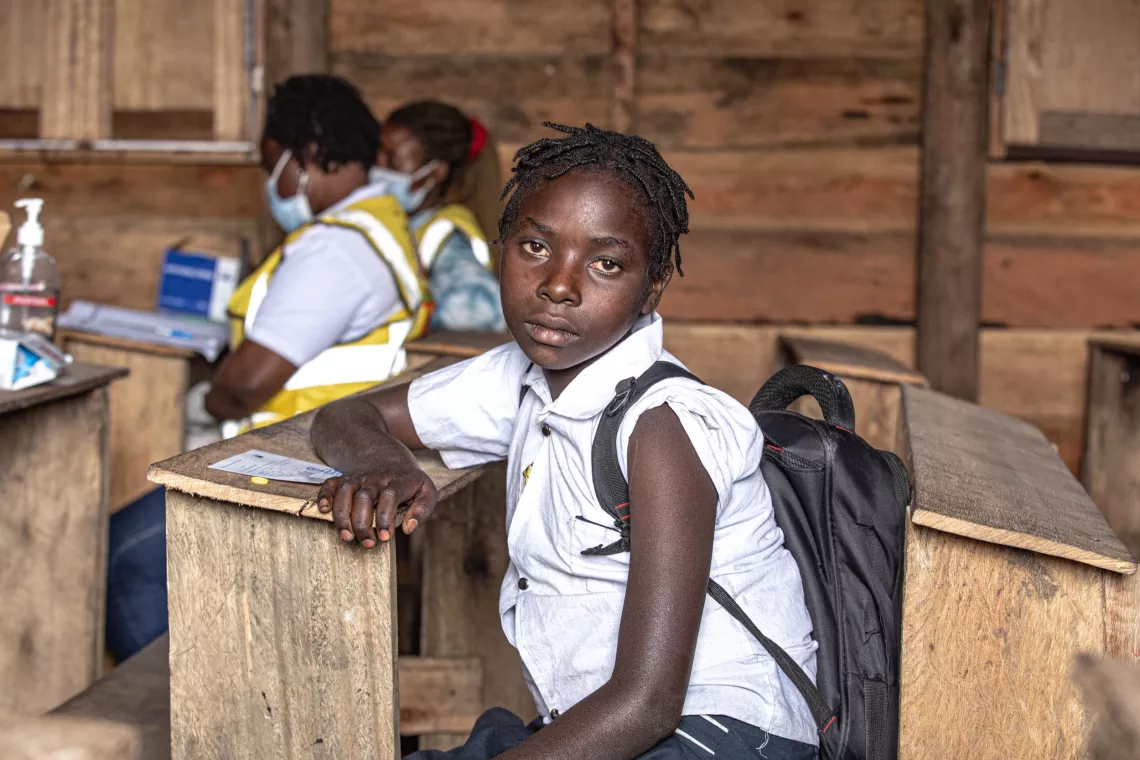
At Kabingo Primary School, a classroom has been turned into a vaccination site for the day. One by one, students line up to get vaccinated. Viviane, age 12, is among the first.
“I got the vaccine because one of my classmates is sick,” she says. “I want to protect myself,”
Viviane was vaccinated by Pascal, but the effort involves an entire team. Alongside the vaccinator, a community mobilizer provides key information to students, a local community liaison helps facilitate the process, and several others contribute to ensuring everything runs smoothly.

Outside the classroom, Viviane joins her friends Esther and Daniel—both also vaccinated.
“The vaccine protects us from mpox, which is a dangerous disease,” Esther says confidently.
Daniel, who was a bit hesitant at first, smiles and holds up his vaccination card. “It barely hurt at all” he exclaims. “I’m telling my friends to get vaccinated too.”
The vital work of these community-based mobile teams and the capacity that has been built for the mpox response and future outbreaks of this disease, is made possible thanks to support from Gavi, the Vaccine Alliance, the Mastercard Foundation, the UK’s Foreign, Commonwealth and Development Office (FCDO), and the European Union.


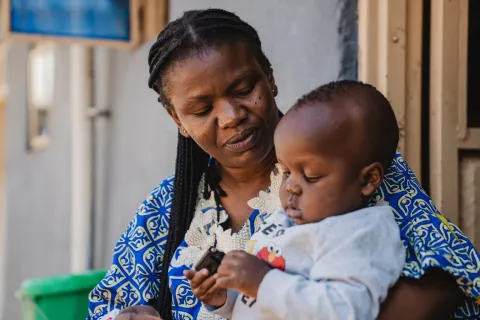
Behind every case is a story—and a family. Sauda Houseni, Raphaël’s mother, shares hers.
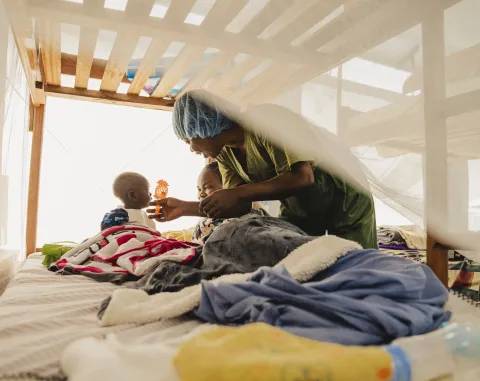
“My son Raphaël, who’s six, was the one who got sick. At first, he had bumps on his skin. When things got worse, I took him to the hospital. He was in a lot of pain and had a high fever, but little by little, he recovered.”
Fortunately, none of Raphaël’s five siblings were infected. Having experienced the fear of the disease firsthand, Sauda is now a strong advocate for vaccination in her community.
“I didn’t take it seriously before,” she admits. “But now, I understand how dangerous the disease is—and how important the vaccine is.”