Ebola: the use of dialogue as a means of raising awareness
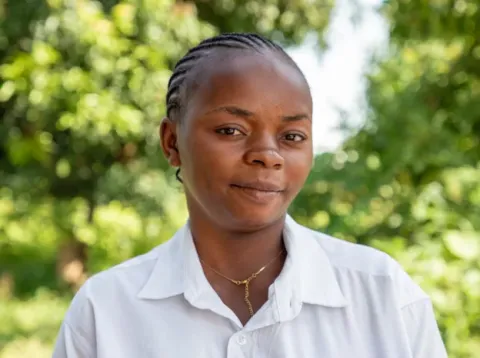
Mwamini survived from the virus and with her testimony she contributes to raise the awareness in her community.

- Français
- English
For nearly four months eastern Democratic Republic of the Congo has been dealing with an Ebola outbreak. Informing populations about the viral disease, prevention measures and treatment options is crucial to stop the spread of the epidemic that has already claimed 212 lives. “For those who don’t believe in the illness, I can confirm that Ebola exists,” says Maman Mwamini, nurse at the Ebola Treatment Centre (ETC), at a major public meeting organised in the city of Beni.
“I am not ashamed to testify that I was infected with the Ebola virus”
Maman Mwamini explains that she was infected along with three colleagues while they were treating a patient, without suspecting for a minute that he was infected with the disease. Soon afterwards, Maman Mwamini began to show symptoms similar to those of Ebola and went immediately to the Ebola Treatment Centre. One of her colleagues was frightened and preferred running away to hide for several days. By the time he finally decided to go to the treatment centre, it was unfortunately too late.
”I knew him very well and I was very upset when he died,” says Maman Mwamini sadly. When she learnt of her colleague’s death, Maman Mwamini was in isolation at the treatment centre. It wasn’t easy. I would often think about my husband and children and at first I was disheartened because I was seeing death in front of me,” continues Maman Mwamini. Happily, thanks to the treatment she received on site and psychosocial assistance the nurse has quickly regained her strength and courage.
“If you hide yourself away when you get the disease you won’t survive for long. You shouldn’t be afraid when you have Ebola virus symptoms” says the nurse encouragingly.
In the affected zones, many people still fear the disease. Maman Mwamini is living proof that it is possible to survive Ebola. By testifying and participating in awareness raising activities, the nurse tries to reassure the population about the care provided to hospitalised patients in the treatment centres. “Don’t believe rumours,” says Maman Mwamini in conclusion.
UNICEF’s response to the Ebola epidemic is supported by the World Bank Pandemic Emergency Financing Facility, the European Commission – European Civil Protection and Humanitarian Aid Operations, the Vaccine Alliance, the United States Agency for International Development, the Central Emergency Response Fund and the Government of Japan. UNICEF is also supported by the German Committee for UNICEF.