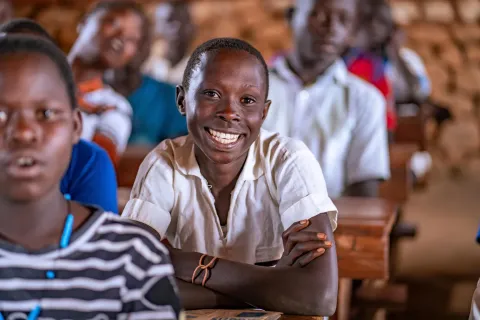
Grave consequences for children in eastern DRC after armed groups displace populations of two towns
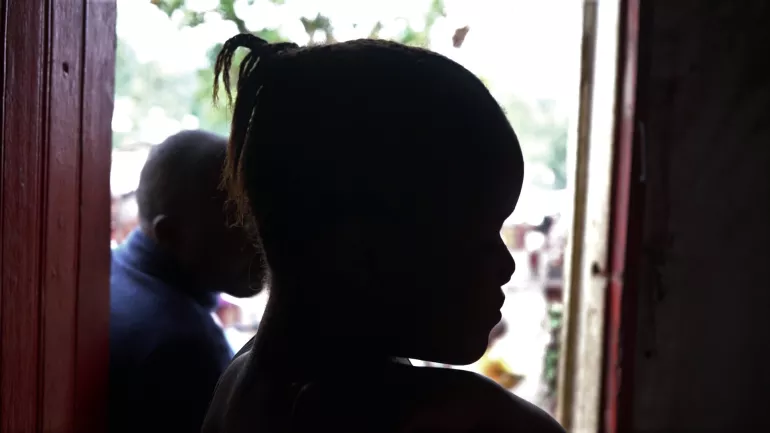
The plight of 12-year-old Grace*, who witnessed a decapitation, typifies the suffering of young people
- Français
- English
BUNIA, 24 JUNE 2021 - The populations of two small towns in the east of the Democratic Republic of the Congo (DRC) have been forced to flee their homes as violence by armed groups in the region continues to exact a grave toll on children and families, UNICEF has warned.
The recent attacks on the towns of Boga and Tchabi in Ituri Province have been devastating for children, many of whom witnessed brutal acts of violence by assailants using machetes and heavy weapons.
UNICEF is appealing for urgent resources to help the thousands of people forced to flee the two towns between May and June 2021.
In total, it is estimated that more than three million children have been displaced in the east of the country, with many separated from their families amid the chaos.
Grace*, 12, typifies the recent suffering of children. The orphan arrived unaccompanied at a camp in Bunia, capital of Ituri province, in early June after she was separated from her grandmother during the attack in her hometown of Boga.
“I was watching television in our house in the middle of the night when the gunmen attacked at four in the morning,” she said.
“They were firing bullets everywhere and everyone took different paths to flee. As I fled, I saw a mother whose head had been cut off.
“I ask the world not to ignore the appalling violence that is going on here. We must do all we can to get rid of people who kill innocent civilians.”
Grace managed to find a vehicle that was taking displaced people from Boga to Bunia, a journey of more than 100km. Efforts are being made by UNICEF and its partners to reunite her with her grandmother after the pair were separated amid the panic of the attack.
She is now being cared for by a foster mother in a crowded shelter in one of Bunia’s two main camps, with a combined population of more than 20,000 displaced people.
Similar attacks by fighters using machetes and heavy weapons in the east have forced whole communities to flee with only the barest of possessions. There have been reports of entire families - including children - hacked to death. Health centres and schools have been ransacked, and whole villages set ablaze.
The simultaneous attacks on Boga and Tchabi forced about 90 per cent of the population to flee the Boga area, with displaced people seeking sanctuary north, south and east of the town.
“It is estimated that about 30,000 people have fled their homes in the recent displacements, including more than 9,500 in Bunia,” said UNICEF Bunia Chief Field Officer Dr. Ibrahim Cisse.
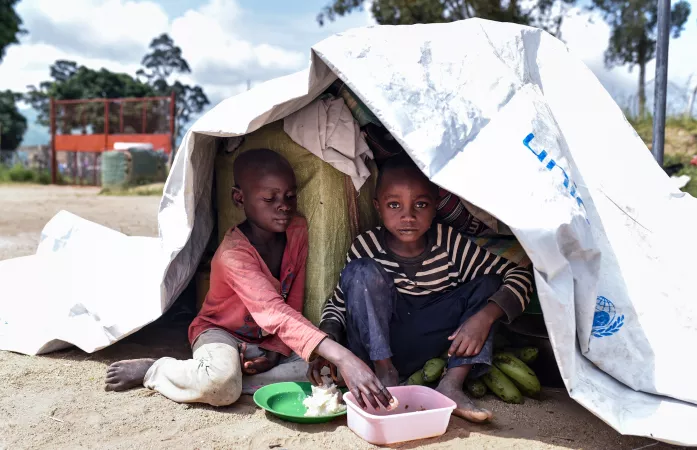
Most of those displaced do not live in camps but stay with friends and relatives in the host community. They have enormous humanitarian needs, particularly for food, Essential Household Items (EHI) and other non-food items (NFI).
UNICEF through its Rapid Response Programme is working closely with its humanitarian partners – distributing thousands of household essentials, sanitary and hygiene kits in addition to providing tarpaulins to more than 4,000 households.
Dr. Cisse said there was little likelihood of displaced people being able to return to their homes despite Congolese military operations to eliminate armed groups active in the Boga area.
UNICEF is urgently appealing for resources to assist newly displaced people, most of them children and women, who have been subjected to serious human rights violations including rape. The UN’s Humanitarian Response Plan is only about 35 per cent funded.
UNICEF’s priorities include working to reunite children separated from their families and recruited into armed groups, along with providing increased access for displaced people to basic daily necessities including healthcare, nutrition, drinking water and education.
A UNICEF report published earlier this year called for an end to the conflict which has caused one of the world’s worst humanitarian crises, driving 1.6 million people from their homes in the first six months of 2020 alone. UN figures show that there are currently 5.2 million displaced people in the DRC, more than in any country except Syria.
In the most violence-afflicted provinces of Ituri, North Kivu, South Kivu and Tanganyika, more than eight million people are acutely food insecure.
*Not her real name
Media contacts
Additional resources
About UNICEF
UNICEF promotes the rights and wellbeing of every child, in everything we do. Together with our partners, we work in 190 countries and territories to translate that commitment into practical action, focusing special effort on reaching the most vulnerable and excluded children, to the benefit of all children, everywhere.
Follow UNICEF DRC on Twitter and Facebook