

Pathways: Digital Competency Framework for Educators in Sub-Saharan Africa
UNICEF’s digital competency framework for educators in sub-Saharan Africa
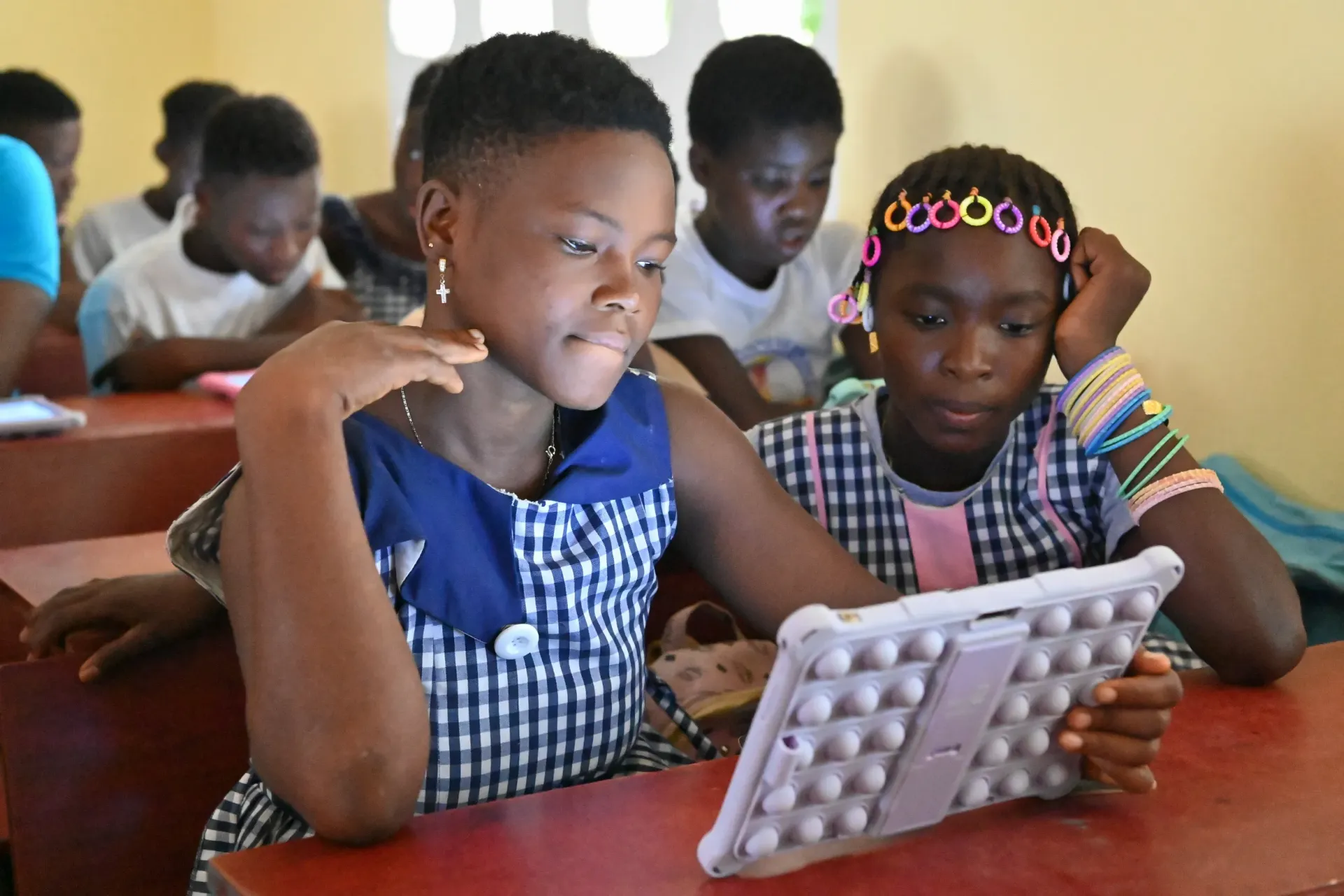
Across sub-Saharan Africa, educators are increasingly expected to use digital tools to support teaching and learning. Yet many work in contexts where access to devices, electricity, connectivity, training and technical support is limited or unreliable. Global digital competency frameworks often assume conditions that don’t reflect these realities, making them difficult to apply in practice.
Pathways is UNICEF’s digital competency framework for educators in sub-Saharan Africa, designed specifically to address this gap by focusing on low-resource, offline, low-connectivity, and infrastructure-constrained settings.
A framework built for real contexts
Rather than presenting a long or abstract list of skills, Pathways breaks digital competence into small, achievable steps. These steps are organised across clearly defined roles that together enable digital teaching and learning, including:
- Teachers
- Facilitators working in non-formal or humanitarian settings
- School leaders
- Local education officers
- ICT technicians supporting learning environments
The framework recognises that these roles have different responsibilities, access to technology, and training needs—and that effective digital education depends on all of them.
Modular, flexible, and practitioner-centred
Pathways is not intended to be used as a single, fixed framework. Instead, it functions as a modular toolkit. Users select and combine only the domains, competencies, and proficiency levels that are relevant to their goals, priorities, and available resources.
Each competency is concise and practitioner-centred, with clear progression levels that emphasise practical capability over technical mastery. This makes it easier to:
- Align expectations with what is realistically achievable
- Target training and support where it is most needed
- Track progress in meaningful, manageable ways
By focusing on what is essential and achievable now, Pathways supports steady progress rather than delaying action in pursuit of ideal conditions.
Who is Pathways for?
Pathways is designed to be useful at any level of the education system, from national to local.
It can be used by:
- Ministries of Education and other decision-makers shaping national or sub-national teacher development strategies
- UNICEF Country Offices designing or supporting education programmes
- Implementing partners planning training, coaching, or blended professional development
- Educators and local education officers reflecting on their own practice and development needs
In all cases, Pathways supports the creation of customised pathways that reflect local infrastructure, priorities and realities.
How Pathways can be used
Organisations and teams can use Pathways to:
- Work with Ministries to identify and prioritise relevant digital competencies for different education roles at national level
- Shape teacher training, coaching or blended delivery models within programmes
- Support partners to design digital skills training that is realistic for low-resource contexts
- Assess current skills for a cohort of educators and track development over time
What comes next
Pathways 1.0 is ready to use. Over time, it will be supported by additional resources, including training content, monitoring and evaluation tools, and AI-supported guidance to help users build and use customised pathways
Together, these elements aim to support educators across sub-Saharan Africa to develop the digital competencies they need - using the tools that are actually available - to strengthen teaching and learning for every child.