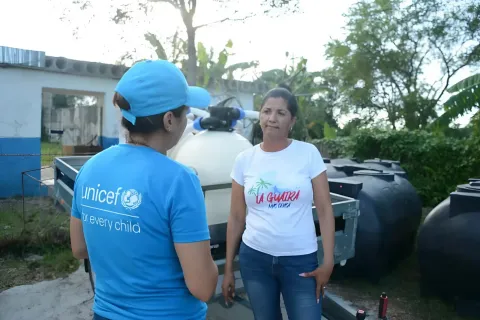
The traces of a fire in a city’s life
The funds provided by the Government of Canada enabled the purchase of medical supplies and medicine kits to support the health system in Matanzas, a city affected by the fire at the supertanker base.

- Español
- English
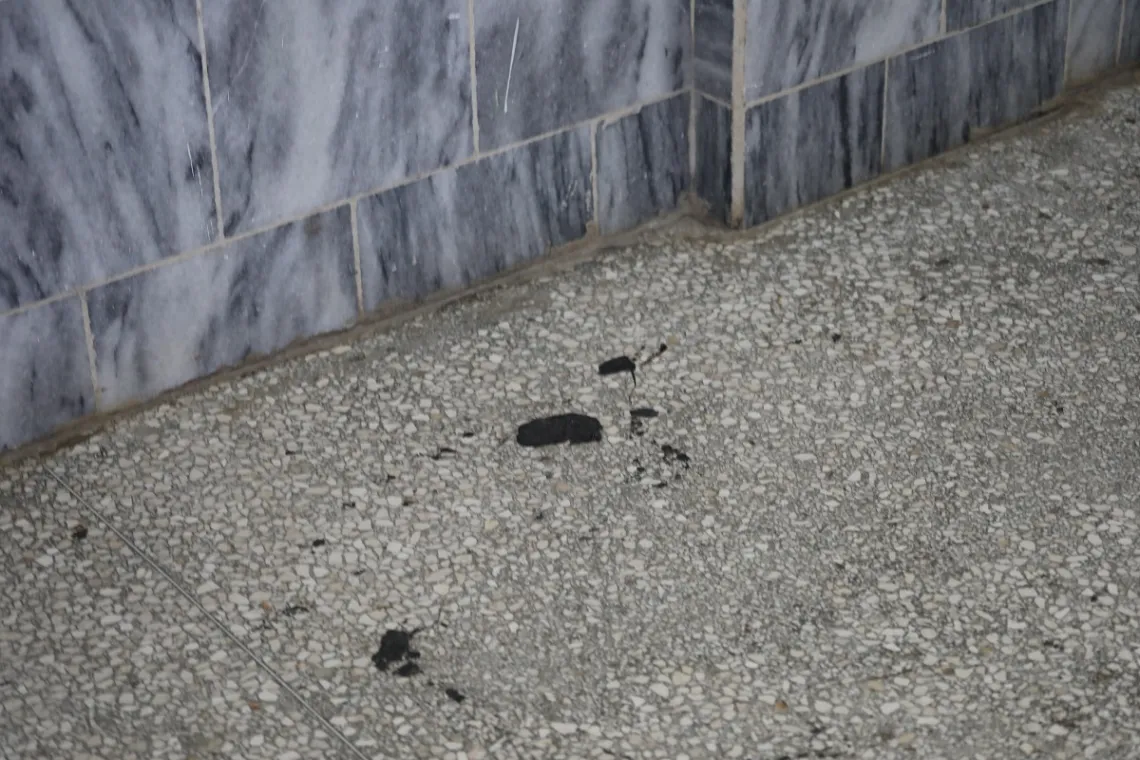
The entrance corridor to the emergency unit of the provincial hospital “Faustino Pérez”, in Matanzas, still shows the soul-stirring traces of asphalt, left by the firefighters’ boots. On the night of August 5, 2022, dozens of people passed through that corridor, most of them injured by the explosion at the supertanker base. That incident changed, forever, the life of a city and also the life of Dr. Ana Maria Carballo, a second-year resident in the specialty of Aesthetic Surgery and Traumatology. On that fateful night, she was on duty in the burn ward. “It was a very hard moment,” she recalls.
A lightning strike hit the dome of tank 52, in the industrial zone of Matanzas, which stored 26,000 cubic meters of oil. The fire caused the tank to explode and the fire subsequently spread to three other tanks, also loaded with fuel. The incident caused the deaths of 17 people and injured 146 others.
The injured were immediately taken, in different types of transport, to the “Faustino Perez” hospital. “We received, in less than half an hour, more than 50 injured people. We organized several emergency rooms to begin providing medical care to all of them. I had to classify the patients’ burns into mild, severe and very severe”, recalls Ana María.
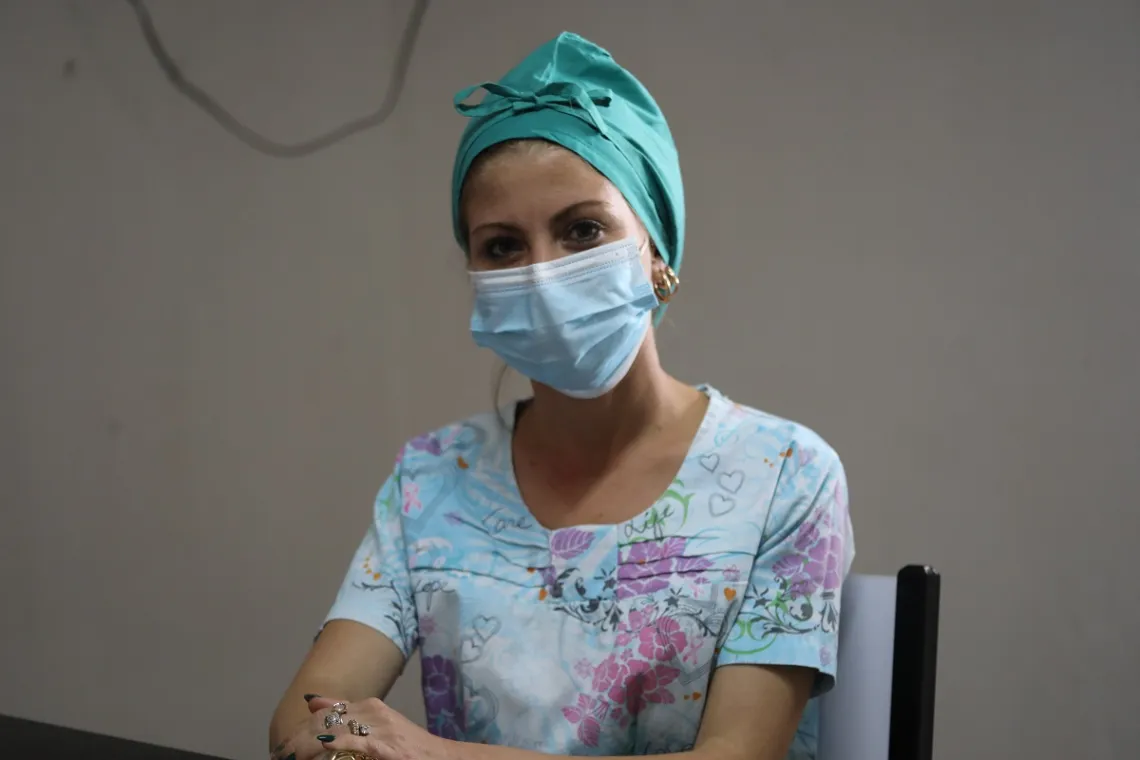
“The whole hospital mobilized. We were shocked. There were young people and adults, crying, screaming for their relatives. We had to find the strength to get to work and help everyone. Those were difficult days, with a lot of work, and also with sadness when we heard the news about the bodies of the firefighters who were stuck at the site of the accident,” the doctor tells us.
In the burn ward, Ana María recalls, there were also traces of asphalt, from the boots of the firefighters and the personnel who worked in rescuing the wounded. Those footprints are no longer there; but those in the emergency corridor remain, as a sad reminder of the worst fire in the history of Cuba and, above all, the unseen traces remain. These are the ones that have marked a city unable to forget the days when a huge column of black smoke rose over its imposing bay.
Support to the health system in Matanzas by the Government of Canada
International support for this emergency situation was immediate. UNICEF Cuba, with funds provided by the Government of Canada, purchased medical supplies such as trocars, catheters and medicine kits that were distributed throughout the hospital network, with priority given to pediatric and maternal and child hospitals. These kits supported the health care provided to approximately 11,000 people, particularly women and children. In addition, another 2,000 people benefited from emergency medical supplies.
The assistance of the Government of Canada in this emergency situation was very important, because it took place in a complex socioeconomic context in Cuba, marked by the impact of the COVID-19 pandemic. Under these conditions, the National Health System saw its capacity to acquire and replenish supplies, medical supplies and essential medicines reduced.