Three Water Treatment Plants Bring Safe Water to Communities Affected by Hurricane Melissa
The water treatment plants have the capacity to produce safe water for 21,000 people every day.
- Español
- English
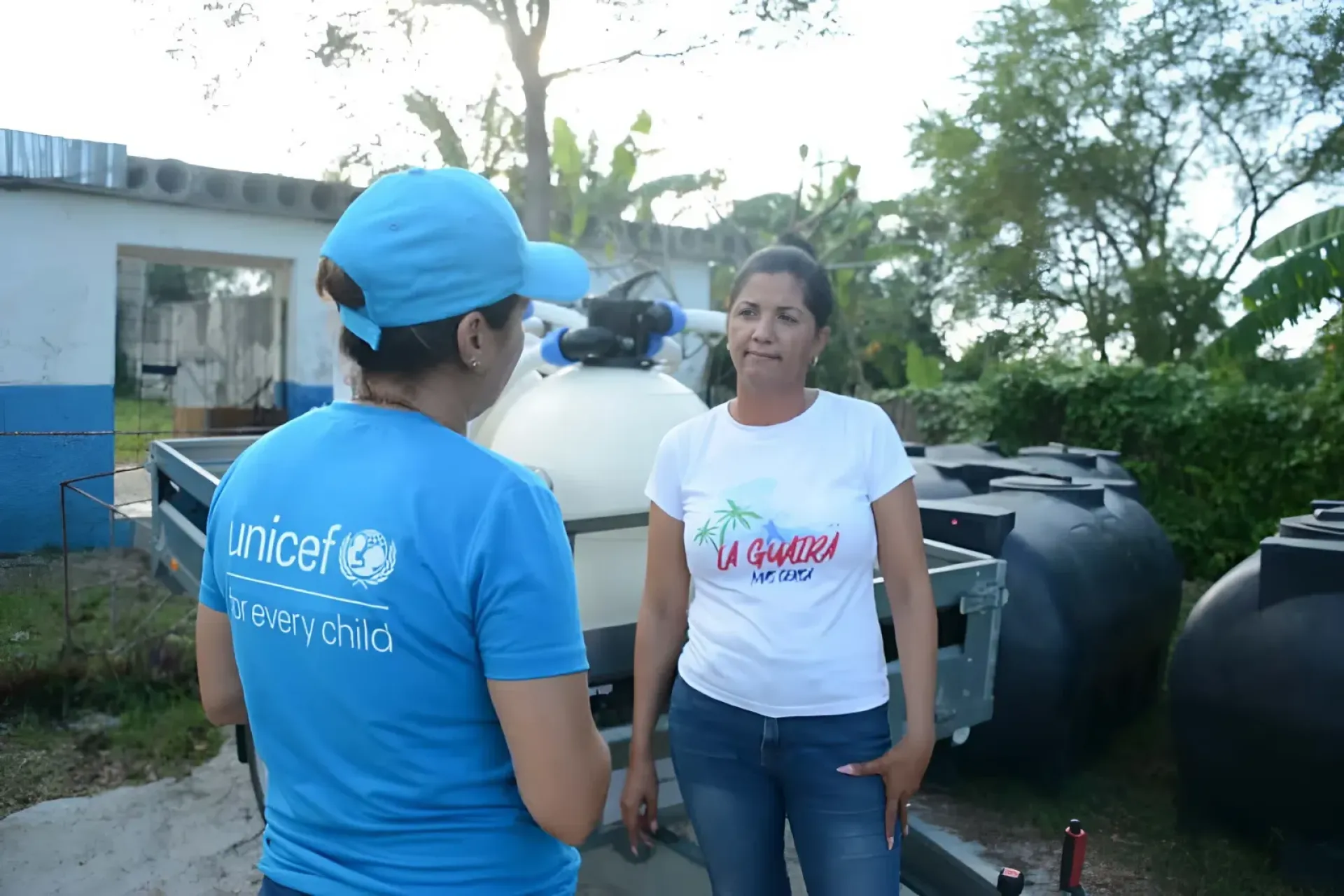
A few days ago, a truck departed bound for eastern Cuba from the warehouses of the Hydraulic Works Maintenance Company of the National Institute of Water Resources (INRH) in Cotorro. This truck carried one of the portable water treatment plants pre-positioned with the support of UNICEF Cuba —beginning a journey that would make a difference for thousands of families affected by Hurricane Melissa.
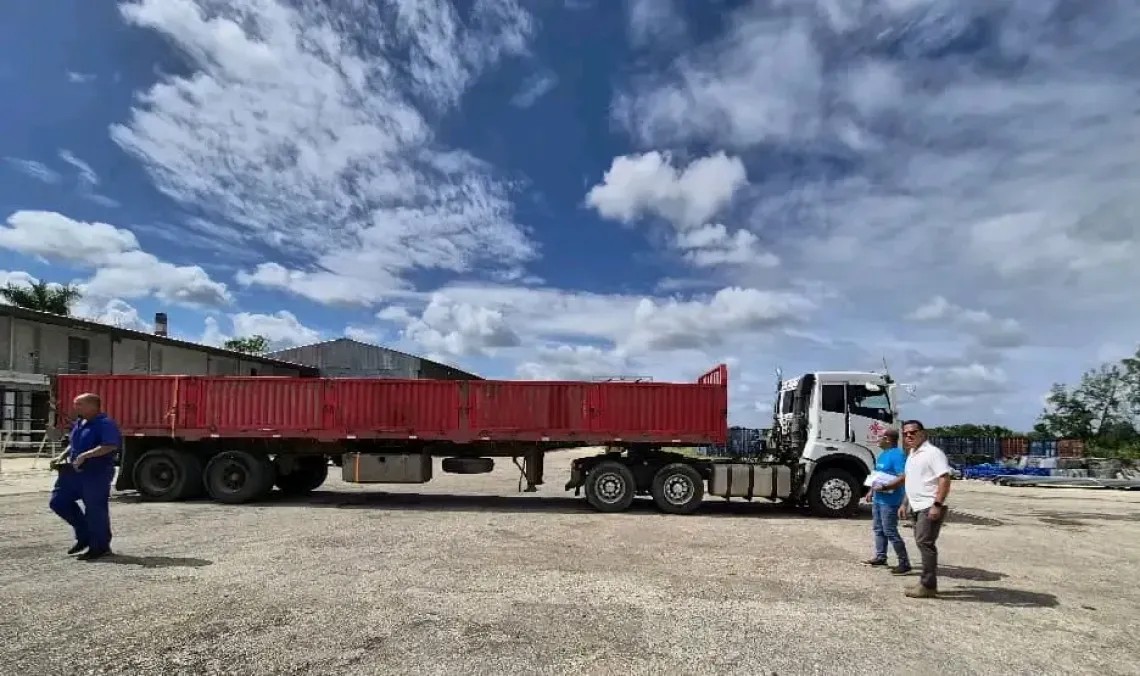
The other two water plants —also pre-positioned in the country— joined the convoy from different points of Cuba as part of the national emergency preparedness system. One water plant was loaded in Villa Clara, and another one departed from Holguín toward Granma.
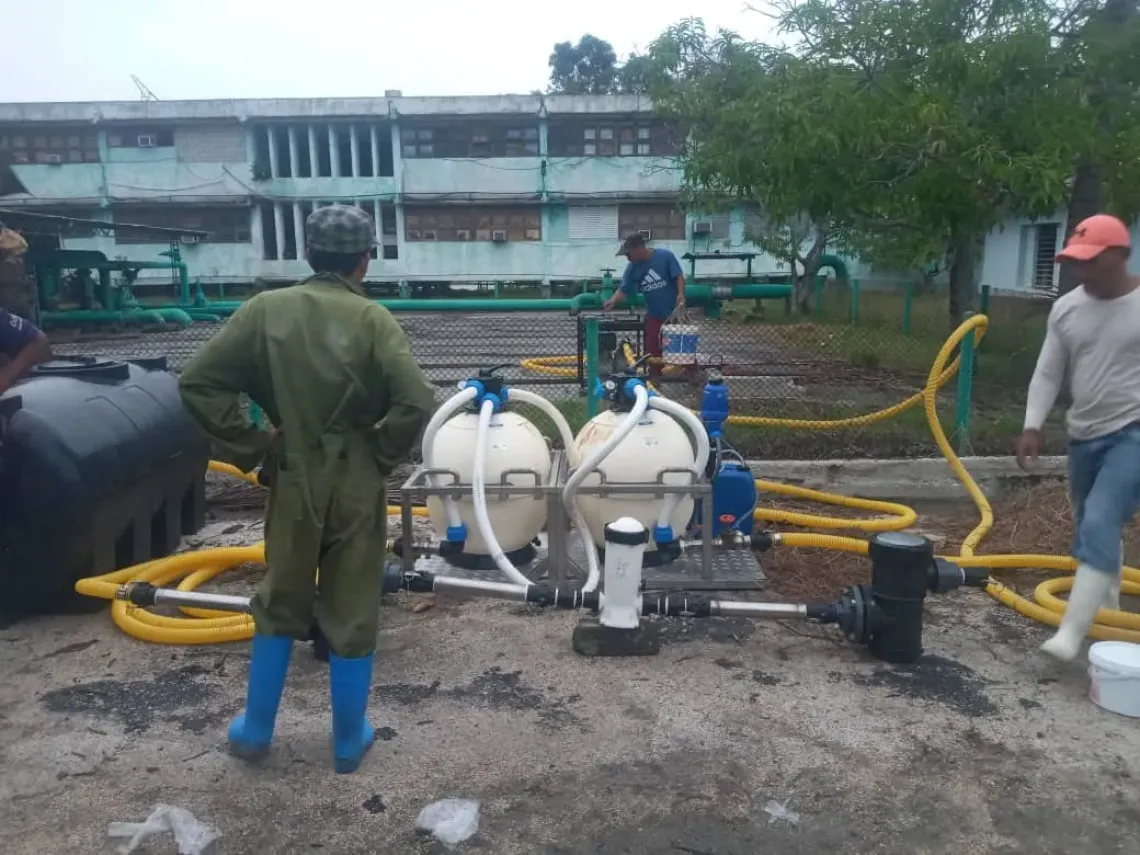
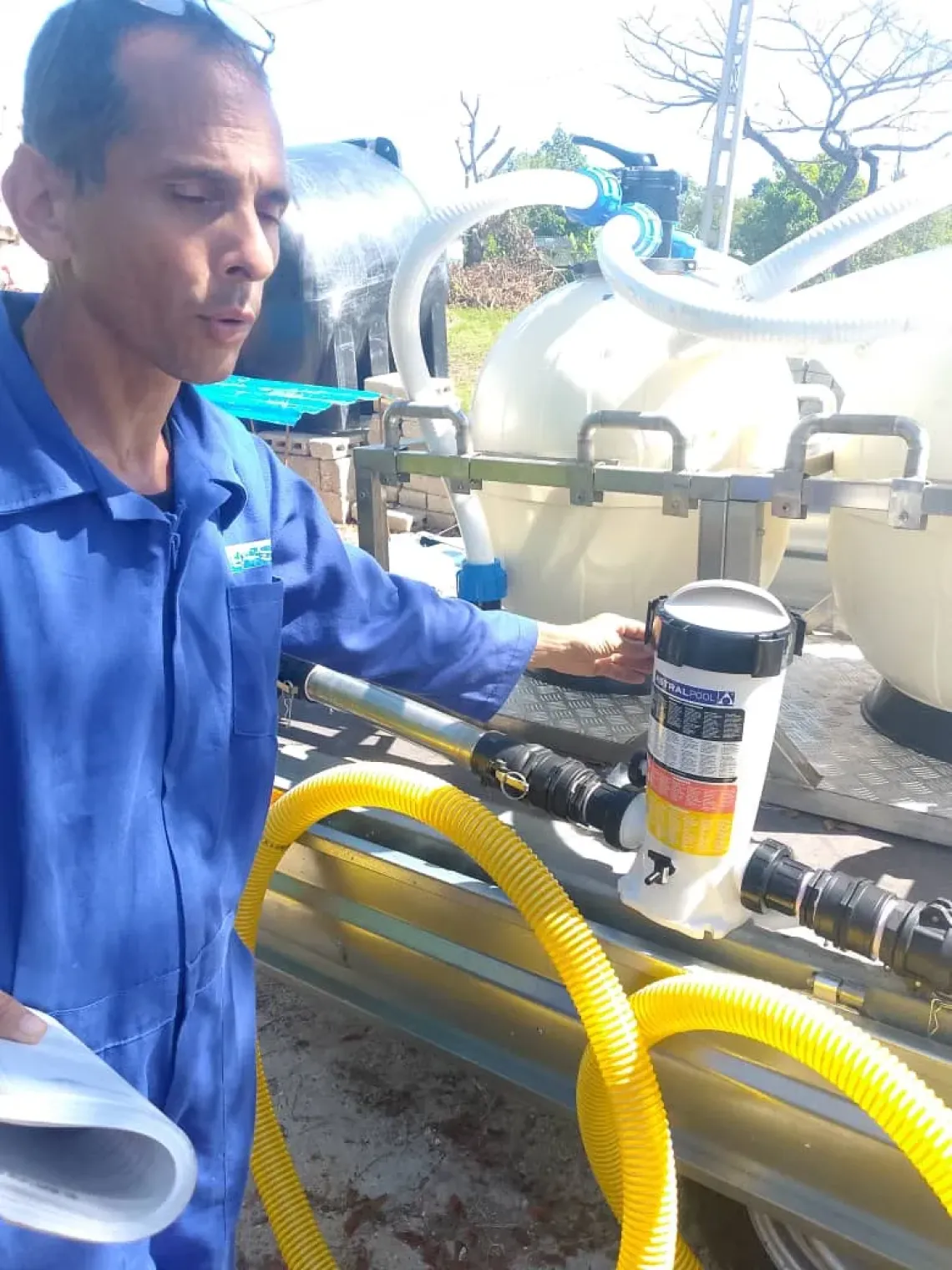
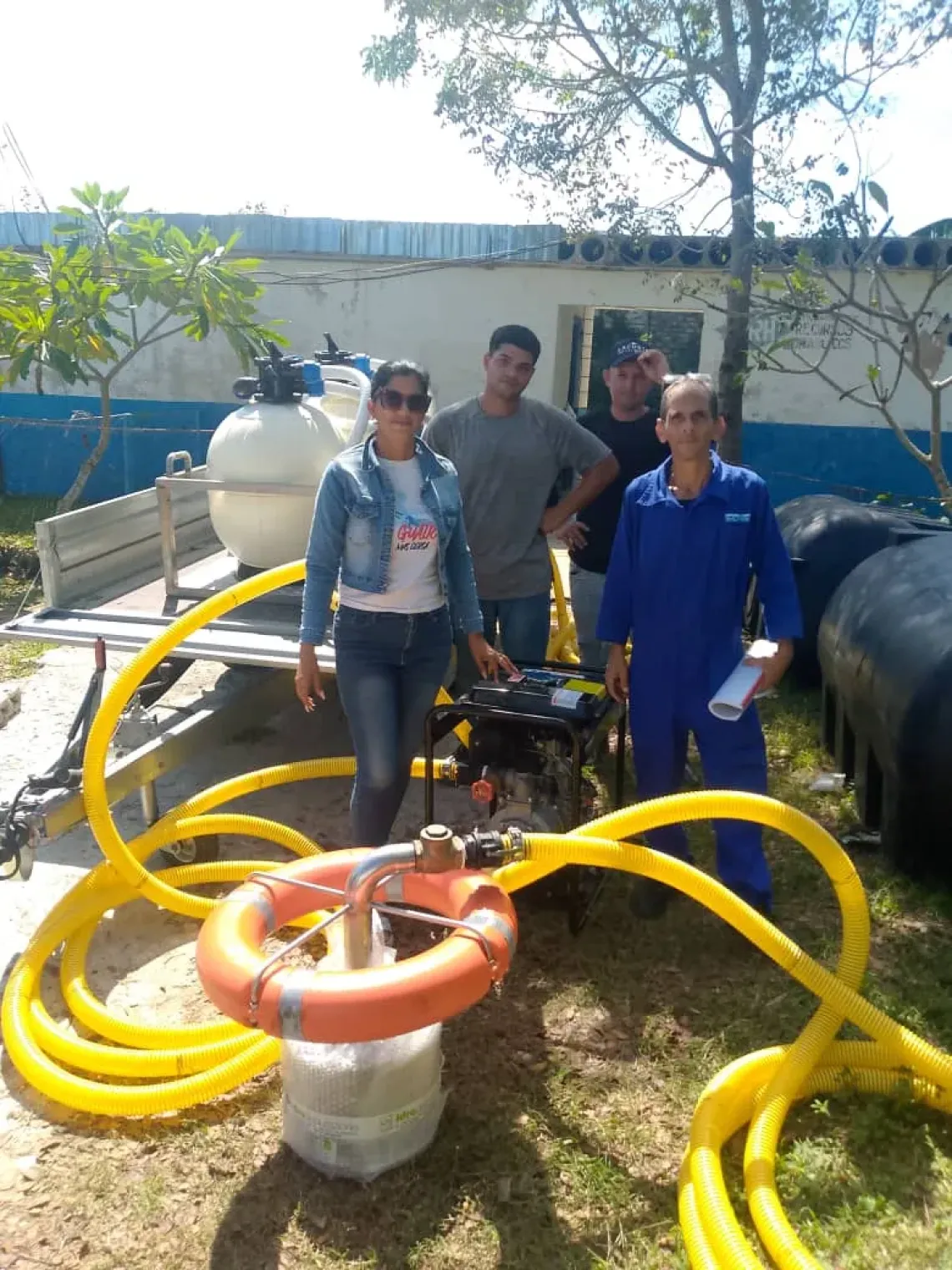
This was no ordinary transfer. Their tanks and filtration systems carried the possibility of restoring access to safe water for Río Cauto and Cauto Cristo, municipalities in Granma where the hurricane’s heavy rains caused severe flooding that contaminated wells, damaged networks and left entire communities without water supply.
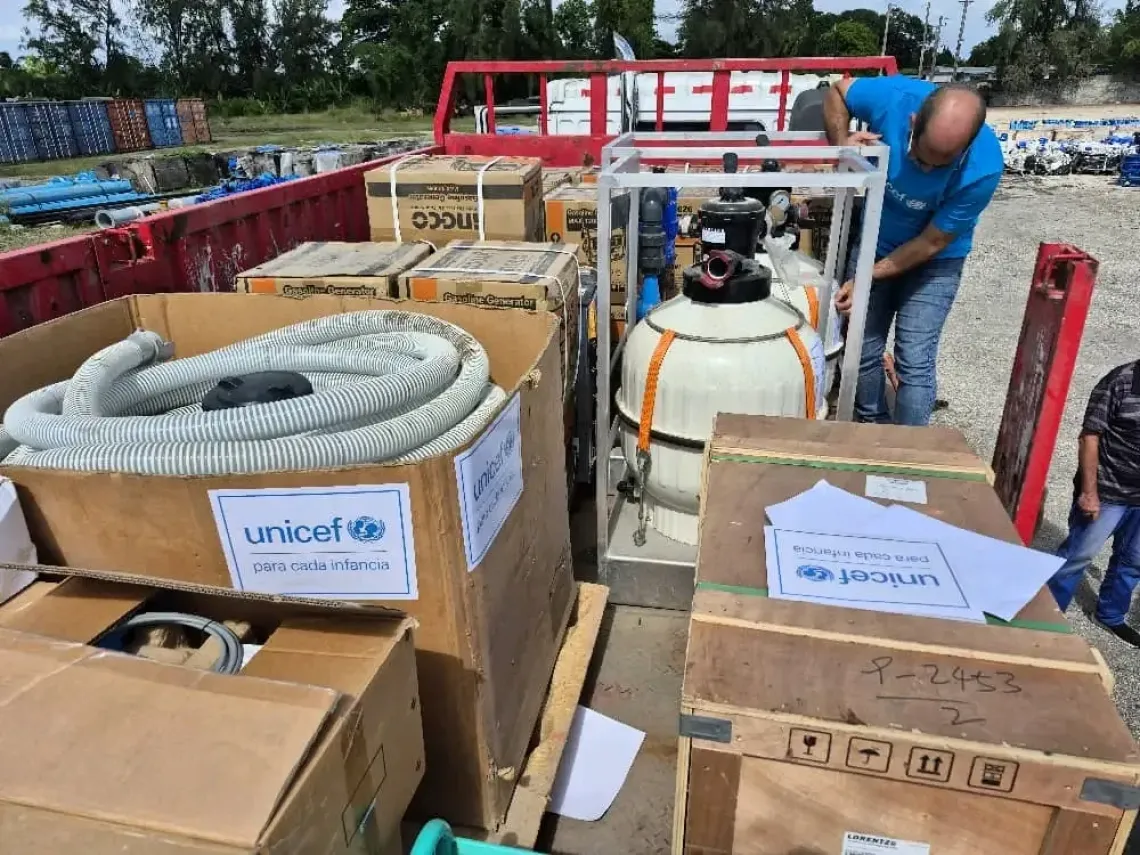
Together, the three water plants can produce drinking water for 21,000 people per day, and their activation is helping restore families’ trust in something as essential and vital as access to clean water.
From Pre-Positioning to Action
UNICEF Cuba and INRH have worked jointly to strengthen the country’s emergency preparedness. A key part of this effort is the pre-positioning of resources —equipment, plants, tanks and supplies ready for immediate activation when a hurricane, flood or earthquake disrupts essential services.
This preparedness system is part of anticipatory action supported by the United Nations Central Emergency Response Fund (CERF), whose financial backing ensures that these supplies are available before a disaster occurs.
After Melissa’s passage, that network of foresight became an immediate response.
At the point of departure, Fermín Sarduy Quintanilla, Director of International Relations and Collaboration at INRH, describes the operation:
“From here, we coordinate the transfer of resources from the hydraulic system itself and the donations we send to the eastern provinces. This truck, fueled with support from UNICEF, is carrying one of the drinking water treatment plants pre-positioned in western Cuba.”
The plan had been carefully designed. All three plants —equipped with their own generators—would operate independently of the national electricity grid.
A Response That Prioritizes Health and Life
After natural disasters, access to safe water becomes the first line of public health defense. Stagnant water and contaminated sources increase the risk of diarrheal diseases and other infections, especially among children.
Yoel Martínez, UNICEF Cuba’s Water, Sanitation and Hygiene Officer, clearly explains:
“UNICEF is the lead agency on water, sanitation and hygiene within the United Nations System. In an emergency, ensuring access to drinking water is essential for public health. Our work focuses on addressing the most urgent needs of communities and supporting national authorities to restore service quickly.”
The strategy operates on several levels: installing the three treatment plants, distributing large-capacity water tanks and delivering hygiene kits to the most affected families.
Before the hurricane, 1,300 hygiene kits were already pre-positioned in the country, allowing rapid delivery to evacuation centers in Santiago de Cuba.
Later, 3,372 family hygiene kits —containing basic cleaning and personal care items— were received in the country, along with 14 water tanks ranging from 6 to 10 m³, which will benefit more than 26,000 people, and 4,400 ten-liter jerrycans for household use.
Safe Water Returns to the Communities
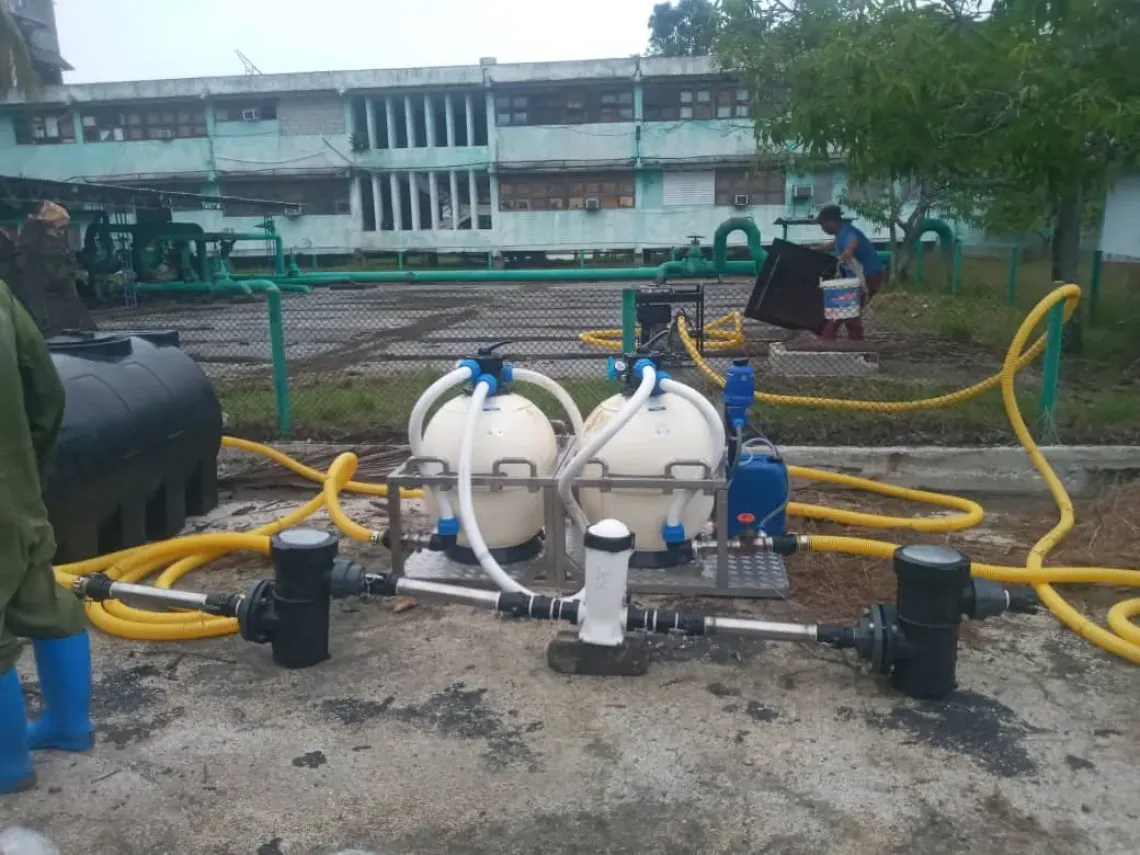
“Every step —from preparation to installation— has been coordinated with local authorities and communities. It’s not just about starting up a plant up; it’s about ensuring that its operation is sustainable,” explains Marielys del Toro, UNICEF Cuba Emergency Officer, from Cauto Cristo. The plant installed there is benefiting 4,000 people in the municipal center and another 4,000 in surrounding outlying areas.
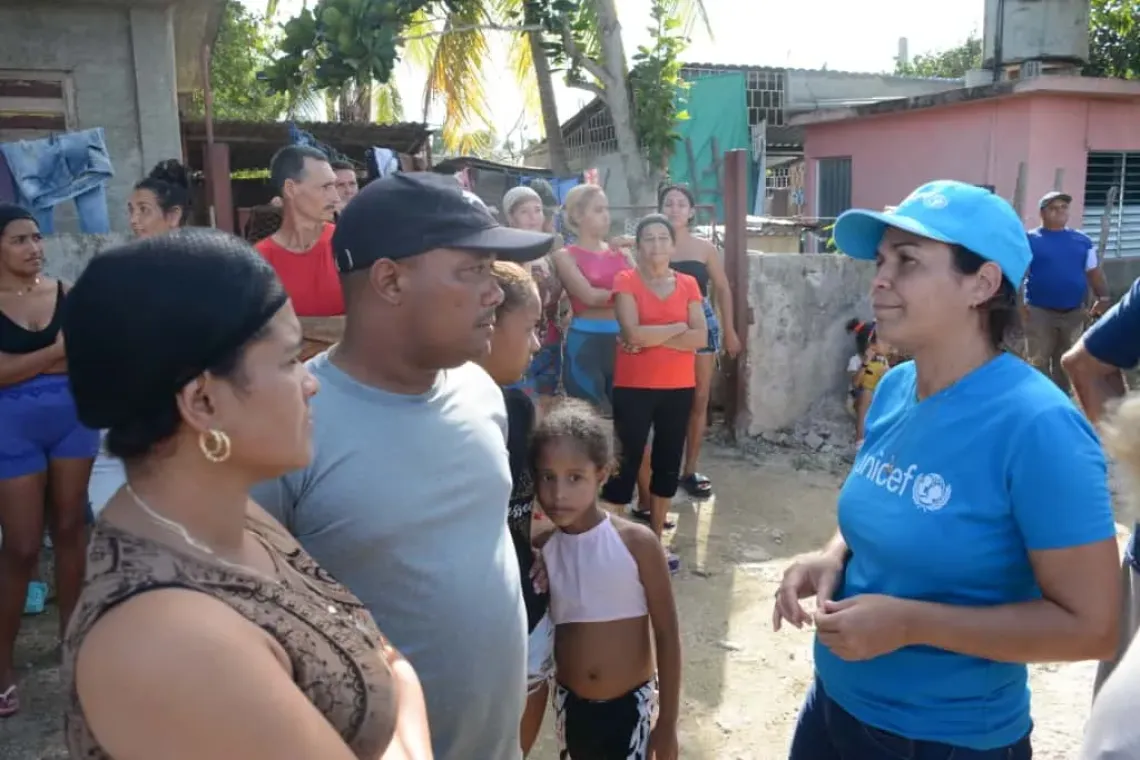
The experience from hurricane Melissa’s passage confirms the importance of maintaining a network of pre-positioned resources in the country. “In an emergency, every hour counts. Having supplies ready to move to affected areas allows us to reduce timing of response and protect people’s health from the very first days,” del Toro emphasizes.
In the eastern municipalities affected by the hurricane, the sound of generators and the steady flow of water mark the beginning of a new stage. The return of the service not only improves sanitary conditions but also brings families a renewed sense of normalcy and hope.
Where the emergency left deep marks, collaboration among Cuban institutions, communities and international partners shows that preparedness saves lives.
The three portable water treatment plants —located in Río Cauto and Cauto Cristo— are tangible proof of the commitment to ensuring every child’s right to grow up in healthy and safe environments. Ensuring access to safe water means protecting the health and lives of Cuban families.