When Everything Changes
Three months after Hurricane Rafael struck Cuba, UNICEF continues to support local and national efforts to uphold children's rights. The contribution of the United Nations Central Emergency Response Fund has been crucial in this endeavor
- Español
- English
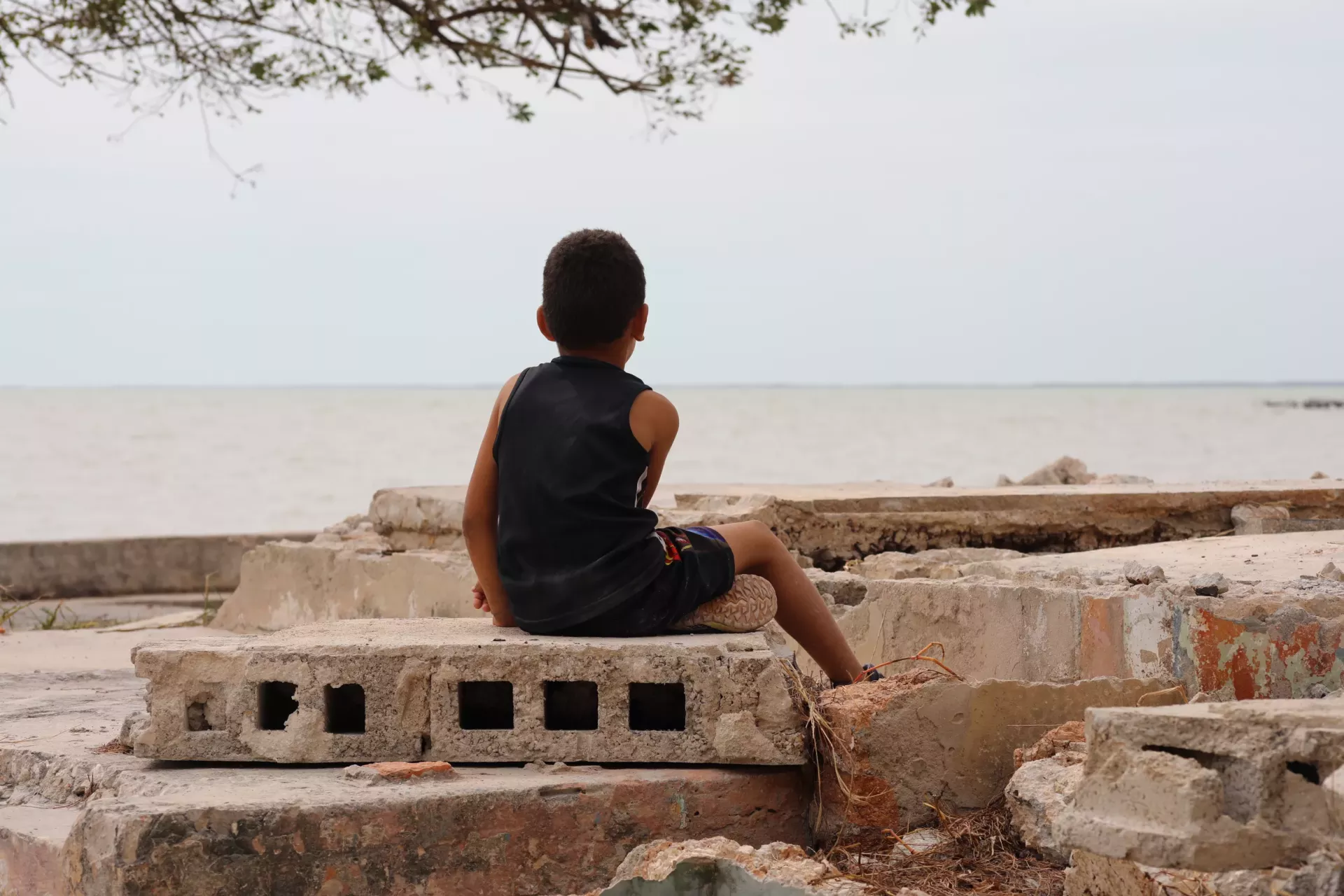
Tristán Gorrín Vazquez, 15 years old, and Leucier Chávez, 8 years old, live in Playa Cajío —a coastal community in southern Artemisa, near the area where Hurricane Rafael made landfall on the afternoon of November 6, 2024. At their young age, they have experienced both the beauty and the dangers of the sea.
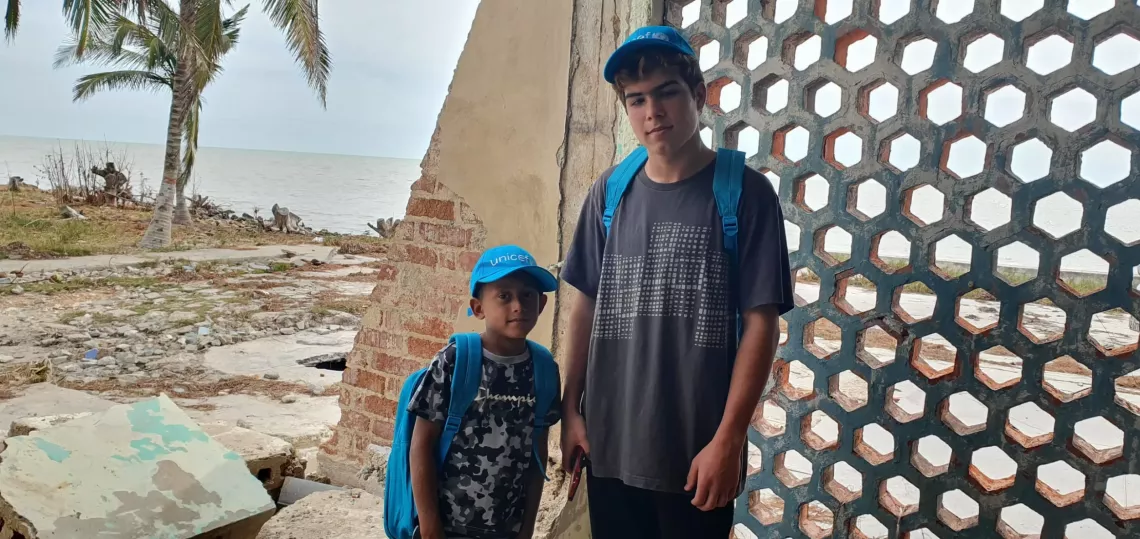
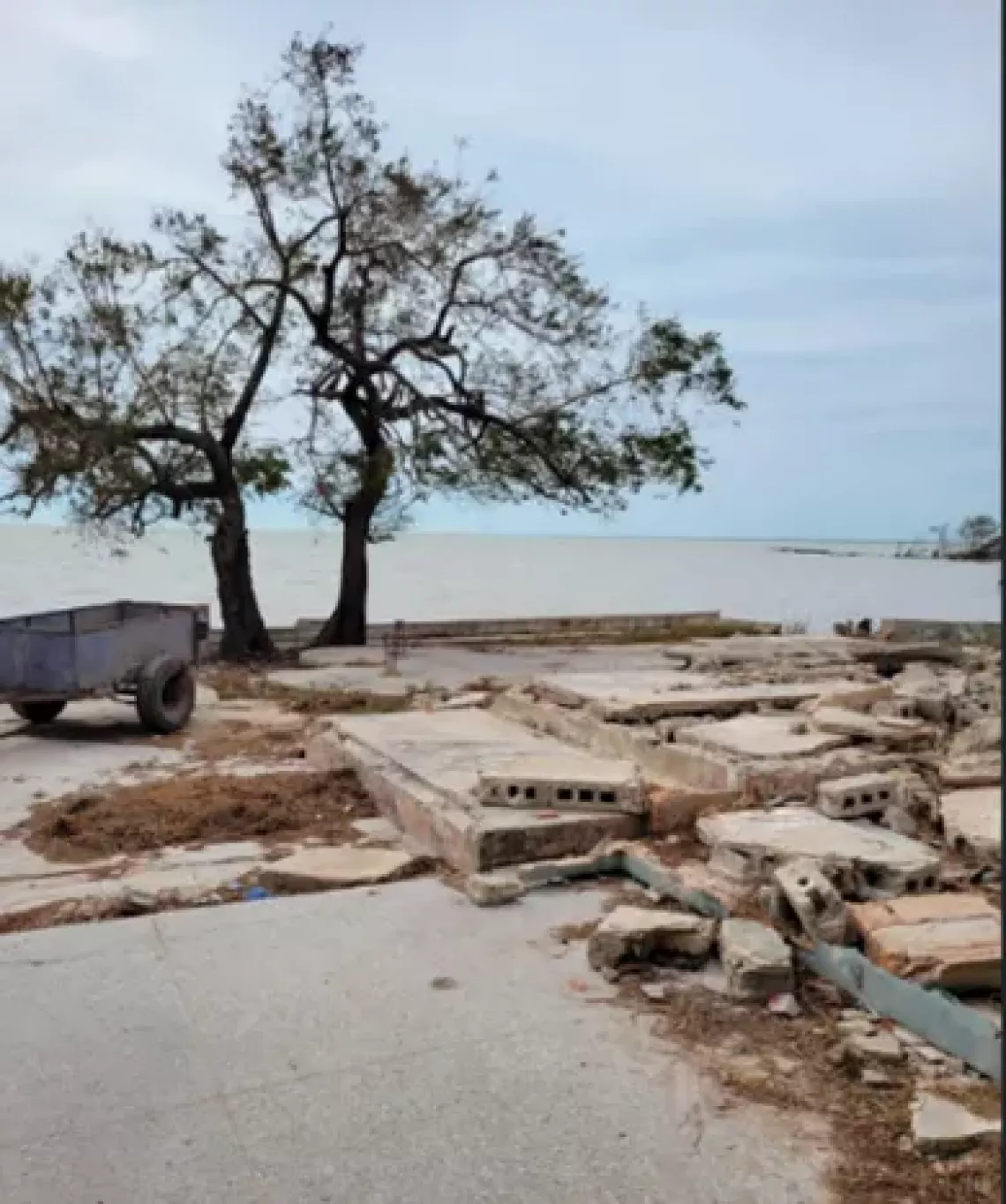
Hurricane Ian, which hit western Cuba in September 2022, and more recently, Hurricane Rafael, have been unforgettable for this fishing community, residents say. The powerful hurricane-force winds pushed waves inland, devastating everything in their path. The frequency and impact of hydrometeorological events make this community —home to about 3,500 people, including 130 children aged 0 to 15—vulnerable to climate change.
Tristán and Leucier were evacuated to the homes of relatives in nearby communities. But "the wind was strong there, too," they recall. When residents learned of Hurricane Rafael’s potential path near Cajío, they organized to relocate to safer places and protect their belongings. Thanks to these measures, no lives were lost. A brigade of neighbors stayed behind to safeguard personal and community property until residents could return.
Tristán felt relieved to see his home still standing and realized that the damage this time could be repaired relatively easily. "Only one wall was seriously damaged. Other homes lost doors, windows, fences, and roofs. In these cases, the most important thing is preserving life," he says. The first few days were difficult for everyone, with no electricity or running water. Long days of recovery would lay ahead.
"I helped my grandmother clean the house, remove mud, and supported the community as much as I could," Tristán says. He is attending middle school in the municipal capital of Güira de Melena, about 14 kilometers from his home. Like other adolescents in the area, he could only return to school nearly a month after the hurricane.
Leucier lives with his father and, together, they have gradually erased the traces left by the raging wind and sea. Clearing debris, removing fallen trees and reorganizing their belongings were some of Leucier’s tasks; but he also found time to play with other children in the community while alternative solutions for resuming school were sought.
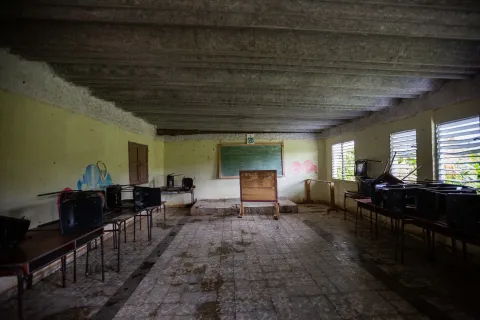
Julio Sanguily primary school —the only school in Cajío— suffered infrastructure damage. Its location, just a few meters from the coast, makes it highly vulnerable to hurricanes.
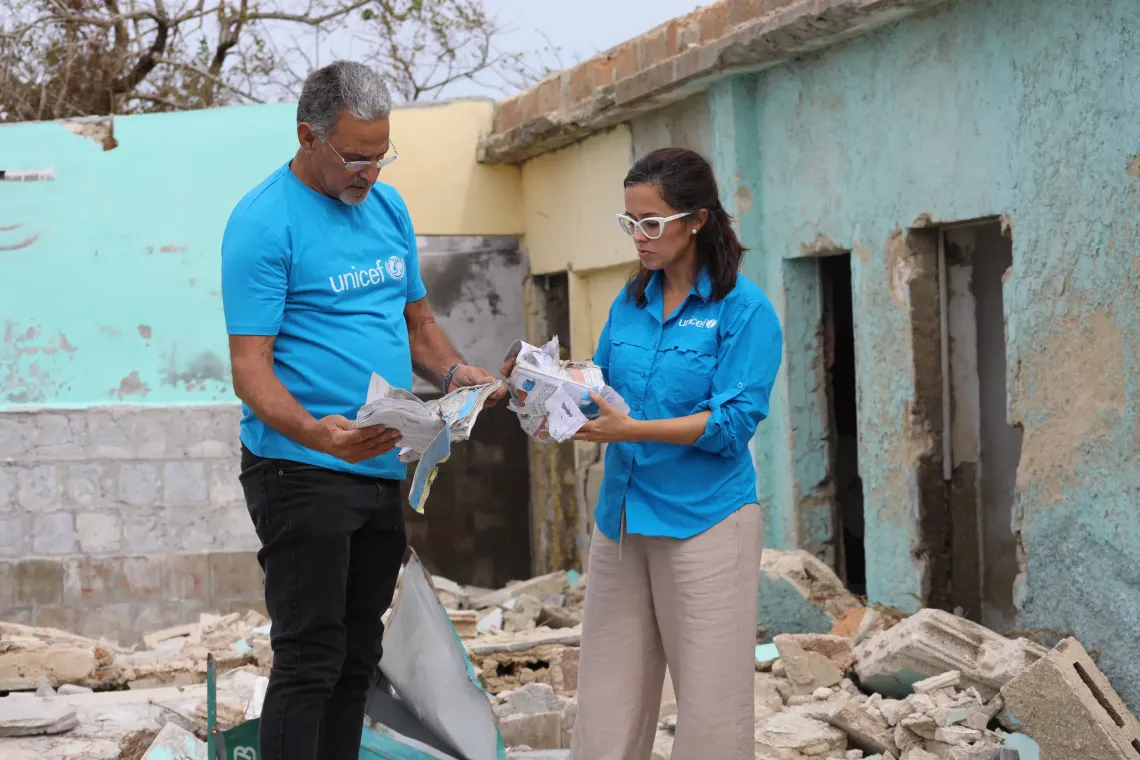
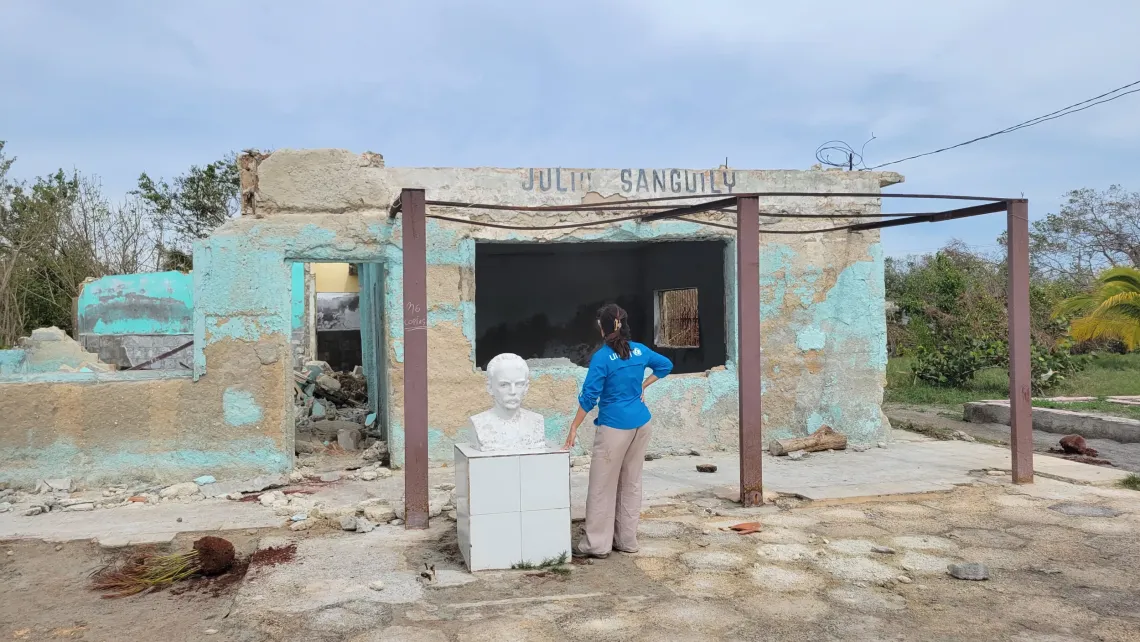
In 2022, Hurricane Ian (Category 4) damaged the school. At that time, Leucier was starting first grade and he remembers learning to read and write in temporary learning spaces set up until repairs were completed. "There was a classroom at the teacher’s home and another one at a shopping center," he recalls.
Once again, students from this primary school have resumed classes thanks to the solidarity of neighbors and the commitment of their teachers, who have opened spaces in their homes for continued learning. Three months after Hurricane Rafael’s impact, they are still following this alternative arrangement. The school may be relocated to another site.
Children’s Rights: A Priority in UNICEF’s Response
On an improvised stage facing a now-calm sea, singer-songwriter Enid Rosales and her band repeated the chorus of one of her most popular children's songs: "Everything changes, everything transforms, nothing stays the same...". It was November 20, and UNICEF Cuba chose to commemorate the 35th anniversary of the Convention on the Rights of the Child by bringing some hope and joy to the people of Playa Cajío.
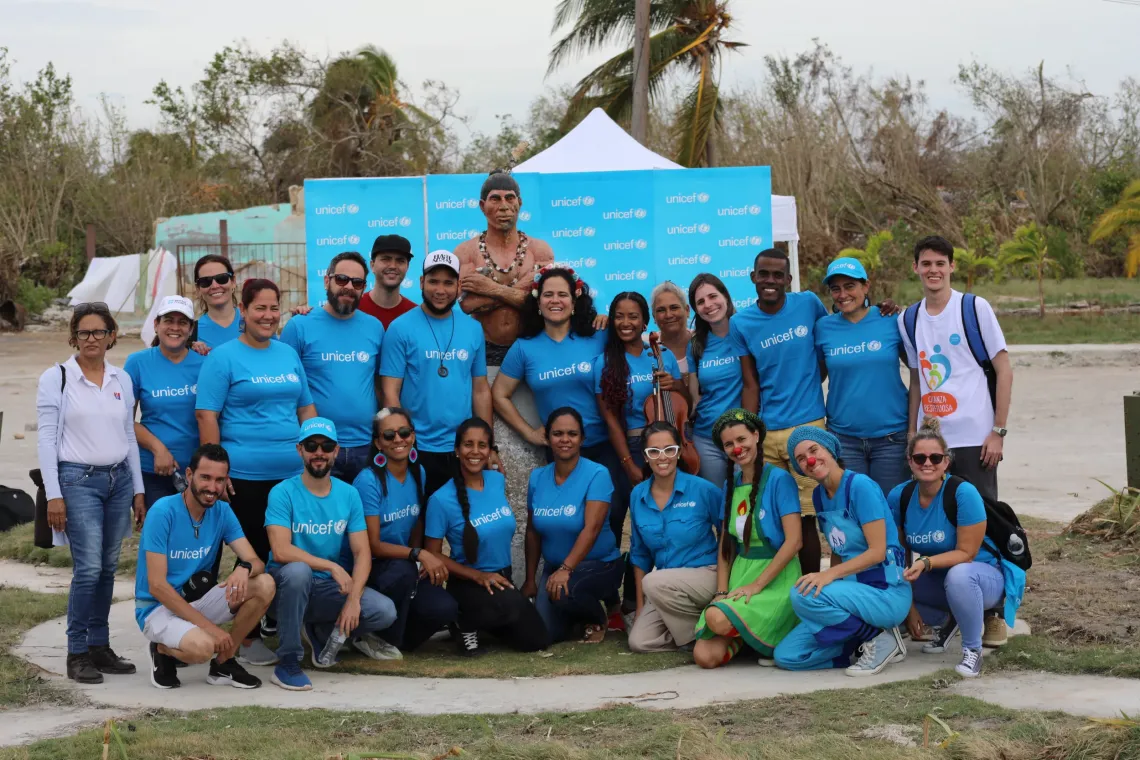
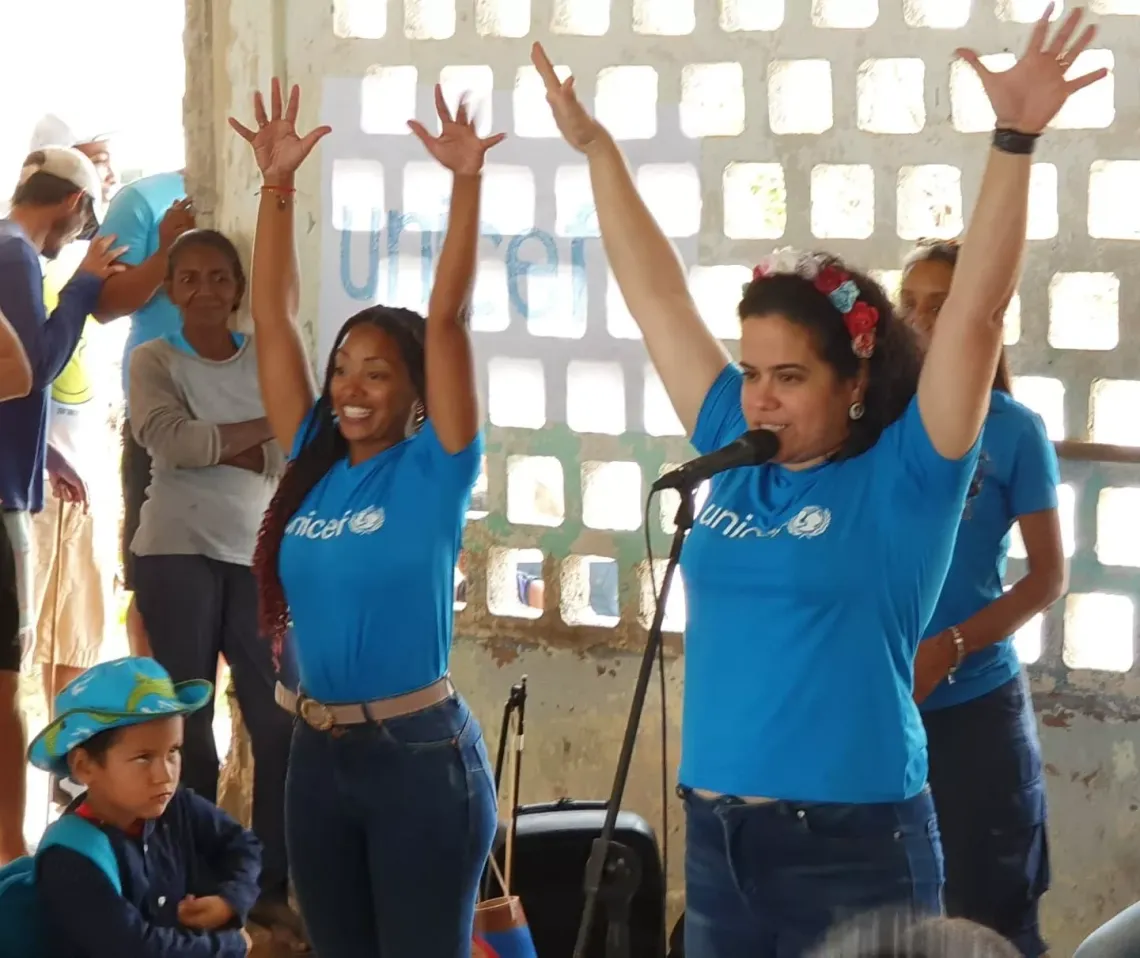
The date found the UNICEF team in the midst of a whirlwind of activities to support national and local authorities in assisting communities affected by multiple disasters: first, Hurricane Oscar struck Guantánamo province on October 20; then, Hurricane Rafael affected western Cuba; and finally, earthquakes with a magnitude of 6.7 and 6.0 on the Richter scale were felt in Granma and other eastern Cuban provinces on November 10.
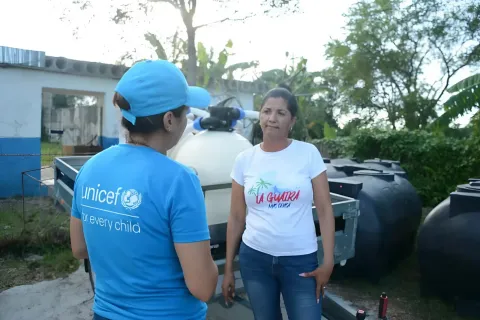
UNICEF is committed to ensuring the rights and development of children and adolescents. In emergencies, its focus is on supporting essential services such as access to safe drinking water. Six power generators were procured to immediately restore drinking water services in affected communities in Artemisa province. One of these power generators benefited the residents of Playa Cajío at a time when electricity had not yet been restored to the area. Additionally, Artemisa province was provided with 13 chlorinators to be installed in water pumping stations.
The education sector was also supported with 3,750 square meters of waterproof tarpaulins provided to repair the roofs of Rafael Martínez Villena Pedagogical School in Alquízar —where 490 future teachers from all 11 municipalities of Artemisa are being trained.
This immediate response was made possible thanks to the United Nations Central Emergency Response Fund (CERF), which provided rapid funding for the purchase of essential supplies, with priority given to the needs of children and adolescents.
To learn about the United Nations Action Plan in response to Hurricanes Oscar, Rafael, and the Earthquakes—which seeks $78.3 million to support approximately 930,000 people with their most urgent and recovery needs—you can visit this link.