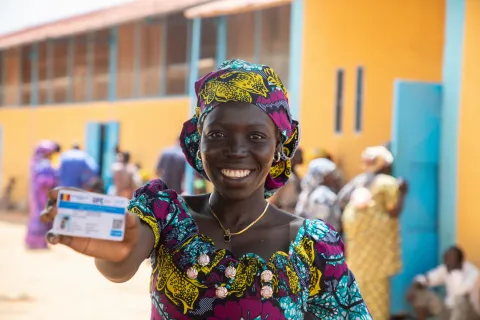
Inclusive and quality education interventions allow pupils to study in a better environment.
Improving equitable access to inclusive quality education for boys and girls in school.

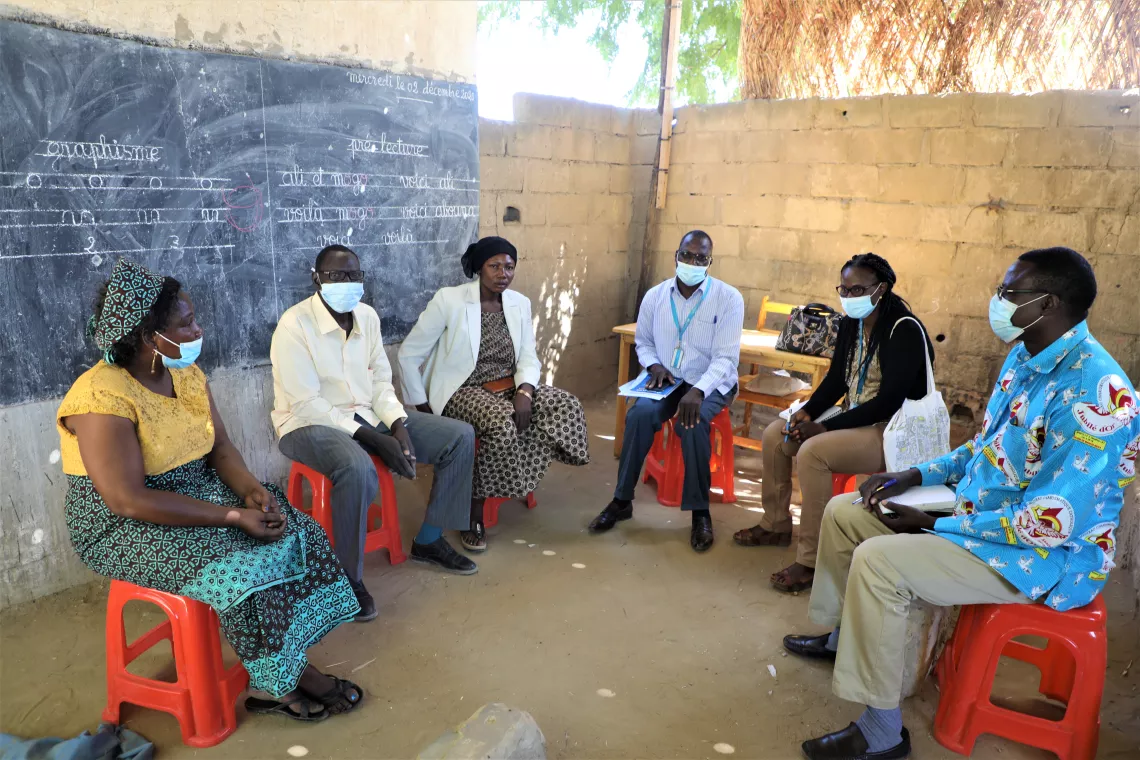
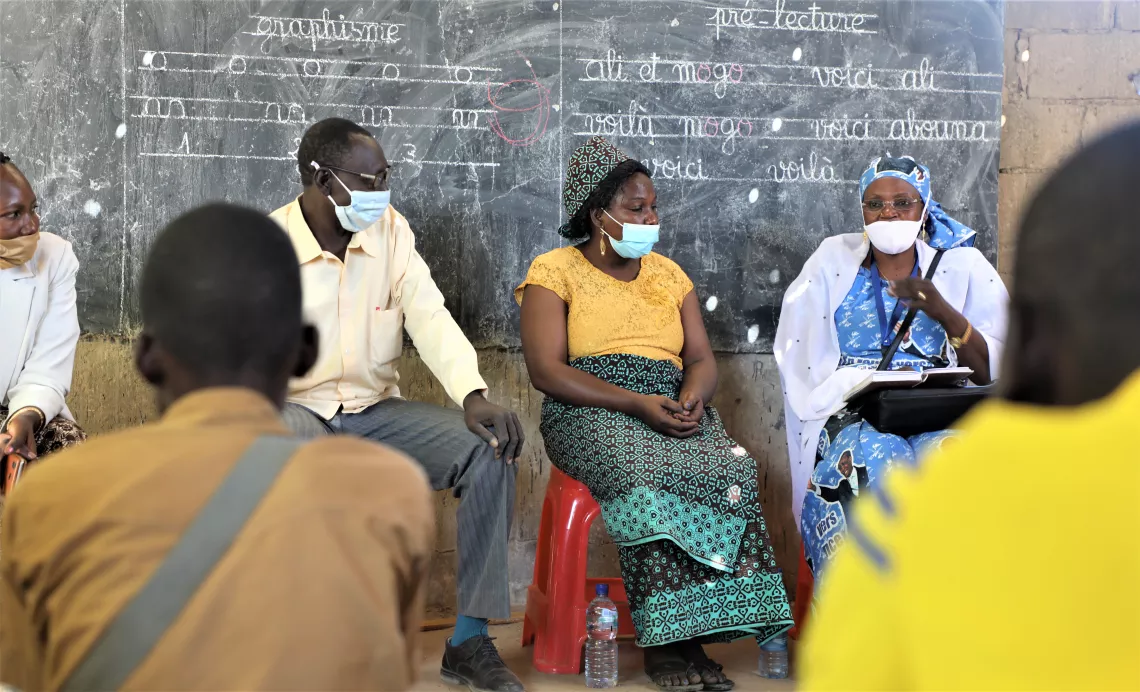
In December 2020, a UNICEF team made up of the nutrition, education and WASH officers organized a meeting with the educational inspector and directors of the schools La Léproserie A and B with a view to restarting activities after the period of interruption due to the COVID-19 health measures.
This meeting was an opportunity to present the current situation of the activities implemented in the school with the participation of hygiene clubs and the NGO École Saine, Ménage Sain (ESMS). Furthermore, the issue of deworming children with Mebendazole was discussed. During the exchanges, it has been agreed that the teachers and pupils will be consulted, and the consent of the parents is being sought.
The hygiene club of la Léproserie is composed of 20 members, all of whom are pupils of the grade two to grade 6 classes. Their role is to maintain the school and inform their classmates about the importance of hygiene. ESMS works with the pupils to teach them, from an early age, hygiene practices such as the maintenance of toilets, water points, courtyards and hand-washing techniques. Menstrual hygiene is also an important topic in this programme.
Talking about menstrual hygiene, Allah Tessem Steven, a fifth-grade student at the Léproserie school and member of the hygiene club testifies:
"When a girl gets her period, we indicate her where she can get sanitary pads. We sensitize boys not to make fun of girls because menstruation is a natural phenomenon."


Thanks to the support of Natcom Korean, UNICEF was able to help the Ministry of Education and Civic Promotion to integrate nutritional education in the 4 schools. In addition, the guide for setting up school nutrition clubs and the modules on optimal nutrition practices have been developed and technically validated.
Boutalbagara school
At Boutal Bagara school, the hygiene clubs and the association of mothers of pupils (AME) contribute to the school hygiene. In addition to supporting school activities, the AME is involved in the promotion of menstrual hygiene and nutrition of the students.
Djeradom Armand, a grade 6 pupil and member of the hygiene club of Boutal Bagara school:

"In the hygiene club we are responsible for helping our classmates keep the schoolyard and toilets clean. We ask them not to throw rubbish and to avoid defecating in the open air but rather to use the toilets."


With support from the Korean Committee for UNICEF, a Vitamin A supplementation and deworming campaign was carried out in 4 schools in N'Djamena (Léproserie (A&B) and Boutalbagara (A&B). Through this campaign, which was targeting children aged between 6 and 15 years, UNICEF Chad aimed at contributing to the prevention of malnutrition in schools, but above all, to secure the physical and mental capacities of the pupils. This will allow them to continue learning in safe conditions, thanks to the Korean Committee for UNICEF.