Chad: U-Reporters, early heroes in the response to the floods in N'Djamena.
U-Reporters supports flood victims
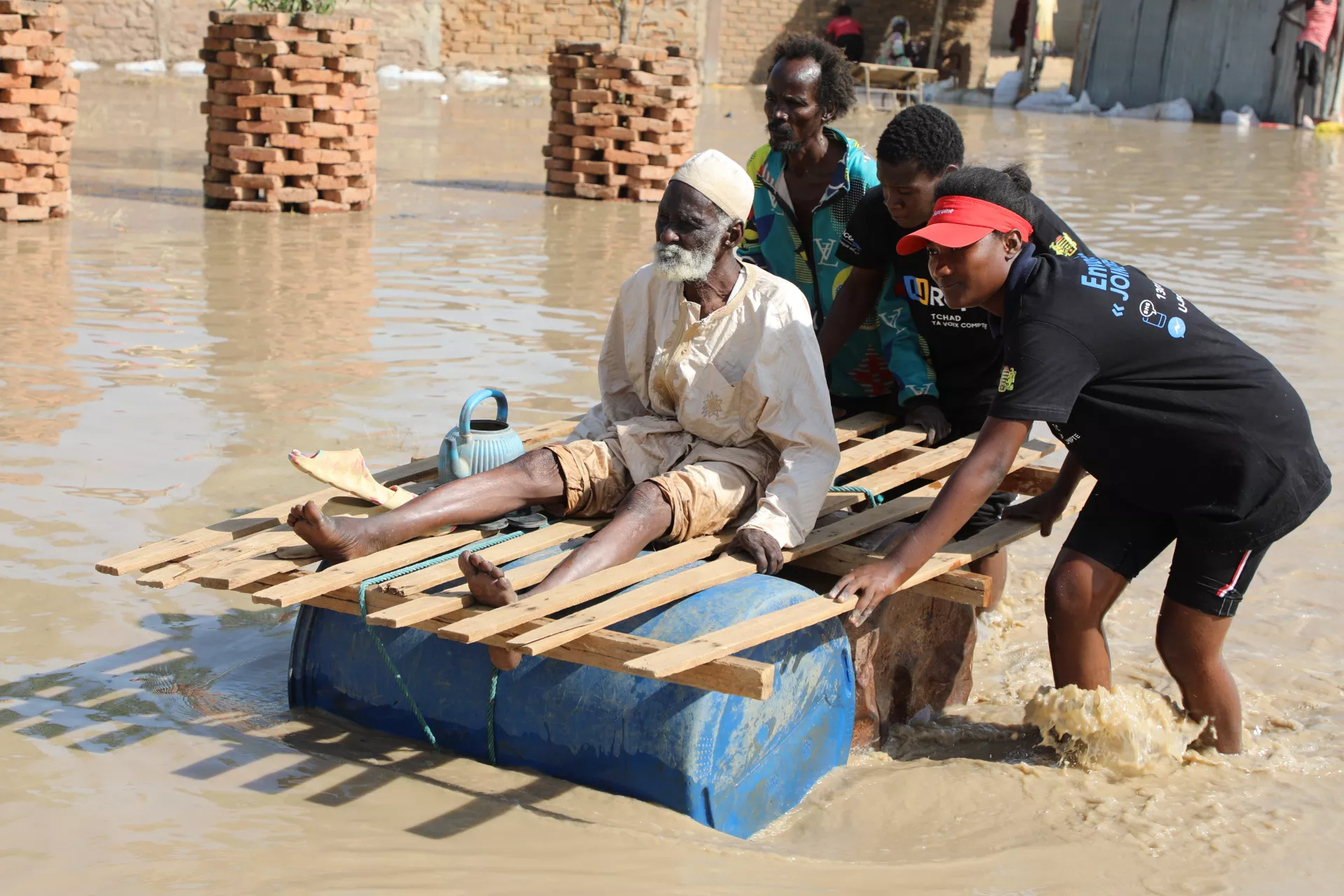
On this Sunday, 16 October 2022, on the main artery that crosses the 9th district of N'Djamena, thousands of distraught people contemplate what is left of their neighbourhood invaded by the water. Some have taken refuge on the roofs of houses, others are clutching the few belongings they were able to save before the water rushed into their homes. U-Reporters are busy filling bags of earth to try to reinforce the dykes.
"Help me" shouts a 14-year-old girl carrying her little brother on her back. She has managed to climb a dike that is threatening to break. A young U-Reporter enters the water and carries the children on his back to dry land.
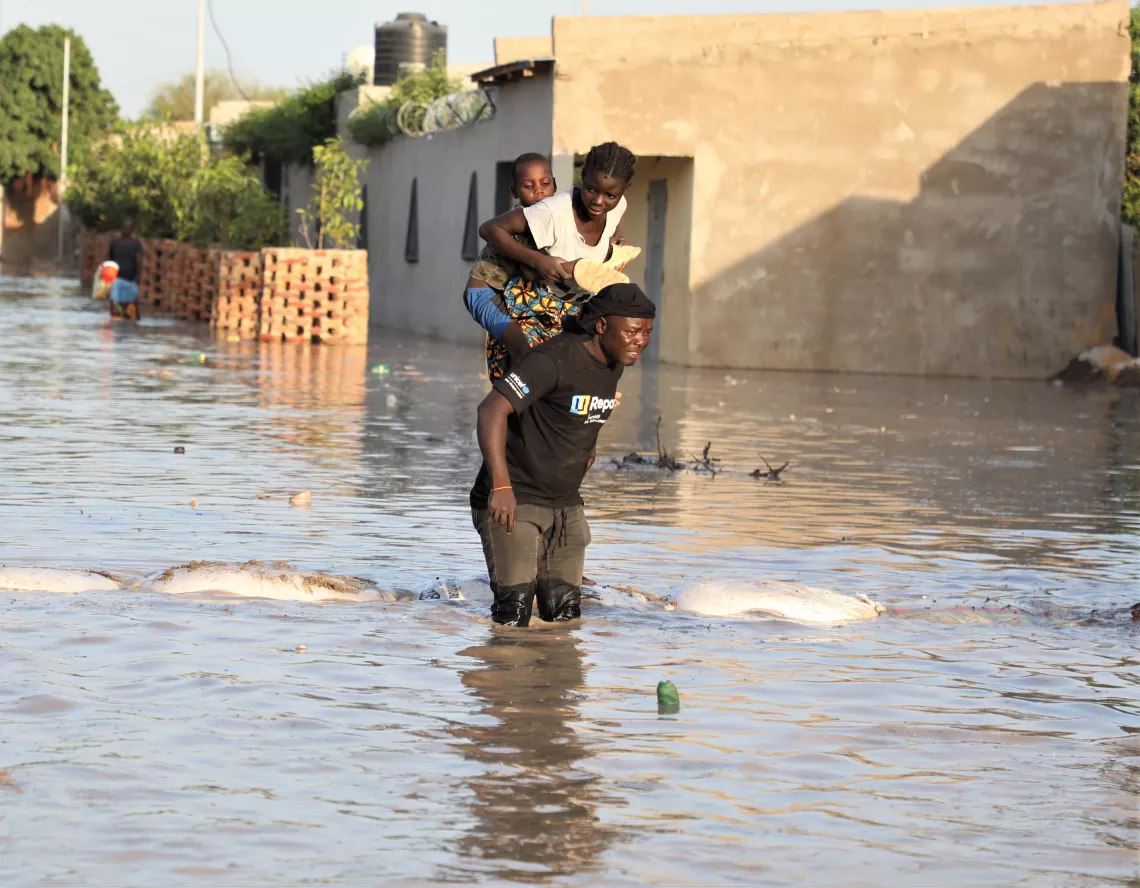
Flooding in N'Djaména has reached unprecedented proportions this year. After the heaviest rainy season in three decades, the Chari and Logone rivers, which irrigate the Chadian capital, burst their banks. Roads have turned into rivers, houses have collapsed and many people have been injured.
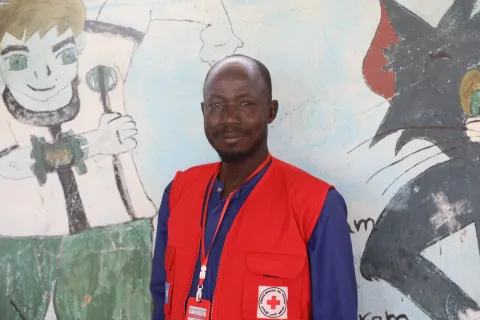
"The first images and videos posted on social networks were the trigger for our commitment," says Celestin Maoundombaye, U-Reporter from the Boutalbagar neighbourhood and member of the Eco-engagement youth platform.
As early as Thursday 13 October 2022, the first U-Reporters went to the rescue of those affected. With rudimentary means, rafts, dugout canoes, and sometimes on their backs or heads, they helped evacuate children and elderly people trapped in houses, where the water level sometimes reached 2 metres. "When we arrived at the scene, a dyke was threatening to break. We pooled our money to buy bags and filled them with soil. This made it possible to maintain the dam," says Maoundombaye Celestin.
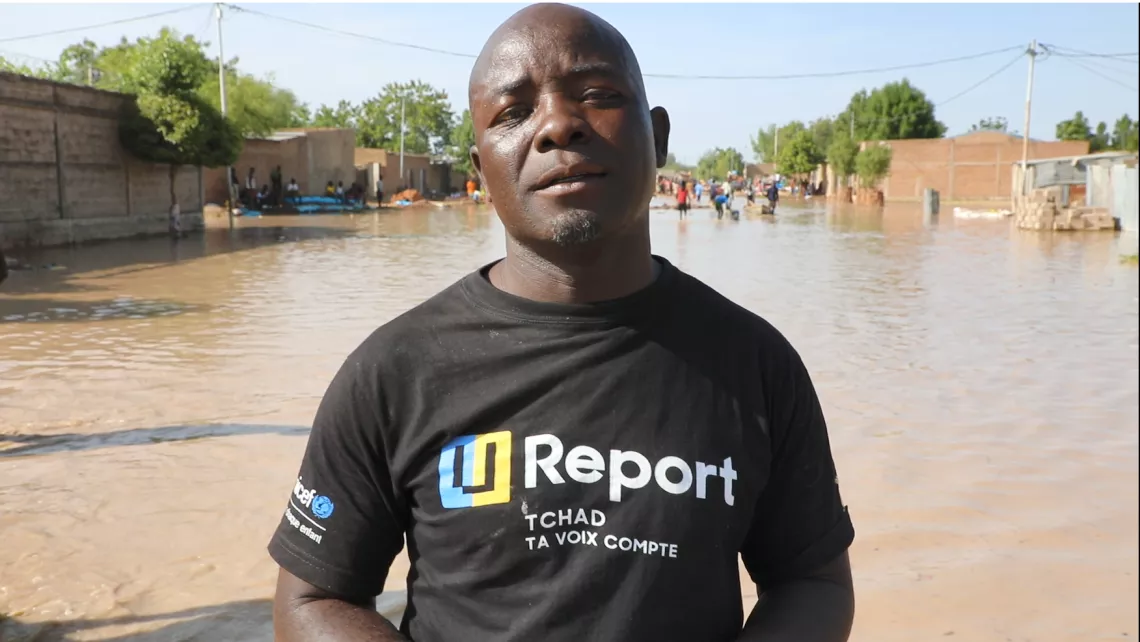
A few weeks earlier, as floods threatened the city, UNICEF teams, through U-Report, had trained young people on humanitarian action, including preparing them for rapid emergency response mechanisms and advocacy. Through this contingency strategy, young people formed networks that they called "U-Report communities". As a result, communication and mobilisation were facilitated and the response to the floods could be launched in record time.
" Before, we didn't know that we could save lives. After the training with the U-Report team, we realised that we ourselves could do something, and we are proving it on the ground today," says Celestin.
The presence of young people wearing T-shirts with the U-Report colours is reassuring, as one mother explains. "I didn't know that there were still young people in this country with such benevolence. May the Lord bless them and preserve them from the snakes that are currently swarming in the water," she said. Nearly two hundred young U-Reporters, girls and boys, mobilised in N'Djamena to help the victims.
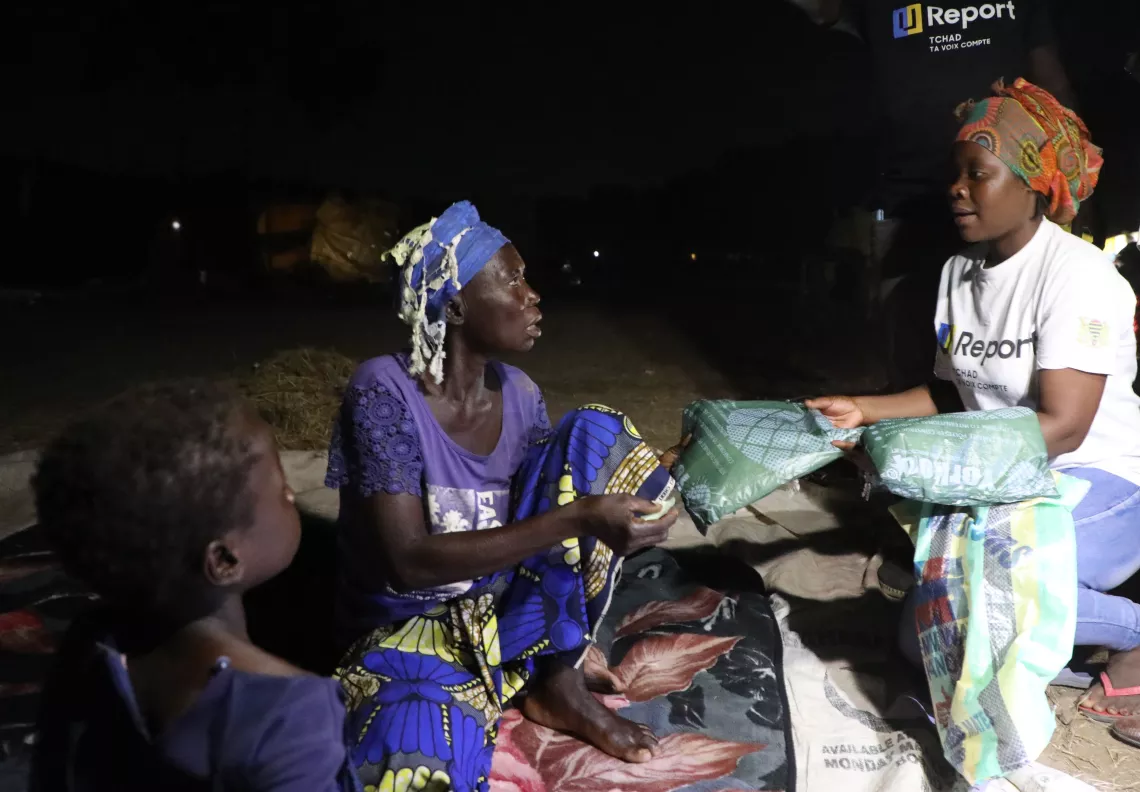
After helping to save lives during the day, the U-Reporters spent their evenings helping UNICEF teams by distributing more than 400 insecticide-treated bed nets to flood-affected families who were rushed to a temporary site to house the displaced. The young U-Reporters on the ground continue to mobilize other U-Reporters communities, and are organizing for the future. They are aware that the big challenges lie ahead after the relocation of the displaced, especially the management of hygiene and sanitation, as well as the prevention of diseases and epidemics that could be triggered by the crowded and difficult living conditions.