
No more missing school because of monthly periods
UNICEF and its partners, with US funding, are supporting adolescent girls in the Ouham Fafa prefecture of CAR to overcome taboos that keep them away from the classroom.
- English
- Français
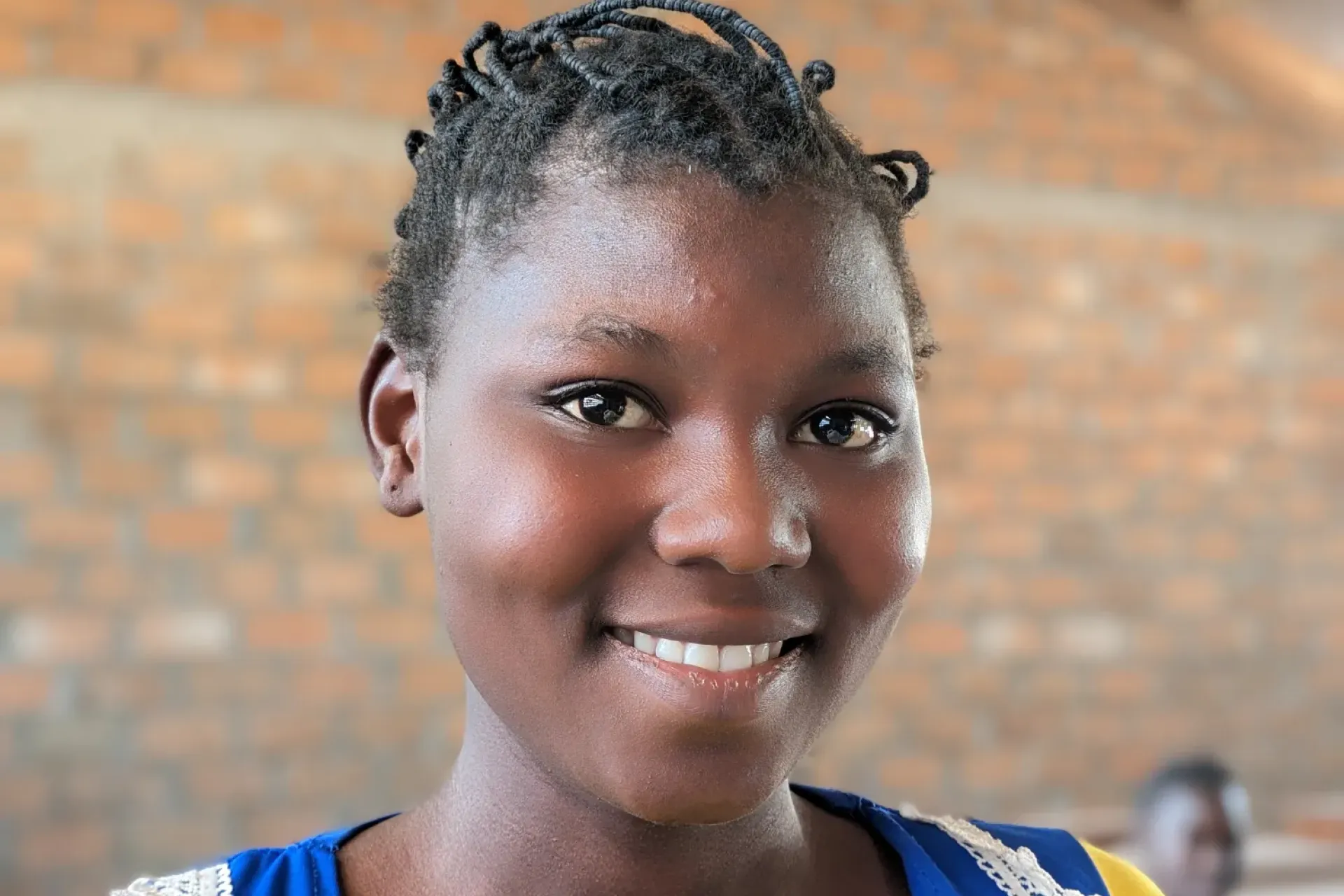
Elda Nasambo was born in 2013, the same year conflict erupted in the Central African Republic. Her hometown is Batangafo, a locality that endured the conflict longer than most. For years, armed groups ruled by force, tearing apart an already battered population, until they were driven out in 2021. In their wake, they left tens of thousands of traumatized people, many forced to survive in overcrowded displacement camps. Today, at 13, Elda radiates a rare serenity and quiet optimism, grateful to have left behind the years of flight—when she and her parents and siblings were repeatedly forced to run for their lives.
“I am very happy to be in school. My dream is to go far in my studies and become a doctor, so I can treat children and make sure none of them suffer from disease. Because of the conflict, I missed two academic years and fell behind—I am still in the final year of primary school. But I am determined to catch up and become somebody in life.”
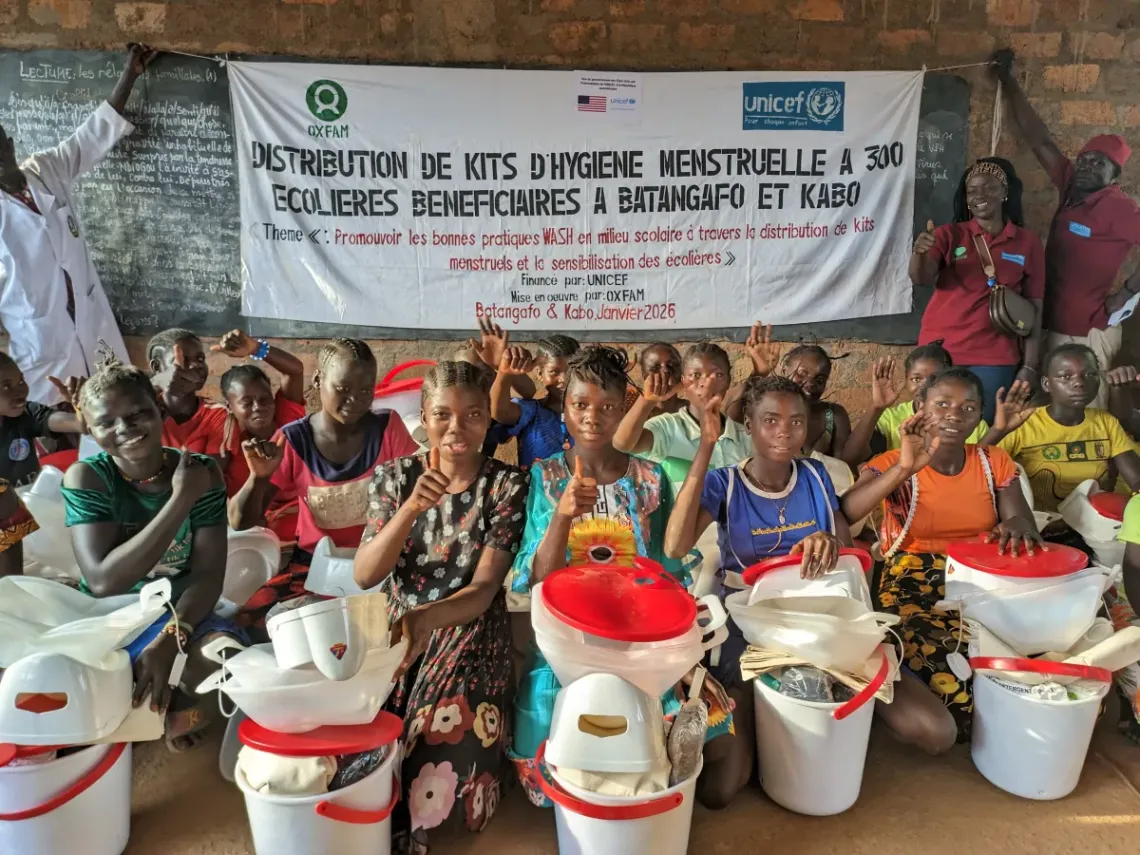
Elda is one of 50 adolescent girls at the Prefectural Primary School in Batangafo to receive a “dignity kit”—a set of essential items designed to help girls manage their menstrual hygiene with safety and dignity. As part of a broader WASH (water, sanitation and hygiene) programme funded by the U.S. Department of State, UNICEF, in partnership with Oxfam International, is distributing these kits to 300 girls in schools in Batangafo and Kabo, the two main towns of the Ouham Fafa prefecture in the north of the country.
No one knows the exact number of adolescent girls in the Central African Republic who miss significant amounts of school each month because of menstruation, but the scale of the problem is alarming. According to a UNESCO study from 2016, on average one in ten girls in Sub-Saharan Africa misses school during their menstrual cycle, and in some countries it is one in four girls. By some estimates, this equals as much as twenty percent of a given school year.
According to Clarisse Kembiyangue, who oversees Oxfam’s hygiene programme in Batangafo, “most girls cannot afford sanitary pads because their parents simply don’t have the means. Instead, they resort to using old rags, which are unhygienic. Combined with the fact that menstruation remains a cultural taboo—something you just don’t talk about—this creates a very difficult situation for girls. When their period starts, many feel ‘dirty’ and are afraid to go to school for fear of being mocked by boys.
"On average, a girl can miss four to five days of school every month. This causes them to fall behind in their studies, and when exams come, they often perform worse than boys.”
Ms. Kembiyangue says that “in many cases, girls become discouraged and drop out of school—a situation that often pushes them into another serious problem: early marriage. But I remain hopeful that, even though we are currently reaching only a limited number of girls, this programme can mark the beginning of meaningful social change.”
UNICEF advocates that no girl should miss school due to menstruation, and in some communities works to improve the supply of pads, including through local manufacture.
Distribution of menstrual hygiene kits to help girls manage their periods is part of UNICEF’s WASH programmes worldwide. It helps prevent them from falling behind or dropping out.
Elda is among a group of 25 primary-school girls from Batangafo Prefectural School, listening attentively as Clarisse gives a detailed explanation on how to manage that situation. Before beginning however, she delivers a direct message to the handful of male teachers and boys present in the classroom.
“All of you—men—please get out. This briefing is not for you.”
Once the explanations are over, the girls step forward one by one, visibly confident. Clarisse checks their names off a list and hands each of them a package of hygiene items: a foldable jerrican, two pieces of cloth, soap, washing powder, sanitary pads, underwear, and a torch—to help them reach the latrines at night.
The final item prompts extra questions: a whistle. “It is for your own protection,” Clarisse explains. “Keep it with you at all times at night. If you get up to go to the toilet and feel that you may be at risk of sexual assault, do not hesitate—blow it loudly and repeatedly.”
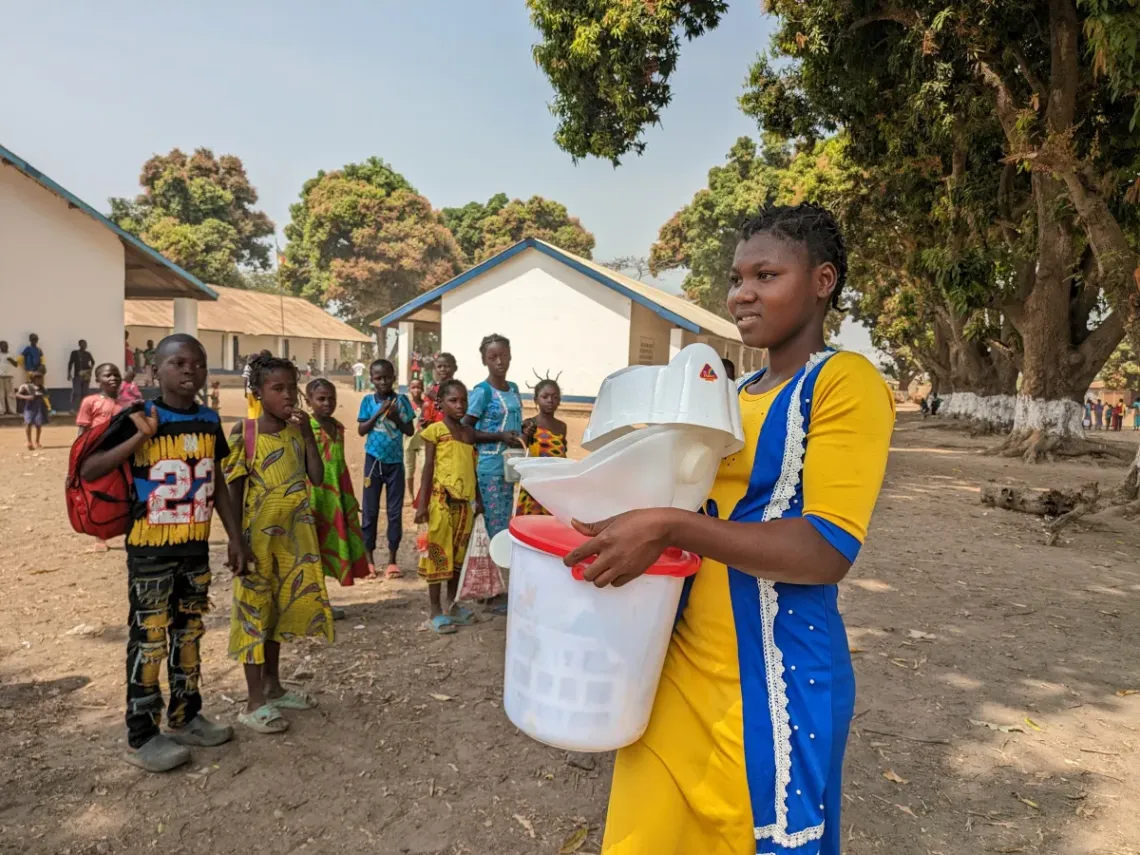
Elda, too, has received her kit. “I am very happy, because now I know I will no longer miss my lessons during my monthly period, as I did before. I used to feel angry when I had to stay home for five days—ashamed, and because the boys made fun of us during that time,” she says.
As the session comes to an end, Elda gathers her belongings and walks back home. Before leaving, she casts a glance at a few of her male classmates—her expression hovering somewhere between relief and quiet triumph.
“Boys should also listen to what we were just taught, because above all, they are the ones who need to change their mentality,” she says.
As she starts walking away, she adds, “I always advise other girls: don’t be afraid. Monthly periods are normal and natural—there is nothing to be ashamed of. They should never prevent you from coming to school.”
