The Gbélékota communities: A model of community engagement
Helping communities to identify their development problems and challenges, proposing possible solutions and, above all, taking initiatives to find local solutions

- English
- Français
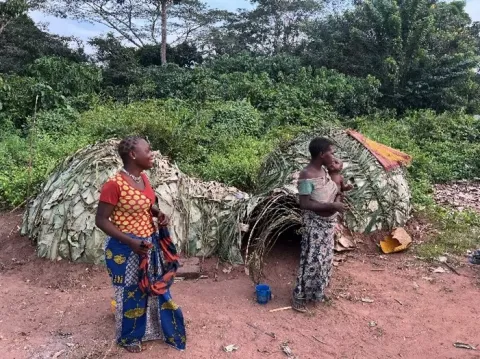
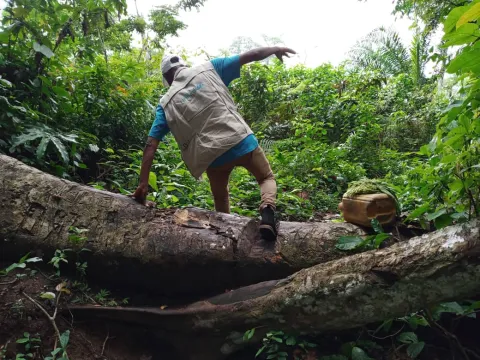
Helping communities to identify their development problems and challenges, proposing possible solutions and, above all, taking initiatives to find local solutions is the exercise that the residents of the Gbélékota communities, in the Korompoko commune, in Bossangoa sub-prefecture, Ouham prefecture, have been carrying out over the last few months with support from UNICEF.
Thanks to this "Community Diagnosis" initiative, the population realised that it has the local capacity to undertake small-scale projects that do not require the intervention of humanitarian or development partners. For some community leaders, this project has profoundly changed the population’s habits and attitude.
"At first, we didn't understand the approach, because usually when organisations come here, it's to register households and distribute food, seeds or school supplies... So we didn't understand why there were meetings where there was no talk of distribution. A lot of people were demotivated. It was as we went along, with the training and simulations organised by UNICEF, that we finally understood the approach", said Robert Zounendji, Pastor of the Liberté Church in Gbélékota, who actively participated in the activities.
"We realised that we also had capacities and resources. We are no longer going to sit back and wait for donations. We will try to solve our problems ourselves", he stressed.
Let’s build latrines as a start!
The official handover ceremony for the Community Action Plan took place on Wednesday 6 December 2023 at the Gbélékota school, a symbolic location as the first community involvement activity began there, 6 months prior. A building with three classrooms was built there at the time without considering latrines for the children.
From the very first days of the community diagnosis, the community took charge and decided to build latrines for the school. Two blocks were finally built thanks to their initiative. The local communities did everything themselves, from digging the pits to raising the walls, without any intervention from partners. UNICEF, through its partner Caritas Centrafrique de Bossangoa, contributed a few bags of cement, wood and metal sheets for the roof.
"This is the first time we've done something like this since our group was founded. It's exceptional! We're going to do everything we can to implement this plan, OUR plan, for the good of our community," said Bernard Gounoumoundjou, a local leader from Gbélékota.

Engagements to consolidate the community dynamics
During the document handing-over ceremony, the chiefs from the five villages applauded this initiative, which was supported by UNICEF, WFP, UNFPA, PLAN INTERNATIONAL, AFEB and CARITAS. « A great first, » said the community representative. As a result, all village chiefs took upon themselves to turn this plan into a roadmap that shall guide all possible interventions in their respective places. They also made a commitment to respond to the problems of their community with local initiatives as they await eventual external support. This initiative was summed up in the slogan “Our development starts with us”.
From its side, UNICEF reiterated its support to the communities through the work with its implementing partners. Many partners also appreciated this initiative and in turn pledged to support the dynamic community that was developed in Gbélékota. The World Food Programme (WFP), for example, announced that it will be implementing a school canteen project at the Gbélékota school, at the request of the community.
UNICEF, with its partner in the field of education and protection, the Association des Femmes Evangéliques de Bossangoa (AFEB), promised to construct a building with three classrooms and latrines to increase the school's intake capacity. UNICEF will also be training parent-teachers, a major action included in the community action plan. For its part, Plan International NGO, will address the women's concerns about the lack of a savings and credit structure.
The Gbélékota communities comprise five villages: Gbélékota1, Gbelekota2, Bourouna, Mandjia and Banda. This community action plan is an advocacy tool, a roadmap for the community. It includes nine key sectors for social and economic development. Nine key sectors were explored in this community diagnosis: education, health, social cohesion, food security, economy and trade, protection, youth, communication/information, and WASH. For each sector, the major problems, possible solutions, the contribution of the community and the support of partners were elaborated.