When Latrines Restore Dignity in Health Facilities
How the WASH in Health programme, supported by UNICEF and the Republic of Korea, is transforming patient experience and strengthening hygiene through inclusive latrine construction.
- English
- Français
In the Belel health district, at the Bayara health facility, users are experiencing a simple yet profound joy: the inauguration of new latrines. An event that may seem ordinary, but whose impact is immense for patients, caregivers, and health personnel.
In health facilities, priorities often focus on access to care, quality of medical services, or water supply. Amidst this mosaic of urgent needs, latrines are too often relegated to the background, even though they are an essential link in the chain of care.
The Absence of Latrines: A Silent Burden
Yet the absence or degradation of latrines has direct consequences on health and dignity. It exposes users to waterborne diseases, weakens hygiene practices, and creates discomfort, sometimes even humiliation.
At the Bayara health facility, this reality had become a daily ordeal. Only three latrines were available. Two were in an advanced state of deterioration, inaccessible to persons living with disabilities. The third had no door and no roof, offering little privacy and even less safety.
“We receive on average one hundred patients per month. You can imagine how difficult it was for them to use these toilets,” confides the deputy head of the health center.
“Without doors and without gender markers, there was always the risk that someone would walk in at the wrong moment. The discomfort was constant.”
A Concrete Response to Restore Hygiene and Dignity
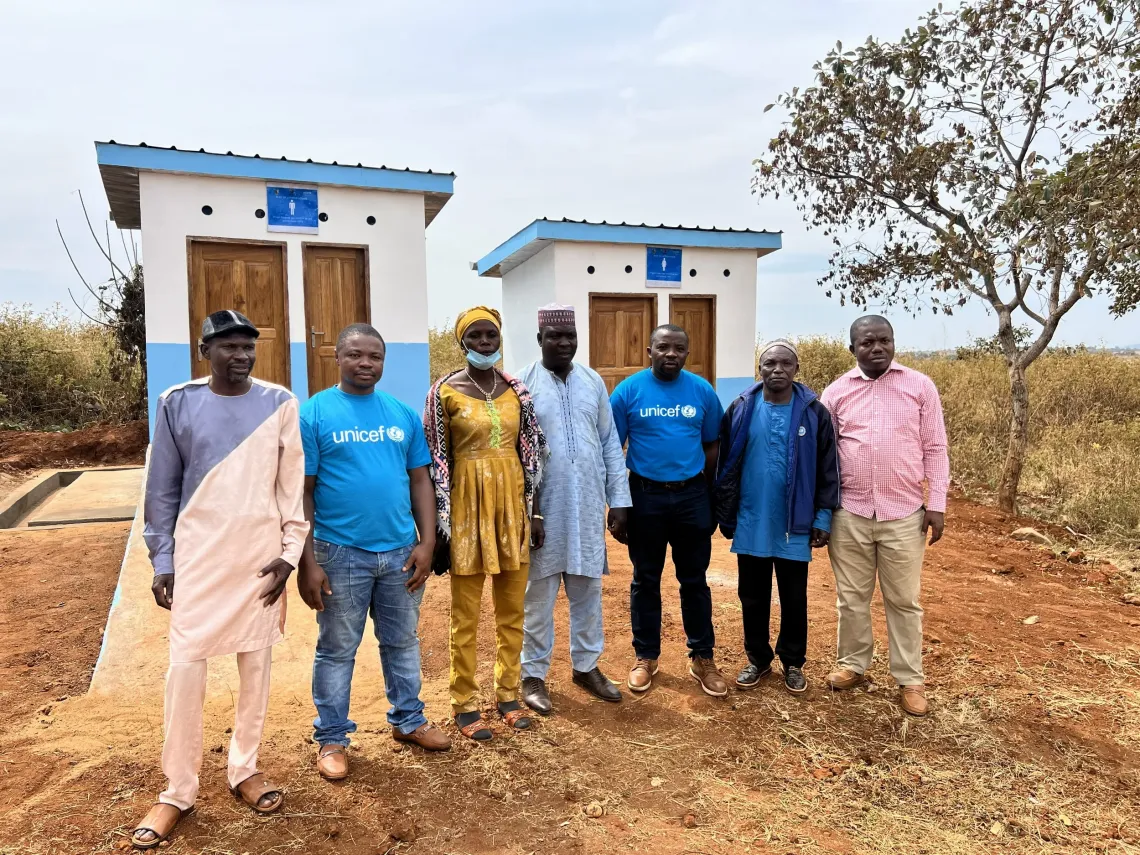
In response to this situation, UNICEF and its partners took action. As part of the WASH in Health programme, funded by the Republic of Korea, four inclusive latrines were built within the Bayara health facility.
This infrastructure, warmly welcomed during its provisional handover, aligns fully with UNICEF’s commitment to reducing hygiene-related diseases, especially among children and women, and improving the overall quality of health services.
A Visible Change for Users
The impact of this construction is immediate. For both health staff and patients, the new latrines represent far more than simple equipment.
“These latrines will truly alleviate our hardships. From now on, everyone will feel comfortable in a clean, safe, and inclusive space,” rejoices the deputy head of the health center.
Patients share the same relief:
“Finally, we can go to the toilet without fearing that someone might open the door,” says a caregiver with a smile.
Investing in Latrines Is Investing in Health
The WASH in Health programme, implemented by UNICEF with funding from the Republic of Korea, is now expanding to several health facilities. But considering the still high number of structures lacking adequate latrines, the needs remain significant.
Investing in inclusive latrines is not a luxury. It is a public health imperative, a tool for preventing disease and an act in favor of human dignity. Multiplying such infrastructures means sustainably reducing health risks and strengthening the quality of care provided.
Because a health system is not measured solely by the availability of medicine or the skills of personnel, but also by its ability to provide safe, clean, and respectful spaces.