Warmth That Heals: Kangaroo Care for Newborn Survival
In Adamawa, young mothers show that love, resolve, and Kangaroo Care—a simple, skin-to-skin method—can give premature babies the strength to survive and grow.

In Cameroon, one in six children dies before reaching the age of five, with a third of these deaths occurring within the first 28 days of life, the critical neonatal period. This stark reality highlights the urgent need to improve maternal and child health services, especially for babies born prematurely or of low birth weight. This situation has been further compounded by the COVID-19 pandemic, which has exposed significant gaps in healthcare infrastructure.
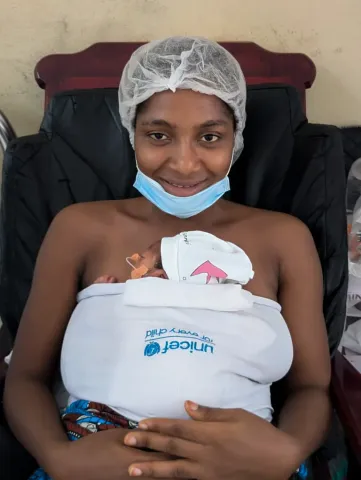
In response, the Republic of Korea through UNICEF has made it a priority to strengthen the health system, with a particular focus on reducing under-five mortality by flagging the urgent need for practices like the Kangaroo Mother Care (KMC) a simple, low-cost method that involves skin-to-skin contact between mother and baby to regulate temperature, heartbeat, and breathing, while fostering emotional bonding.
Addressing these challenges requires a holistic and coordinated approach. UNICEF is working with the government and partners to reinforce health systems, upgrade water, sanitation, and hygiene facilities in health centres, and promote public awareness on health and hygiene. Community engagement and collaboration among stakeholders are also key to ensuring lasting impact. By investing in these areas, there is hope to give every child in Cameroon a fair start in life, beginning with the chance to survive.

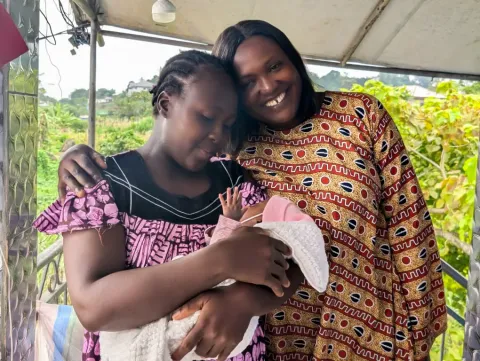
In the heart of Cameroon’s Adamawa region, in the vibrant town of Ngaoundéré, stands the regional hospital, a place where life begins each day with the enchanting cries of newborns echoing through the maternity ward. Amid the joyful noise, tucked behind transparent windows, lies a special room reserved for the most fragile arrivals: premature babies. Here, nestled closely against their mothers’ chests, the tiny infants rest peacefully wrapped in warmth, love, and skin-to-skin care, unaware of the world around them.
Miste, a 20-year-old mother of triplets, shares her experience:
“From the beginning of my pregnancy, I was told I might give birth at seven months. That is when they introduced me to the kangaroo method. It is tiring, but it is necessary, and all I want is for my babies to be fine.”
Her dedication paid off. Two of her babies were discharged quickly, and she continues to care for the third in the kangaroo position, holding him close to her heart.
Floriane, just 18, also found strength in the method after giving birth to her daughter Aisha prematurely:
“The first time I held her like that, I felt an instant connection. Feeling each other’s heartbeat made both of us feel safe. I only put her down for about two hours a day, just to breastfeed or change her.”
Health workers at the hospital have seen firsthand the impact of this approach:
“Kangaroo care has changed the way we support premature babies,”
says a nurse at the maternity ward.
“It’s not just about survival, it’s about giving these babies a strong, loving start in life.”
Kangaroo Mother Care is more than a medical technique; it’s a lifeline. With support from UNICEF and the Republic of Korea, hospitals like Ngaoundéré are equipped to train mothers, provide kangaroo wraps, and ensure that even the most fragile newborns have a fighting chance. By investing in this simple yet powerful method, Cameroon is taking a bold step toward reducing neonatal mortality and giving every child, no matter how small, the warmth and care they need to survive and thrive.