Ameh Baby Boosts Mpox Detection in Akwaya
In Ameh, a remote village in Cameroon’s South‑West Region, a twelve‑month‑old baby has become a vivid reminder of the need for strong community health systems to protect children in hard‑to‑reach areas.

Eyalle is too young to say when he is in pain or to describe how he feels. Like all infants, he depends entirely on the adults around him to notice when something is wrong.
When rashes first appeared on his skin, his parents knew something was not right, but like many families in isolated communities, they had limited information about mpox or how it spreads.
To confirm what was happening, Eyalle’s sample had to travel more than 700 kilometres to the Djoungolo Protestant Health Centre in Yaoundé. When the result came back positive for mpox, he became the youngest confirmed case in the Akwaya outbreak. Today, he is recovering well, but his case has highlighted where support matters most.
Growing Up in a Remote Village
Ameh village sits deep in the forest near the border with Nigeria. Many families depend on farming and the forest for their livelihoods. Roads are rough, and reaching health services can take hours or even days. For parents raising young children here, illness can bring uncertainty.

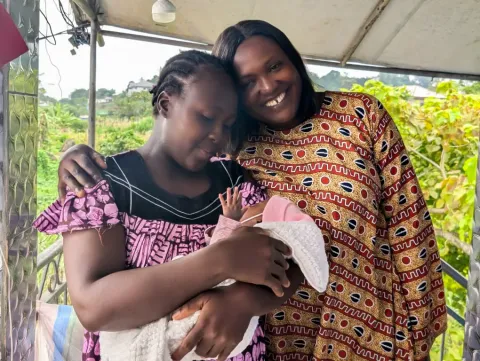
“When I first noticed the rashes was not normal, I became worried, because he is still small and could not tell me how he was feeling. As a mother, you can only watch and try to understand what is happening.”
Eyalle’s mother recalls.
In communities like Ameh, families rely on each other for support. Parents do their best to care for their children, even when health services are far away.
When Mpox Reached the Community
Mpox is a viral disease that can spread through close contact. When the first case was detected in Akwaya, health teams began tracing people who had been in contact with the infected child. Eyalle was tested as part of this effort.
“Before the health workers came, we did not know much about mpox, When your child becomes sick in a village like ours, sometimes you do not know what the illness is or what to do.”
Eyalle’s mother says.
Fortunately, the baby did not develop severe illness and is slowly recovering. But his case highlighted the importance of detecting outbreaks early and bringing information closer to communities.
Health Workers Bringing Support Closer
As the outbreak response began, UNICEF supported the training and deployment of community health workers across Akwaya. These workers now travel from village to village, helping families recognise symptoms, sharing health information, and encouraging people to seek care when needed.
“Many families had never heard about mpox before. Our work is to visit homes, talk to parents and help them understand the signs of the disease so they can protect their children.”
says one community health worker supporting the response.
For parents in remote communities, these visits are reassuring.