UNICEF and Japan expand vital services for children from Maga to Vélé
Over 1,000 children screened in Vélé as mothers join forces with UNICEF to shield the most vulnerable from food insecurity.F protègent les plus vulnérables

- English
- Français
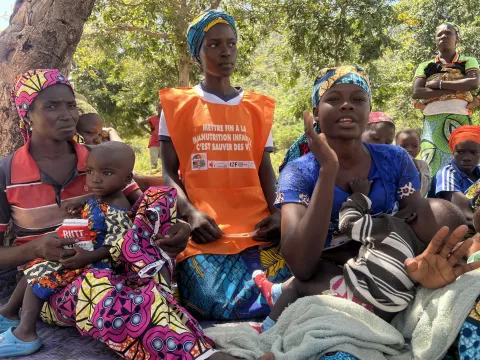
Under a blazing sun, outside the Intensive Therapeutic Nutrition Centre (CNTI) in Vélé, more than a hundred women are queuing in single file, waiting patiently with their children in their arms. Some try to shield them in the shade of the only tree in the back courtyard, whilst others watch the older children play despite the stifling heat. It is past midday; exhaustion is written all over their faces, but they are all here for the same reason: to safeguard their children’s health.
In the Maga district, challenges relating to child nutrition also remain a cause for concern. According to the head of the Maga health district, the situation is closely linked to households’ living conditions.
“When it rains, some areas are completely flooded. To get around, you sometimes have to use a canoe. Access to food becomes difficult, and children are the first to suffer the consequences.”
The lean season makes the situation even worse. Many families struggle to provide their children with three balanced meals a day, thereby increasing the risk of malnutrition.
In light of this situation, screening efforts have been stepped up, improving the early detection of cases and ensuring appropriate care is provided where malnutrition is confirmed.
For the district chief of Vélé, however, tackling this situation requires ongoing support from partners.
“We have had several partners supporting us in the fight against malaria. But today, when it comes to vaccination coverage and child nutrition, UNICEF remains our main source of support. This support is essential for protecting the most vulnerable and strengthening the resilience of our communities. ”
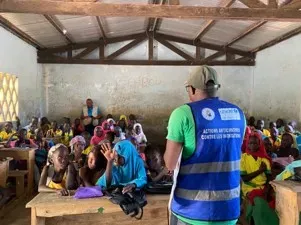
In Vélé, the response is not limited to screening. Routine vaccination programmes continue alongside nutrition initiatives through a community-led approach spearheaded by the Nutrition Activities Support Group (GSAN).

Made up of women from the community, this group plays a vital role in raising awareness amongst their peers about good dietary practices, infant and young child feeding, and the nutritional monitoring of children. This approach is based on trust and close ties.
At the helm of the group, Amina, chair of the Vélé GSAN, embodies this collective commitment.
“The work continues. We are all united by the same cause: the wellbeing of children. We pool our resources and organise cookery demonstrations to show mums that, using locally available ingredients, it is possible to improve children’s diets. Even with the little a family has, a child can be saved from malnutrition.”
The results demonstrate the impact of this commitment. In May 2026, more than a thousand children – 1,043 to be precise – were screened in Vélé. Among them, 15 children suffering from severe acute malnutrition (SAM) were identified and referred for appropriate care. A few weeks earlier, a nutrition awareness event organised by GSAN had mobilised the entire community, bringing together 561 participants, nearly 8 out of 10 of whom were women.
In Vélé, hope is embodied by these women who, every day, devote their time, energy and solidarity to helping children. Through a combination of vaccination, nutritional screening, treatment for malnutrition, malaria, diarrhoea and acute respiratory infections, and community mobilisation, they are helping to build a shield against malnutrition and preventable diseases.
In these two communities, which are facing flooding, food insecurity and household vulnerability, every child vaccinated, every mother made aware of the issues, and every case of malnutrition prevented or treated represents a victory. A victory made possible by community mobilisation and the ongoing support of UNICEF and its partners, who are committed to supporting children.