She came to school. She stayed
How dignity boxes are keeping girls in class across crisis-affected schools in the North West and South West regions of Cameroon.

School campuses are meant to be inclusive spaces, designed to meet the needs of everyone who passes through them. This requires deliberate effort especially when it comes to meeting the menstrual needs of girls. At the very least, this should show up through functional WASH facilities and the availability of menstrual hygiene materials. Yet for many community schools and Temporary Learning Spaces (TLSs) across the crisis-affected North west and South west regions of Cameroon, these basic necessities are simply not there.
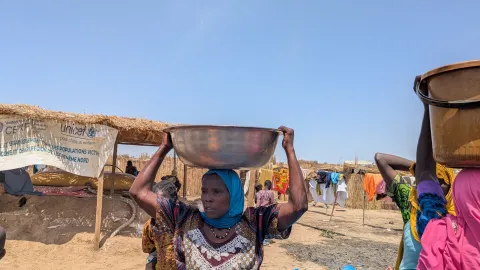
The Anglophone crisis has placed immense strain on the education system in these regions. School buildings have been destroyed or abandoned, teachers attacked or displaced, and investment in gender and girls issues in schools have significantly reduced. In some hard-to-reach areas, schools that remain open do so barely offering only the most essential service, teaching. Concepts like inclusivity, gender studies menstrual hygiene management, and child-friendly school environments are not foreign to these schools; they are simply unaffordable. As with many other realities shaped by the crisis, the trade-off is stark: invest in additional systems or survive as a school.
For girls of menstruating age, this trade-off carries daily consequences especially for those who experience their first period on campus. Without spaces or materials to manage menstruation properly, girls frequently miss school, experience stigma, and internalize shame. Over time, this chips away at confidence and self-worth, turning menstruation an ordinary biological process into a monthly source of anxiety and disruption.

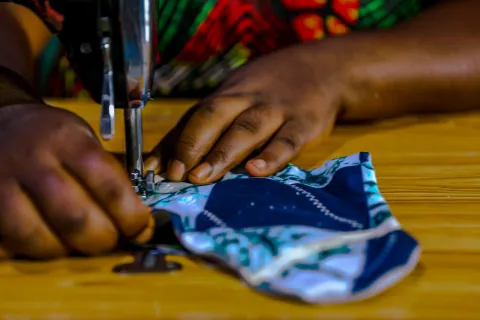
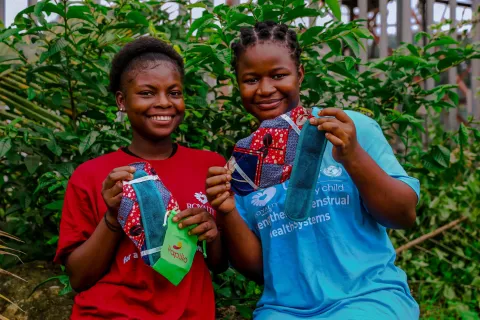
Recognizing the risk that poor menstrual hygiene management poses to girls’ attendance and wellbeing, UNICEF’s partner, Royalty World, began experimenting with the concept of dignity boxes. These are emergency menstrual hygiene kits placed directly in schools. Each box contains pads, towels, underwear, soap, sanitizers, towels, and simple menstrual health education materials enough to allow a girl who experiences a menstrual accident, or who begins her period at school, to clean up, change, and return to class without having to go home or endure shame.
Seeing the value of this approach, UNICEF supported Royalty World to expand the initiative to schools and TLSs in crisis-affected communities across the North West and South West regions where education interventions were already underway. The aim was straightforward: reduce period-related absenteeism and ease one of the quiet, recurring costs that keep girls out of school.
When Space Is Scarce, Dignity Matters Even More
In Kumba, Meme Division, the challenges extended beyond learning into the very question of space. With many school buildings destroyed or located in “red zones,” multiple schools now share single campuses. Because the crisis has disrupted schooling timelines, children in primary school are now older than before, increasing the likelihood of menstruation occurring on campus. Presenting the dignity box to the head teacher was met with visible appreciation.
“We are happy to receive this box, because, as you can see, our place is not very good, and this will help us not to miss school. We are really struggling; this will help a lot.”
In Wututu, the situation looked different. The school had a functioning toilet and access to water but lacked materials to respond to menstrual accidents when they happened.
“We have had menstrual incidents in schools many times, but all we could offer was pad when we had it, the girls need so much more and this box contains a lot, like the towels and the books. This book is very important, with the chart, because we can use it to teach the other children, even the ones that were not menstruating”

Beyond materials, another challenge surfaced across schools: limited menstrual health education. This gap allowed myths to circulate freely on campus menstruation described as “punishment,” “something bad,” or “shameful,” particularly when accidents occurred in public spaces.
In Kumba, there was visible relief when the team encouraged the school to establish a menstrual health club. Until then, girls had struggled to speak openly about menstruation, especially in mixed settings. Many were reluctant to admit they were menstruating when boys were present, reflecting how deeply silence and misinformation had taken root. The need for sustained sensitization and support became clear because menstruation is natural and should never be a source of shame or exclusion.
Measurable Impact
By the end of the project, more than ten schools across Fako, Lebialem, Manyu, Meme, Mezam, Boyo, Ngoketunjia, Bui, and Menchum divisions had been supported with dignity boxes. Each box contained enough supplies to respond to over 420 menstrual incidents per school amounting to approximately 4,200 instances where girls did not have to leave school, miss lessons, or carry menstrual shame with them through the day.
This intervention was made possible through the support of European Union Humanitarian Aid and the Government of Japan, whose investment helped absorb a basic but persistent cost that continues to affect girls’ education in crisis-affected settings.
We call on government institutions, civil society actors, community leaders, educators, and private sector partners to treat menstrual health as a school and household economic issue. Invest in menstrual hygiene management solutions that reduce recurring costs. Equip schools with practical, affordable tools that prevent girls from being pushed out of class by circumstances they cannot control.
When the cost of menstruation is reduced, girls miss fewer school days, families retain scarce income for other needs, and schools hold on to learners who might otherwise disappear quietly. Easing this monthly burden does more than solve a practical problem it strengthens resilience, protects dignity, and advances gender-equitable education.
For Every girl, Dignified menstrual care