She no longer has to chose
How reusable menstrual pads are easing a hidden financial burden for girls in crisis-affected Cameroon

Menstruation does not recognize crisis, financial hardship, vulnerability, or convenience. It speaks only one language: biology. In the context of the Anglophone crisis in Cameroon’s North West and South West regions, menstruation has not paused because there is unrest. For many girls and young women, it has simply become heavier to carry.
For them, menstruation is rarely received as a gift. It arrives as an added cost. The question is no longer how many pads are needed, but how many can be afforded. The choice is not between brands, but between menstrual pads and other basic needs that have grown increasingly inaccessible under the weight of prolonged socio-economic disruption.
Across nine divisions in the North West and South West regions, Adolescent girls continue to encounter persistent barriers to menstrual health and hygiene. One challenge cut across every community: cost. In Cameroon, menstrual pads remain taxed, and this burden is transferred directly to women and girls through inflated prices. Six hundred francs. Seven hundred. One thousand. Two thousand. The variation tells a story of volatility, insecurity, and distance. Communities classified as “hard to reach” bear the highest prices, even as they remain the most vulnerable within the menstrual health context.
In communities such as Oku, Lebialem, Belo, and Babessi, this economic strain compounds emotional and physical stress during a period that calls for care and calm. Menstruation is gradually stripped of its meaning as a marker of a healthy body and recast as a monthly disruption something to endure rather than understand.
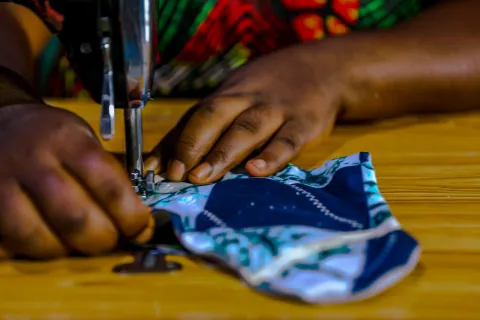
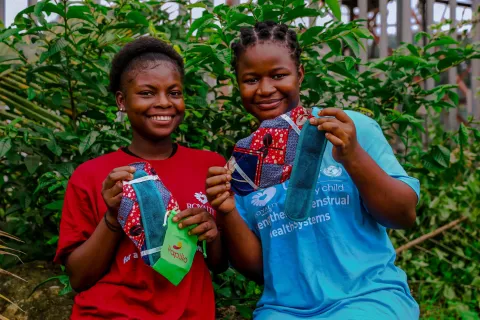
Addressing this economic barrier brought reusable menstrual pads to the forefront. Locally produced, eco-friendly, and designed with comfort and health in mind, these pads respond to variations in flow and duration while offering durability. With a lifespan of up to two years when properly used, they present a sustainable alternative to disposable pads, reducing both financial pressure and environmental waste.

Recognizing this potential, UNICEF is leading efforts to advance menstrual health and hygiene across the North-West and South-West regions by providing strategic direction, technical guidance, and coordination support. In partnership with Royalty World, UNICEF is supporting the delivery of menstrual health education and essential services to 5,000 vulnerable girls and young women, including those in schools, Temporary Learning Spaces, and Child-Friendly Facilities.
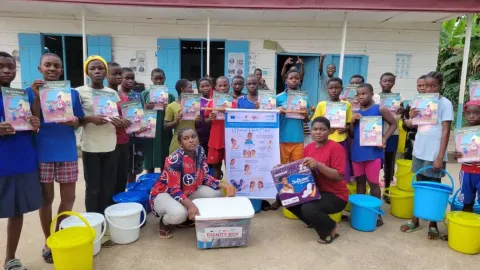
Community focal points were identified and trained in every project location to lead menstrual health sensitization and demonstrate the use of reusable pads. Accompanying project teams across divisions, they helped carry both information and dignity into communities.
“Bye to Monthly Cadeux!”
“Bye bye to monthly 600!”
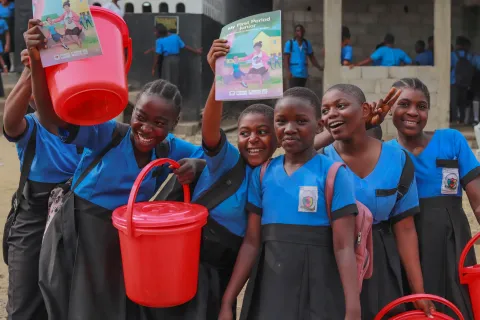
The chants rang out in Yoke community after distribution small words carrying large relief.

“My mother doesn’t have to struggle to buy pads for me again. This has really helped us. I can focus on my studies without thinking about money or fear.”
By the close of the distribution cycle, more than 5,000 girls and young women had received menstrual hygiene kits. For households already operating at the edge of survival, this reduction in recurring monthly expenditure is significant. Money previously spent on disposable pads often at inflated crisis-driven prices can now be redirected to food, school materials, transport, or basic healthcare needs.
Girls in hard-to-reach communities, where pad prices are highest and purchasing power is lowest, no longer have to make monthly trade-offs between menstrual products and other essentials. With reusable pads lasting up to two years, the cost of menstruation was shifted from a recurring monthly expense to a one-time, durable solution.
This support has reduced a big burden for us. The money we used to spend every month can now help with food and school needs. It has brought us relief.
This intervention was made possible through the support of European Union Humanitarian Aid and the Government of Japan, whose investment helped bring back dignity and support for adolescent girls.
We call on government institutions, civil society actors, community leaders, educators, and private sector partners to treat menstrual health as a household economic issue. Invest in menstrual hygiene management solutions that reduce recurring costs. Support sustainable alternatives that ease monthly financial pressure. Ensure schools and communities are equipped with practical, affordable options that do not force girls and families into repeated trade-offs.
When the cost of menstruation is reduced, girls miss fewer school days, households retain scarce income for other essentials, and communities gain stability.
Because easing this monthly financial burden does more than save 600 FCFA. It restores dignity. It protects education. And it strengthens resilience not once, but every month.