Gender and Polio in the Far North: Understanding the Barriers to Improve Vaccination
Addressing gender inequalities to boost polio vaccination and protect children in Cameroon’s most vulnerable communities.
- English
- Français
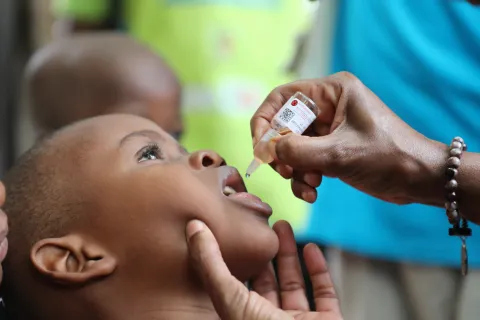
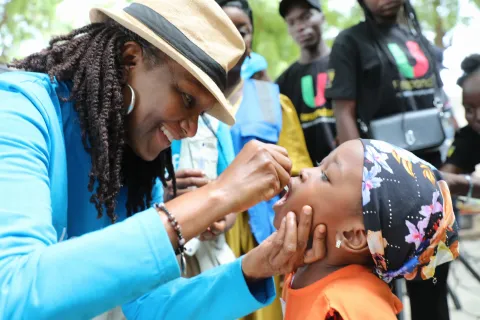
In Cameroon’s Far North region, eradicating poliomyelitis depends not only on the availability of vaccine doses but also on overcoming gender-related barriers. Through the “Gender Polio+” project, UNICEF and its partners are addressing these invisible obstacles so that every child, even in the most remote areas, can be protected.
Maroua 1 and Mokolo: Priority Districts
Located in the Lake Chad Basin and bordering several countries, the Far North remains exposed to the importation of poliovirus variants and suffers from insufficient routine immunization coverage. The districts of Maroua 1 and Mokolo have a high number of so‑called “zero-dose” children, those who have never been vaccinated.
Here, the fight against polio faces several persistent challenges: insecurity, population displacement, long distances to health facilities, and restrictive social norms. In this fragile context, gender inequalities deeply influence vaccination decisions, access to services, and the quality of care

Women are at the center of children’s health, but they do not always have the means or authority to act quickly. Integrating gender into vaccination means recognizing this reality and responding to it in practical ways.
Women on the Frontline, Without Always Having Decision‑Making Power
Children under five are at the heart of polio vaccination strategies. Yet women, mothers, grandmothers, aunts, carry most of the responsibility for childcare. They are the ones who take infants to health centers, keep vaccination appointments, and ensure daily family well‑being. However, their decision‑making power is often limited.
“Women are at the center of children’s health, but they do not always have the means or authority to act quickly. Integrating gender into vaccination means recognizing this reality and responding to it in practical ways,” explains Sambaï Noel, Head Nurse at the Mokolo District Hospital.
A 2024 analysis conducted in Mokolo and Maroua 1 highlighted several persistent obstacles: low levels of education, heavy domestic workloads, limited financial autonomy, long distances between homes and health facilities, as well as beliefs and rumors surrounding vaccination and Vitamin A supplementation. Combined, these factors weaken adherence to immunization schedules, particularly among displaced families and those living in the most remote areas.
Social Norms, Distance, and Rumors: Preventable Barriers
For many mothers, vaccinating a child means walking or riding several kilometers, often with limited resources. Some even spend the night near health centers to avoid missing a vaccination session. In households where men decide on expenses, transportation costs can become a deterrent.
In addition to these material constraints, persistent social norms and rumors, especially concerning fertility or vaccine safety, continue to circulate.
“On social media or in certain conversations, people still say the vaccine can harm young girls. It’s a daily battle to set the record straight,” says Sambaï Noel.

Gender Polio+: Vaccinating Differently to Protect Every Child
In response to these challenges, the Gender Polio+ project, implemented by UNICEF and partners, aims to help eradicate polio in the Far North by addressing the social norms that hinder vaccination. The initiative engages traditional and religious leaders and encourages fathers’ involvement through community dialogues, fathers’ groups, and male champions to promote shared responsibility for childcare.
“When men get involved and support vaccination, decisions are made more quickly and children are better protected,” says Aïssatou, a model mother in Mokolo.
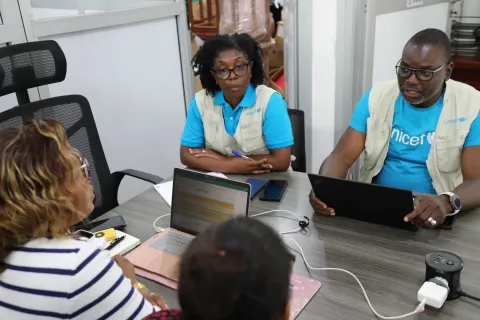
At the health‑system level, Gender Polio+ strengthens the capacity of health workers to offer more gender‑sensitive services. Health personnel and routine vaccination teams receive training on gender integration, interpersonal communication, and the prevention of sexual exploitation and abuse, ensuring safer, more accessible, and more respectful services for families.
At the community level, model mothers, women’s groups, and volunteers play a key role in awareness‑raising and combating misinformation. By integrating gender at every stage, from analysis to service delivery, the project is already contributing to improved vaccination uptake, increased participation from fathers, and a noticeable decline in paralysis cases among children.
“Thanks to awareness‑raising efforts, we are seeing fewer children affected by paralysis than before,” notes Aïssatou.

Vaccinating Differently for a Polio‑Free Far North
Eradicating poliomyelitis in Cameroon’s Far North is not only about increasing the number of doses administered but also about approaching vaccination differently. It requires recognizing the central role of women, engaging men as partners, relying on community leaders, and offering services adapted to local realities.
With Gender Polio+, UNICEF and its partners are charting a clear path: transforming social norms, strengthening trust, and removing gender‑related barriers, so that every child, wherever they live, can be protected against polio.