Caleb’s Story: A Name, A Future and Hope Restored
Ensuring every child has a birth certificate is an investment in education, protection, and a brighter future, without it, children like Caleb remain invisible and at risk

Yet across Cameroon, thousands of children grow up without this basic right. In crisis-affected regions such as the North West and South West, years of conflict have disrupted families, destroyed homes, and weakened access to essential services. Civil registration offices have been closed or remain out of reach. Civil registry offices are less operational. At least 33% of secondary offices are non-functional, while most main offices operate only part-time due to the security risks faced by mayors. Civil documents have been lost during displacement, and many parents lack information or resources to register their children.
Without legal identity, children are left invisible, unable to sit for national examinations, or fully access services meant to protect them. They are more vulnerable to exploitation, child labour, early marriage and lifelong exclusion.
Calebs Story
One of those children was Caleb.
For most of his childhood, Caleb existed without an identity in the eyes of the law. Born in Ehom, a community in Cameroon’s South West region, his early years were shaped by uncertainty and repeated displacement caused by the prolonged Anglophone crisis.
As violence intensified, schools closed and families fled. Civil registration services became inaccessible, and like many children in crisis-affected communities, Caleb was never registered at birth.
Forced to move repeatedly in search of safety, Caleb spent nearly two years in the littoral region living with his elder sister. With limited means, she struggled to provide food and basic health care. Education was out of reach not only because of financial hardship, but because without a birth certificate, school enrolment was impossible.
When his sister could no longer support him, Caleb returned to Ehom to live with his mother. Determined not to give up on her son’s future, she enrolled him in Class Five, where he ended prior to the crisis. But fear lingered. Without a birth certificate, Caleb would not be allowed to sit for the First School Leaving Certificate examination the following year.
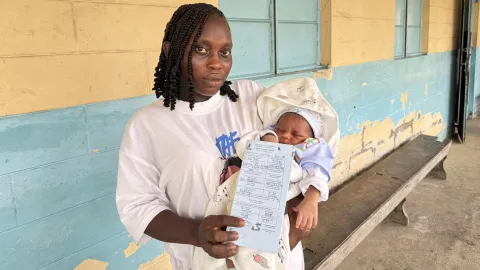
For Caleb, it was a moment of relief and belonging.

“I am happy I finally have a birth certificate,” he says with a smile.
“I can finally register for my exam like my friends.”
Caleb’s life began to change when community facilitators from TeenAlive, a UNICEF implementing partner identified him during outreach activities focused on birth registration and child protection. Through their support, Caleb was registered and finally received his birth certificate.
“He was going to school,” his mother recalls, “but we knew it could all end suddenly, without a birth certificate to register the final exams.”
That single document transformed his future. For the first time, Caleb could prepare for his national examination without fear of exclusion.
With a Wider Lense

Caleb’s story reflects a wider reality. In 2025, UNICEF estimates that one in three children in Cameroon does not have a birth certificate, with the situation particularly severe in the crisis-affected North West and South West regions.
Across communities in the South West, thousands of children share similar experiences years without legal identity, interrupted education, and uncertainty about their future. Through integrated community-based interventions that link birth registration, education support and mental health and psychosocial care, children who were once excluded are now returning to classrooms with renewed confidence.
In divisions such as Fako, Kupe Muanenguba and Lebialem, children in examination classes particularly Class Five and Class Six have been prioritized to prevent dropout and ensure continuity of learning.
For parents and caregivers, receiving a child’s birth certificate is often an emotional turning point.
“I never thought this day would come,” one parent says.
“Now my child can sit for exams and continue school like other children.”
It doesn’t end there, through targeted outreach with traditional leaders and community quarter heads, awareness helps strengthen the importance of birth registration as a gateway to education. Community dialogues and sensitization sessions have helped leaders understand how the absence of a birth certificate prevents children from enrolling in school and sitting for national examinations. As trusted voices, they now play a key role in identifying unregistered children and encouraging families to act.
In communities such as Tombel, Bangem, Alou, Wabane and Fontem, this engagement has enabled thousands of pupils in class 5 and 6 to receive birth certificate and to exercise their right to education, thereby, and secure their place in school. Outreach continues in hard-to-reach areas including Etam, Ehom, Kupe, Bulutu, Njilap, Fonenge, Letia, Lekeng, Mveh and Mated, ensuring that children who were once invisible can access education and a better future.
Through the support of the European Union humanitarian aid, UNICEF, and implementing partner TeenAlive, children like Caleb are gaining the legal identity that unlocks education, safeguards their rights, and restores hope for a brighter future.
No Child Should Be Invisible
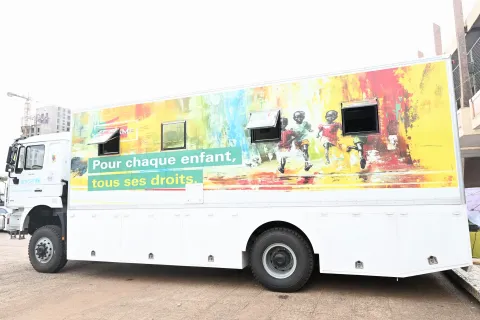
While progress has been made, thousands of children across Cameroon are still waiting. Civil registration systems must be strengthened, mobile registration services expand, and awareness increased so that no child is excluded simply because they lack a piece of paper.
You can help ensure that every child in your community has a name the first step to accessing education and other fundamental rights. Birth registration is a gateway: without it, children cannot enroll in school, sit for exams, or fully enjoy protection and services. Governments, local authorities, traditional leaders, and partners must work hand in hand to make birth certificates accessible to all children. Together, through coordinated action and sustained commitment, we can ensure that every child in Cameroon is counted, protected, and given the opportunity to learn, grow, and thrive.
For Every Child, a legal Identity, a Birth certificate