Polio Campaign: U‑Responders Mobilise Communities to Protect Every Child in Cameroon
From 23 to 26 April 2026, UNICEF Cameroon and health authorities conducted a polio vaccination campaign during the Sub-National Immunisation Days across six regions.

Highlights
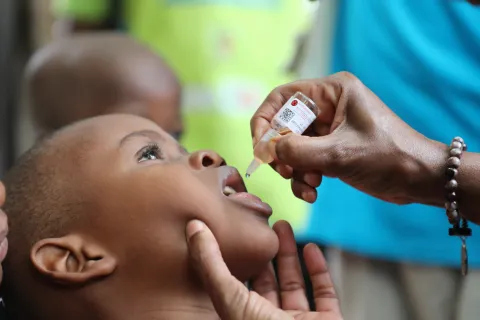
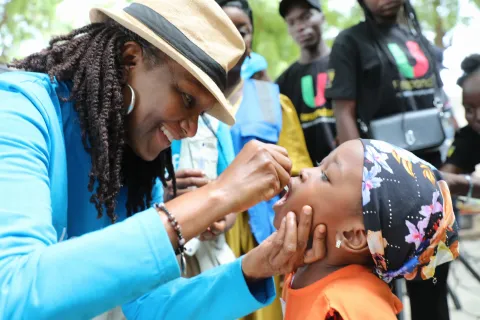
From 23 to 26 April 2026, UNICEF Cameroon, in collaboration with national and regional health authorities, conducted a polio vaccination campaign during the Sub-National Immunisation Days (SNIDs) across six regions of the country. The campaign aimed to protect children aged 0 to 59 months through the administration of the novel oral polio vaccine type 2 (nOPV2), a critical tool in preventing the spread of circulating variant poliovirus.
At the heart of this large-scale mobilisation were the U‑Responders—trusted young volunteers embedded within their communities—working alongside UNICEF staff and vaccination teams to ensure that every child is reached.
Who are the U‑Responders?
U‑Responders are trained young people who support UNICEF’s emergency response efforts by promoting inclusive dialogue, sharing reliable and context-specific information, and helping communities prepare for, respond to and recover from crises. During the polio campaign, their role proved essential in strengthening community engagement and trust.
Youth-led mobilisation on the ground
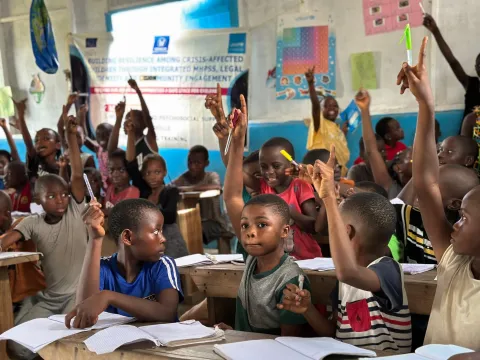
More than 2,000 U‑Responders were deployed on the ground, supported by over 3,000 U‑Reporters engaged through digital platforms. Together, they carried out intensive awareness-raising activities through door-to-door visits, community caravans, outreach in schools and public places, and direct support to vaccination teams.
Their actions focused on:
- raising awareness about the importance of polio vaccination;
- addressing rumours and misinformation;
- encouraging families to have their children vaccinated;
- supporting household mapping and registration of children aged 0–5 years.
These efforts were particularly concentrated in the Far North and North regions, including localities such as Logone Birni, Kousseri, Maroua, Yagoua, Mora, Mokolo, Garoua and Lagdo, where access challenges and population mobility can increase the risk of children being missed.
Reaching the most vulnerable children
Despite difficult terrain, long distances and occasional security constraints, U‑Responders worked tirelessly to reach households in remote and hard-to-access areas. At the end of vaccination, children received a small ink mark on their finger to confirm immunisation, while houses were marked to indicate that they had been visited—simple but effective measures to ensure accurate tracking and full coverage.
According to local health officials, messages delivered by young people from within the community are more easily understood and accepted, contributing to higher uptake of life-saving vaccines.
UNICEF’s commitment and partner support
The campaign also benefited from strong advocacy and field engagement by UNICEF Cameroon staff, including the UNICEF Representative, Nadine Perrault, whose presence alongside vaccination teams reinforced UNICEF’s commitment to protecting every child against polio.
The work of U‑Responders is made possible thanks to the continued support of partners such as the Turkish Cooperation and Coordination Agency (TİKA), which plays a key role in strengthening youth engagement and the visibility of U‑Report and U‑Responders in Cameroon, particularly in the Far North.
Towards a polio-free future
By combining technical expertise, community trust and youth leadership, the polio campaign demonstrates how inclusive, community-centred approaches are essential to ending polio for good. Through the dedication of U‑Responders and partners, UNICEF remains committed to ensuring that no child is left behind in the fight against preventable diseases.