On World Day Against Child Labour, UNICEF calls for increased protection for children on the move
- English
- Khmer
PHNOM PENH, 12 JUNE 2025 – On World Day Against Child Labour, UNICEF is calling for increased action to safeguard the rights of children affected by migration. A new Study Report on the Situation of Children Affected by Migration between Cambodia and Thailand 1 from the Ministry of Social Affairs, Veterans, and Youth Rehabilitation—supported by UNICEF with funding from the European Union (EU) through the PROTECT programme—reveals the scope of child protection risks faced by children who migrate within Cambodia and to neighbouring countries. These include trafficking, abuse, exploitation, being in conflict with the law, and child labour.
“Child labour strips children of their right to a safe and healthy childhood, keeps them out of school, and damages their physical and mental well-being,” said Dr Will Parks, UNICEF Representative to Cambodia. “Children who migrate,whether alone or with family, internally or across borders, are especially vulnerable to these risks. Without proper documentation, protection, or access to education, migrant children are at a higher risk of exploitative work.”
“UNICEF, in collaboration with the EU, is working closely with Government authorities and stakeholders to bolster cross-border child protection systems between Cambodia and neighbouring countries to ensure access to essential services and implement decisive measures to keep migrant children safe and supported.”
Nearly 138 million children were engaged in child labour globally in 2024, including around 54 million in hazardous work likely to jeopardize their health, safety, or development, according to new estimates released today by the International Labour Organization (ILO) and UNICEF2. The latest data show a total reduction of over 20 million children since 2020, reversing an alarming spike between 2016 and 2020.
Over the last decade, Cambodia has taken major steps to protect its children from violence, exploitation, and abuse. Between 2010 and 2021, the proportion of working children dropped from 37 per cent to 17 per cent. Despite progress, this still represents 1 in 5 children in Cambodia who are economically active3.
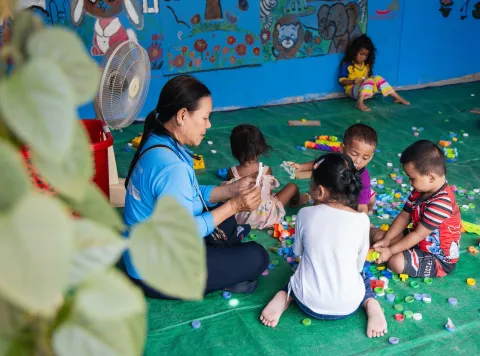
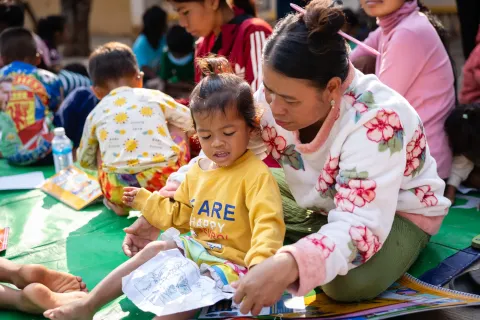
The Study Report on the Situation of Children Affected by Migration between Cambodia and Thailand reveals that migration is often driven by poverty and that children who migrate to Thailand face heightened risks of child labour, particularly when separated from their families4. Children who cross the border illegally are at constant risk of trafficking, abuse, exploitation, and being in conflict with the law. Many do not attend school as their families depend on their daily income and do not have access to essential services like healthcare. Children engage in work in a variety of settings, including on construction sites and in restaurants, and children below minimum age engage in child labour situations involving vending, domestic work, garment production, agriculture, seafood processing, fishing, and organised begging5. Children with disabilities are among the most vulnerable, as they may be recruited for begging and do not have adequate access to essential services.
Climate‑related events such as droughts, floods, and extreme heat disrupt livelihoods and force many families, especially migrant households, into distress migration and precarious work. Child labour is increasingly linked to these climate‑exacerbated stresses, impacting families’ income and pushing children into exploitative work. This is a direct challenge to Sustainable Development Goal (SDG) 8, which calls for the eradication of child labour and protection of vulnerable workers.
To address these challenges, UNICEF is calling for strengthened cross-border collaboration to establish robust joint child protection systems that ensure the safety and well-being of vulnerable children.
1 4 5 Study report on the Situation of children affected by migration between Cambodia and Thailand, MoSVY, January 2025
2 Despite progress, child labour still affects 138 million children globally – ILO, UNICEF
3 Cambodia Demographic and Health Survey (CDHS), 2021–22.
Media contacts
About UNICEF
UNICEF promotes the rights and wellbeing of every child, in everything we do. Together with our partners, we work in 190 countries and territories to translate that commitment into practical action, focusing special effort on reaching the most vulnerable and excluded children, to the benefit of all children, everywhere.
For more information about UNICEF and its work for children, visit www.unicef.org.