Migrant children hit hardest by climate crisis
Climate change is devastating livelihoods and pushing families to abandon their homes. With support from UNICEF, children on the move are getting help to stay off the streets and get back in school
- English
- Khmer
27 May 2025, Poipet city, Banteay Meanchey – Children on the move are some of the most affected, yet least visible, victims of the climate crisis.
“Back there, life was very hard,” says 13-year-old Borey* of his hometown in rural Takeo province. “I was still small at that time, but I understood.”
His family used to be farmers, relying on the familiar rhythms of dry and wet seasons that still dictate the livelihoods of most rural Cambodians.
But when the climate became less predictable, their harvest failed, and their income collapsed.
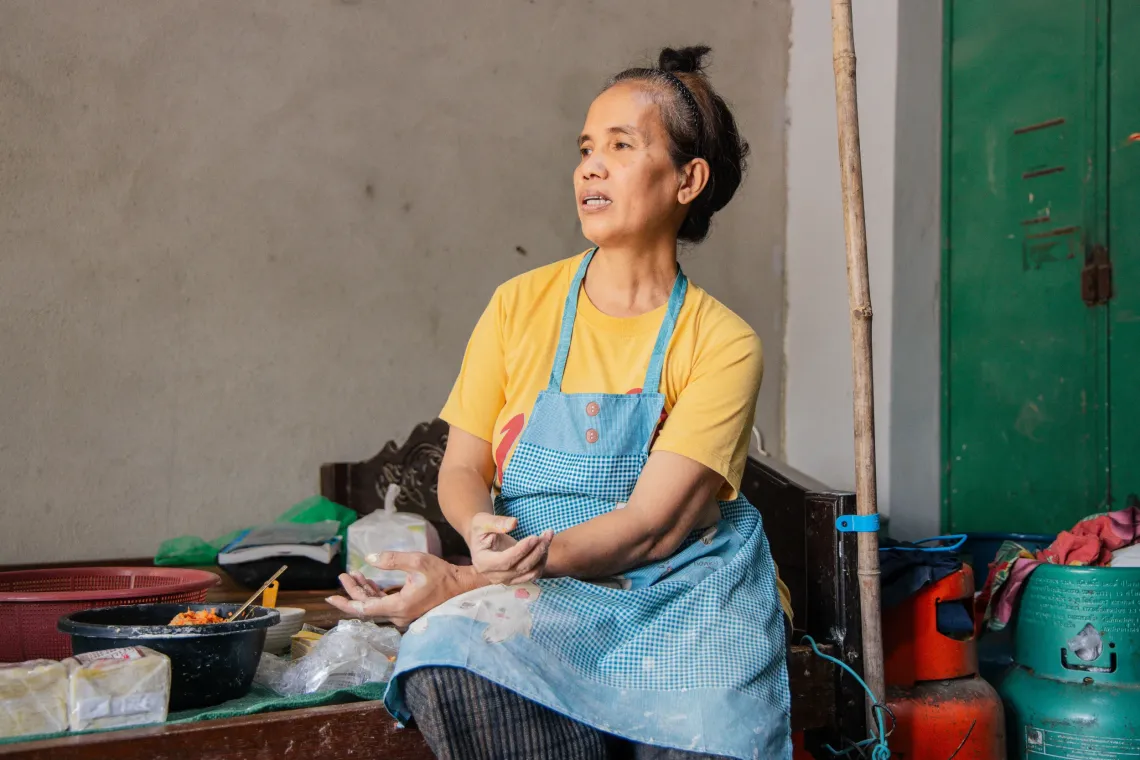
“Because of a drought disaster, agriculture didn’t produce good results,” says 54-year-old Phalla, Borey’s grandmother. “The rice crops were undeveloped and shriveled. Insects damaged them, which caused us to lose profit. That’s why our family’s condition got worse.”
They took out a loan and bought expensive fertiliser, but they just ended up in debt. And with no means of repaying the money they owed to the bank, they eventually sold their land and migrated to Poipet, a fragile city on the Cambodian border with Thailand, in search of economic opportunity and a better life.
“Back then, we had no money,” she says. “We could barely find enough food to eat. We lacked so much, it’s hard to describe.”
And like many children of migrant families, it was Borey who faced the biggest burden of the move – instead of going to school, he helped his grandparents prepare and sell dumplings at the market.
“He had a hard time because he stopped going to school for a while,” says Phalla. “I pitied him. I want my grandchild to gain knowledge like other children.”
When children are on the move, their whole lives may be interrupted. Often driven by poverty, children in Cambodia who migrate within country or across borders face increased risks of exploitation, abuse, child trafficking and being in conflict with the law. The most vulnerable end up living and working on the street, and many do not attend school as their families depend on their daily income. Without access to essential services like healthcare, children are exposed to malnutrition, disease and inadequate immunization.
Extreme weather linked to climate change are heightening the risks of migration, child labour, exploitation and violence for Cambodia’s most vulnerable children. Unsafe and irregular migration is being increasingly linked to climate-related events like droughts, flooding and storms, which disrupt livelihoods and force families into distress migration and precarious work. Children under five, women and girls, and persons with disabilities are disproportionately affected.
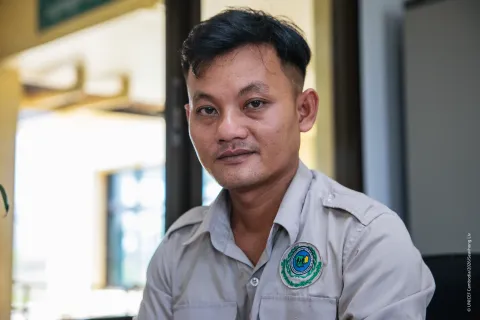
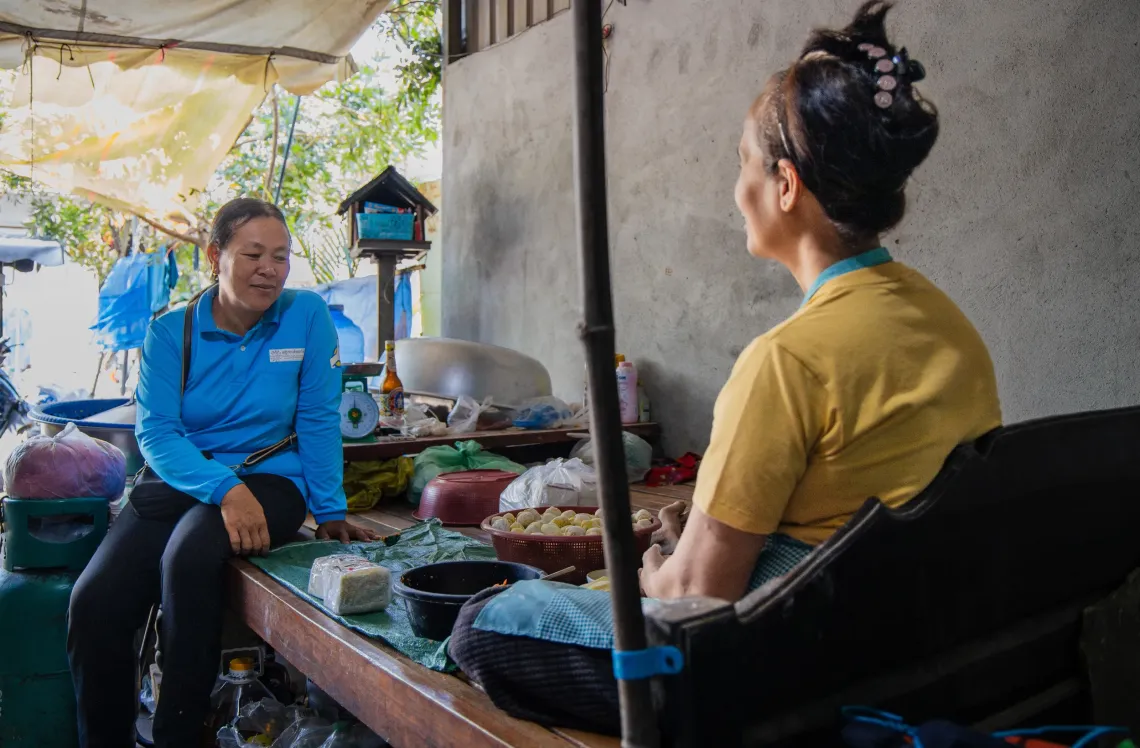
“The reason families migrate often relates to natural disasters,” explains Chhay Chann, a social worker at Damnok Toek, an organisation supported by UNICEF that helps vulnerable children and adolescents in urban poor communities access child-friendly protection services and education, while supporting families to build skills and find stable employment. “Sometimes they farm, but due to drought, they can’t earn enough. They believe going to Thailand or Poipet would bring them better salaries. Sometimes, they are in debt in their hometown, so they feel the need to go to Thailand or border areas to earn money to repay those debts.”
Children who migrate, either alone or with their families, can be pushed into exploitative work as a coping mechanism for income loss. Some will end up working on construction sites, in restaurants, or engaged in work involving vending, garment production, agriculture, seafood processing and fishing. Others will experience the worst forms of child labour, like forced begging and commercial sexual exploitation. Despite significant progress to protect children, 1 in 5 children in Cambodia are still economically active.1
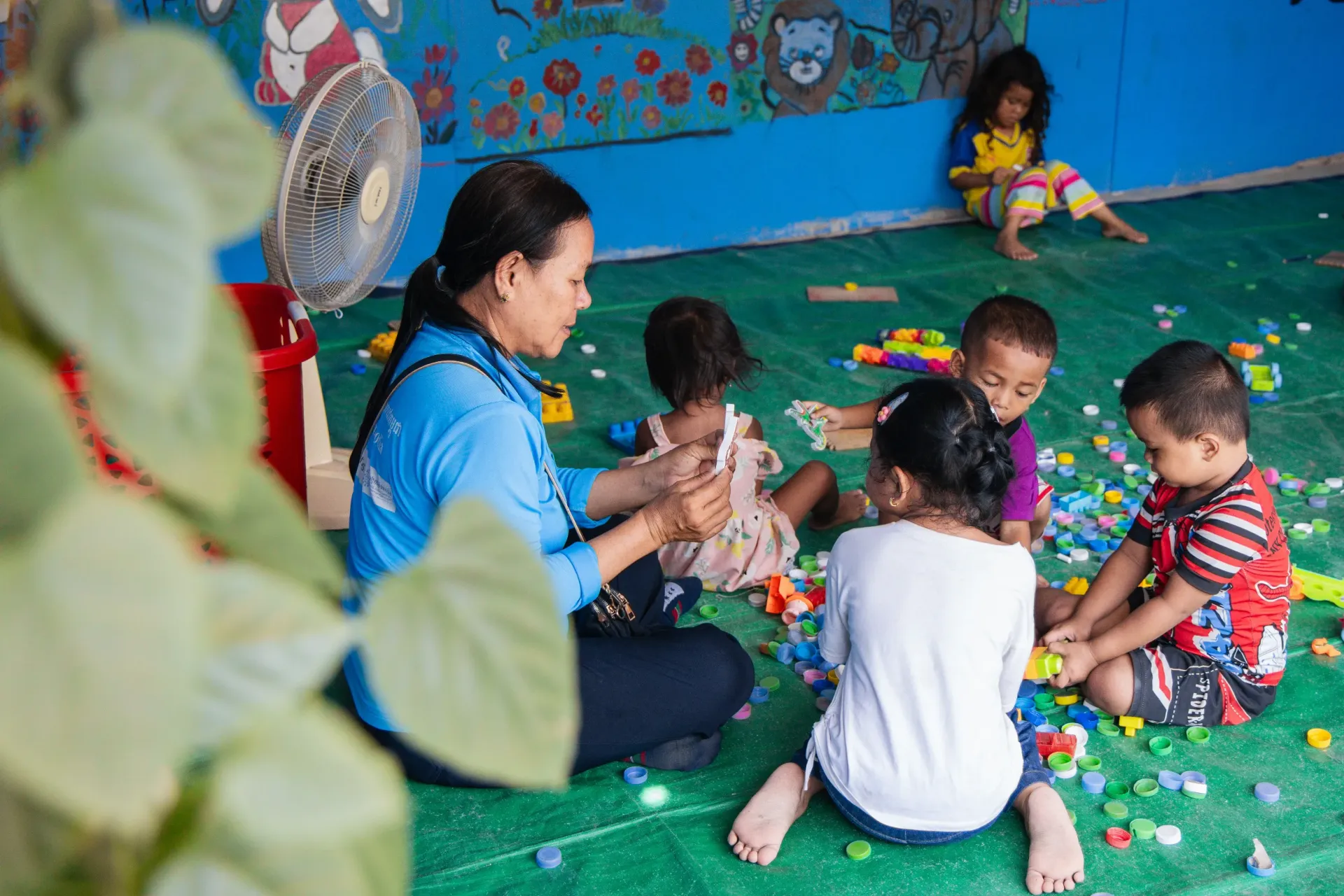
Damnok Toek and UNICEF seek to protect children and adolescents in high-risk situations from violence and exploitation, thereby contributing to a strengthened child protection system. With support from UNICEF, social workers at Damnok Toek provide response services to victims of abuse and trafficking, returning migrant children, children living and working on the street, and other vulnerable children at high risk of exploitation and neglect, including children with disabilities. They also conduct outreach to raise awareness of the risks of unsafe migration, especially across borders and without legal documents.
“We raise awareness about safe migration and children’s rights,” says Chhay. “When families migrate, some children who follow their parents can’t go to school like other children and might get arrested by the Thai police. When they first arrive, with no job, they might go around collecting cans and bottles with their parents to make money.”
Cambodia’s continued reliance on agriculture and informal labour makes the country extremely vulnerable to the impacts of climate change. Its children even more so – nearly two million of Cambodia’s children face high climate risks because they live in areas that experience climate shocks like flooding, drought, extreme heat and storms yet lack access to essential services to help them cope in times of crisis.2
For children on the move, child protection services provide essential support to protect them from abuse and exploitation, help them access education and healthcare, and prevent them from living and working on the street. With funding support from UNICEF Germany, UNICEF works with the Camobodian authorities, including the Ministry of Social Affairs, Veterans and Youth Rehabilitation (MoSVY), to strengthen the child protection system so that it can withstand and respond to climate shocks, ensuring the most at-risk children are able to access timely services that support their needs. This includes supporting authorities to strengthen the capacity of social workers at national and subnational levels to ensure improved prevention, response and reintegration services for children living and working on the street and victims of trafficking, abuse and exploitation.
“Our main goal is to help children go to school,” says Chhay. “We don’t want to see some children going to school while others cannot. Every child deserves the four fundamental rights equally.”
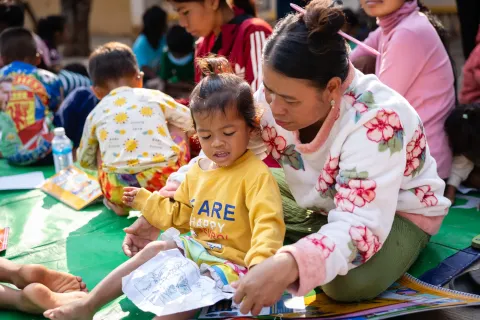
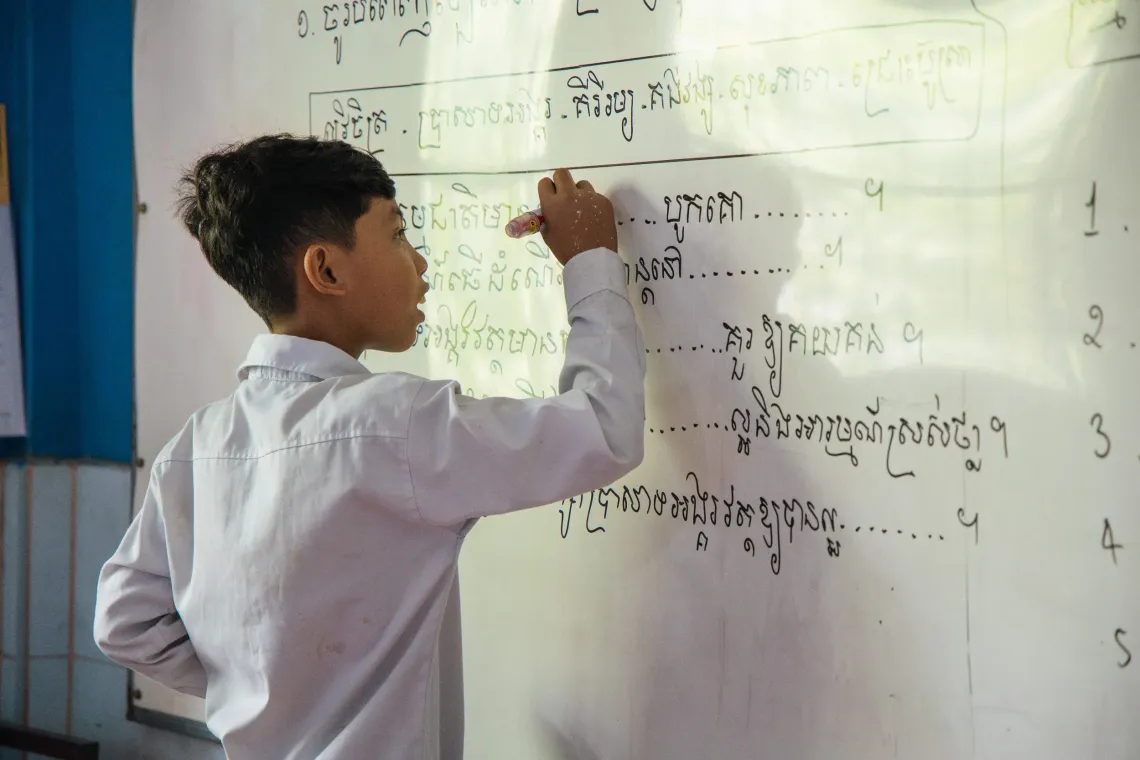
Borey was finally able to attend school when social workers connected him to the non-formal education centre at Damnok Toek. He received school materials and a uniform to support his studies, while Phalla’s son was supported with vocational training to help him learn how to make dumplings. The family were also given capital to help them open their own dumpling business.
“Life is better than before,” says Phalla. “Now, if we want to eat something, we can afford to buy it. We can send our grandchildren to school and support them financially. I’m truly happy things have improved.”
“In the future, I want to see my grandchildren gain more knowledge and learn the skills they desire, skills for themselves,” she adds.
Borey isn’t short of dreams for his future, but his thoughts are never far from home.
“When I grow up, I want to be a civil engineer,” he says. “I want to use the money I earn to help my grandmother build a house.”
*Names have been changed to protect the identities of the children involved
1 Cambodia Demographic and Health Survey, 2021–22