UNICEF boosts access to drinking water in Musenyi.
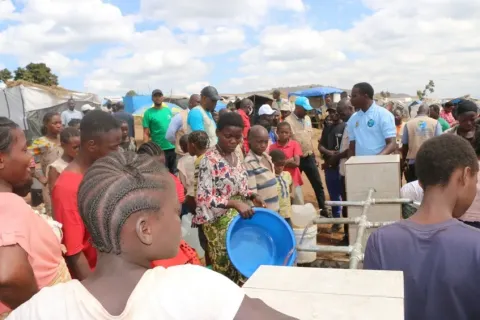
The Musenyi site was recently equipped with 4 water tanks by UNICEF in collaboration with the Agence Burundaise de l'Hydraulique et de l'Assainissement en Milieu Rural (AHAMR) to meet the growing drinking water needs of the arriving refugees.

- English
- Français
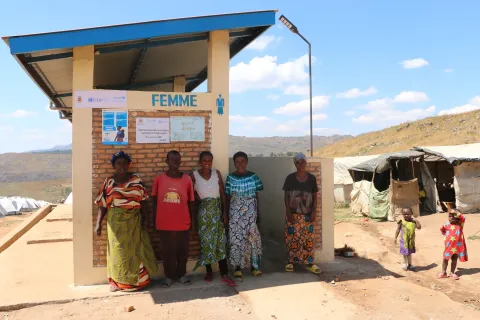
At the Musenyi refugee site, a breath of hope has emerged amidst daily difficulties. Two months ago, UNICEF, in collaboration with AHAMR, installed four flexible tanks, commonly known as bladders, to improve access to drinking water and protect thousands of people from diseases associated with unsafe water.
Until recently, the inhabitants of this site, which is entirely composed of refugees from the DRC, had to travel long distances, depending on the neighbourhood, to access drinking water. This resource was often insufficient due to the high number of refugees. This lack of drinking water exposed families, particularly children, to serious health risks such as diarrhea, cholera, and other diseases linked to poor hygiene and dirty hands.
One of the beneficiaries of this initiative is Edmond Bahati, a mother of nine, who describes the radical change brought about by the move. Having arrived at the site in March, this courageous mother had to leave two of her children behind in the DRC. She remembers: "Before the bladders were installed, we had to go a long way to fetch water, near the market, and that was hard work, especially with the children. Now, it's like having a tap at home, it's right next to my tent".
Her testimony highlights the human impact of a simple technical act: bringing drinking water as close as possible to those who need it most.

To ensure the effective and sustainable management of these new facilities, the refugees themselves, in collaboration with the site authorities, have established a management committee. Each bladder is supervised by a group of three refugees. Their role is to open the water points every morning from 6 am to 10 am, then wait for the reservoirs to refill before reopening in the afternoon, from 2 pm until the quantity available in the bladder is exhausted.
This organisation ensures that water is distributed fairly, while empowering community members. It also demonstrates the active involvement of refugees in managing their own daily lives.
According to Niyonsenga Norbert, head of the Water, Sanitation and Hygiene (WASH) programme at the NGO COPED, these installations have considerably relieved the pressure on the 15 existing water points on the site. The UNICEF bladders are equipped with 8 water distribution ramps with 6 taps each, carefully distributed throughout the neighbourhoods of the site to cover as many beneficiaries as possible.

But despite this progress, challenges remain. "The water we currently use comes from the Mpongora 1 spring. To ensure a continuous supply, it would be essential to construct a large reservoir using durable materials. This would make it possible to stabilise the supply and cope with the constant increase in the site's population", explains Mr Niyonsenga.
Every drop of water in Musenyi is much more than a simple element; it embodies hope, health, protection, and dignity. Thanks to funding from the Central Emergency Response Fund (CERF), the establishment of bladders, a result of a committed partnership, demonstrates what is possible when solidarity and determination come together. Guaranteeing access to drinking water is not just a service; it is a commitment to preserving life.