At Busuma, progress in access to water, but major WASH needs remain
A joint Government and partner mission reviewed progress in water, sanitation and hygiene services at the Busuma refugee site and identified urgent actions needed to close the remaining gaps.

- English
- Français
The Busuma refugee site in Ruyigi Province is providing temporary shelter to refugees who fled insecurity in eastern Democratic Republic of the Congo. The arrival of large numbers of people has placed significant pressure on water and sanitation infrastructure, making access to sufficient quantities of safe water, toilets and bathing facilities a daily challenge.
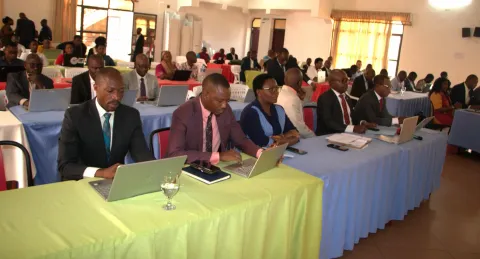
Following recommendations from the WASH Sector Coordination Meeting, Government representatives and humanitarian partners conducted a joint field mission to Busuma on 18 June 2026. Led by the Permanent Secretary responsible for water resources, the mission assessed progress, identified remaining gaps and agreed on corrective measures to strengthen the response.
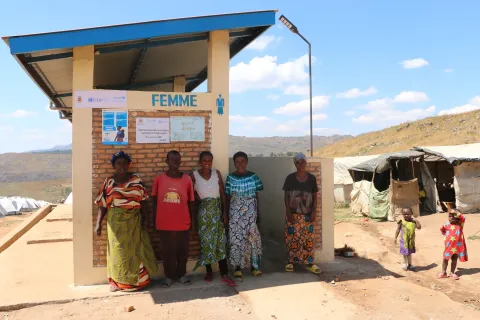
The delegation inspected completed and ongoing WASH infrastructure, including boreholes, spring catchment systems, water storage tanks, distribution networks, communal latrines and bathing facilities implemented with funding from the Government of Navarre. Partners also examined operational challenges and opportunities to improve both the immediate humanitarian response and more sustainable services.
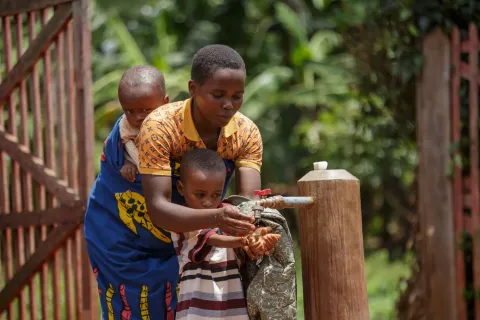
Some refugees say that the new facilities have already eased the daily burden of collecting water, although shortages and long waiting times remain.
“In the past, we sometimes waited several hours to collect water. The situation has improved, but there are still many of us, and the water points are not always sufficient during the busiest times of the day,” says Marie, a Congolese refugee and mother of five living at the site.
Jean-Pierre, who arrived in Busuma a few months ago, describes similar challenges.
“We are grateful for the support we have received. The new facilities make daily life easier, but we still need more latrines and bathing facilities so that families do not have to wait for long periods and can use them safely and with dignity,” he says.


The Permanent Secretary welcomed the progress achieved while emphasizing the need for continued investment.
“The results we have seen demonstrate that coordination between the Government and humanitarian partners is making a difference. However, the continued increase in the site’s population and WASH needs requires both immediate action and more sustainable solutions to ensure sufficient access to safe drinking water and adequate sanitation facilities,” he said.
Data shared during the coordination meeting indicate that water availability at the site increased from 1.5 liters per person per day in December 2025 to 6.8 liters per person per day in June 2026. Once additional boreholes and spring catchment systems are completed and connected to the distribution network, partners estimate that availability could reach 20.8 liters per person per day.
Despite this progress, major sanitation gaps remain. Additional funding is urgently needed to build more durable latrines and bathing facilities, with 92 percent of the identified funding gap still unmet.
Following the field visit, a debriefing was held to review the mission’s observations and agree on priority actions. On 19 June 2026, WASH stakeholders met at the UNHCR office in Ruyigi to review and endorse the recommendations arising from the joint mission.
The recommendations call for completed water storage facilities to be connected immediately to existing water supply systems and operational boreholes. They also emphasize the need to complete internal distribution networks and install additional water points throughout the site.


The mission also identified urgent environmental and public health measures. These include stabilizing gullies and rehabilitating eroded areas within the site, establishing nurseries from July 2026 to support the planting of fruit trees and other suitable species during the rainy season, and strengthening fecal sludge management.
The recommendations also include providing appropriate desludging capacity to transport fecal sludge safely to an authorized treatment facility and exploring resource-recovery solutions, including biogas digesters, subject to technical and financial feasibility.
Government institutions and humanitarian partners renewed their commitment to completing priority works and strengthening coordination. A follow-up review was planned to assess progress against the agreed recommendations and determine the additional resources required.
For refugees living at Busuma, timely implementation will be essential to translate these commitments into safer and more dignified living conditions.