UNICEF and USAID join forces to combat severe acute malnutrition in Burundi
A USAID delegation visits the provinces of Ruyigi and Rutana in Burundi to evaluate the progress of the project addressing acute malnutrition in children under 5 years.

- English
- Français
In several provinces of Burundi, numerous children suffer from malnutrition, primarily caused by poverty and lack of information. Among them, some suffer from severe acute malnutrition (SAM), a condition that directly threatens their survival. Children with severe acute malnutrition have weakened immune systems, making them highly susceptible to common diseases such as malaria, respiratory infections, and intestinal parasites, and they are at greater risk of death. To address this severe acute malnutrition, UNICEF, with support from USAID, tirelessly combats this devastating crisis.
At Kwisumo health center, Faustine Niyonsaba, the mother of Igiraneza Grâce, shares the impact of the project on her daughter's health: "Her body was changing, she was losing her hair and vomiting after every meal. But after starting the treatment, my daughter improved; she is much better now. Honestly, I don't know what I would have done without the help received." Grâce was gravely ill, suffering from severe acute malnutrition (SAM), and her mother Faustine feared for her life due to the many challenges and the lack of means to treat her. Today, Grâce is getting well.

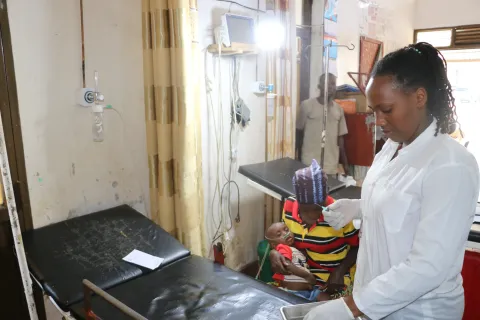
The beneficiaries of this project are children under 5 years old. According to Wilson Niyokwizera, head of the Kwisumo health center, the project's support helps many families. "We try to follow up well, and we notice that there is really a change within the community," he explains. The screening of acute malnutrition cases follows a well-defined process. Trained community health workers consult the children; cases of severe acute malnutrition (SAM) without medical complications are referred to the outpatient therapeutic service, while those with complications are directed to the district hospital for therapeutic stabilization. Follow-up sessions for outpatient SAM children take place once a week, every Thursday.
However, despite this support, many challenges persist. Due to the poverty of families, medicines intended for sick children are often shared with the whole family. Some families consider these medicines as food and believe that a child cannot consume them alone. This delays the recovery of sick children, and sometimes children are treated for a longer period than expected. "This situation leads to an insufficiency of inputs, as prolonged use for the same child depletes resources more quickly. This poses a major challenge for us," explains Wilson, thanking the project and the support they receive.
After visiting the Kwisumo health center, the delegation traveled to the province of Rutana, commune Giharo, where similar challenges were observed. James Hatungimana, head of the Giharo health center, explains that the population of this province does not work sufficiently, leading to hunger within families. "Inadequate nutritional practices also cause malnutrition in the children of this commune," he adds, explaining that some parents, even if they have some resources, do not sufficiently nourish their children with nutritious foods and use their income for other things. According to James, this project is of great help to the families in this region, as cases are gradually decreasing.

"This project saved my child, look, my daughter is doing well," declares Pélagie Ntakarutimana, delighted with the improvement in the health of her daughter Béoline Shurweryimana, who is under treatment after a long period of suffering. Pélagie, mother of 7 children, saw her 6th child suffer from severe acute malnutrition. With hope, she continues to bring Béoline to the health center, seeing the effectiveness of the treatment. She expresses her deep gratitude to UNICEF and its partners for their constant support and valuable assistance.
With the support of USAID, UNICEF and its partners continue to save lives and improve the resilience of communities in Burundi. The results achieved so far demonstrate the crucial importance of this support in combating severe acute malnutrition and strengthening the health of children and families.