Bringing healthcare closer to communities: Burundi validates its National Community Health Strategy
Through the national forum on the 2025–2029 National Community Health Strategy, the Government of Burundi with key partners -UNICEF, EU, Global Fund, Gavi, Africa CDC, UNDP-reaffirmed their commitment to an inclusive and resilient community health system

- English
- Français
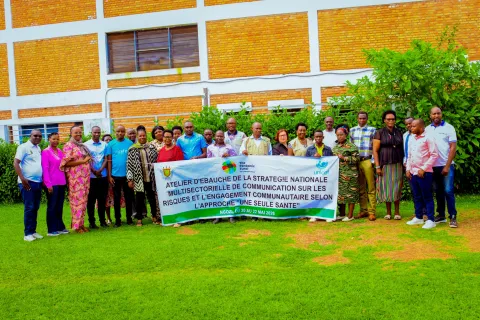
On April 16, 2026, Burundi marked an important milestone for community health with the National Advocacy and Validation Forum for the new National Community Health Strategy. Chaired by the Minister of Public Health, Ms. Lydwine Baradahana, this high-level forum brought together national and local authorities, senior officials from the Ministry of Health, development partners, United Nations agencies, civil society organizations, and community actors around a shared vision.
In her opening speech, the Minister recalled that “community health is the cornerstone of an efficient, inclusive, and resilient health system, as it represents the first point of contact between populations and health services,” highlighting its central role in sustainably improving health indicators and strengthening trust between communities and the health system.
The new NCHS 2025–2029 is part of a deep reform of the community health approach, initiated in 2024 and based on a thorough review of the previous strategy (2019–2023). This analysis identified several challenges, including coordination gaps, a high level of verticalization of interventions, limited community health workforce capacity, and workload pressures affecting service quality.
To address these issues, the redesigned strategy introduces structural changes, including redefinition of the profile of community health workers, the reorganization of their operational model, the strengthening of their motivation and recognition, as well as the establishment of a real-time monitoring system.


To assess the relevance and effectiveness of these reforms, a pilot phase was conducted between August 2025 and January 2026 in the Mutaho health district, in Gitega Province. The quantitative results of this pilot phase are particularly compelling.
Compared to similar districts that did not benefit from the pilot, Mutaho recorded an increase of 1,447 households regularly practicing handwashing, 1,254 households adopting hygienic waste management, and an additional 667 children screened for malnutrition. The use of insecticide‑treated nets among children under five increased by 661 cases, while 95 children received appropriate treatment for diarrhea with oral rehydration solution and zinc.
The pilot phase also identified 155 additional women practicing exclusive breastfeeding up to six months, alongside notable improvements in indicators related to immunization coverage and early antenatal care attendance. These results illustrate the tangible impact of the reconfigured community‑based approach on the health and well‑being of the population.


On behalf of health sector partners, the UNICEF Representative in Burundi, Ms. France Bégin, welcomed these advances and the strong collective commitment demonstrated throughout the process. She emphasized that “this forum reflects a shared commitment around a common vision: building a more protective, equitable and resilient community health system, serving every Burundian citizen,” while commending the leadership of the Ministry of Public Health and the active involvement of local authorities and frontline teams.
Building on the lessons learned from the pilot district, an ambitious national scale‑up plan was presented and discussed during the forum. The plan provides for a gradual expansion to 14 health districts per year, with the aim of covering all 56 health districts nationwide by 2029. Implementation of the first phase in 2026 will require an estimated USD 9.8 million, intended to support priority activities in each district.
As lead agency for health sector partners, UNICEF reaffirmed its commitment to work alongside the Government of Burundi to support resource mobilization and ensure the effective implementation of this ambitious strategy.
The highlight of the forum was the official validation of the National Community Health Strategy 2025–2029, sealing a strong consensus among all stakeholders. More than a strategic document, this roadmap reflects a collective determination to bring health services closer to communities, strengthen prevention, and ensure more equitable access to essential care. Together, Burundi and its partners are making community health a sustainable pillar for development and population well‑being.