A boost to oxygen production in Burundi.
With support from the World Bank and the Pandemic Fund, UNICEF is supporting local oxygen production at the Prince Louis Rwagasore Clinic to strengthen healthcare self-sufficiency.

- English
- Français
Around 9:45 a.m., we arrive at the Prince Louis Rwagasore Clinic, also known as the CPLR. Operating since 1962, it is one of Burundi's referral health facilities. The clinic plays a crucial role not only in Bujumbura province but also beyond, providing specialized care to numerous patients every day.
In February 2026, the CPLR reached a historic milestone with the inauguration of its own oxygen production plant, established with support from UNICEF in collaboration with the Government of Burundi, the World Bank, and the Pandemic Fund.
Under the blazing sun, technical teams are hard at work around the plant, filling and distributing oxygen cylinders. The system now operates continuously, ensuring a steady supply to essential hospital services.
According to clinic officials, this infrastructure has enabled the facility to achieve operational self-sufficiency in medical oxygen, a vital resource for managing emergencies and treating critically ill patients.
In the emergency department, a nurse describes a tangible change: "The oxygen production plant has improved the care of critically ill patients. Shortages have greatly decreased, strengthening the department's resilience."
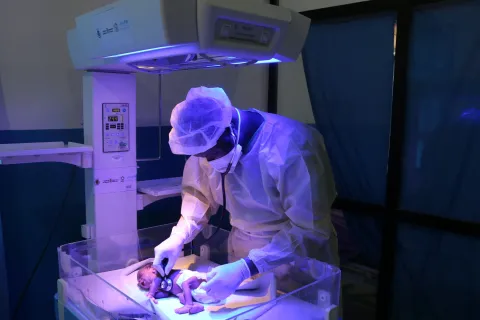
The impact is also evident across other departments. The constant availability of high-quality medical oxygen is essential to the operation of hospital services. It directly supports patient care in emergency departments, neonatal units for premature babies, operating rooms, and intensive care units, where the continuity of oxygen therapy is often vital to patient survival.


At the height of the COVID-19 pandemic, the CPLR faced oxygen shortages due to limited available supplies. This experience highlighted the vulnerability of supply chains and the need to strengthen self-sufficiency in essential medical supplies. "Now, the plant ensures continuous availability, thereby reducing the risk of deaths linked to stockouts," said the CPLR Director, emphasizing the direct impact of this infrastructure on reducing preventable mortality.
Local oxygen production also makes this life-saving treatment more accessible. Produced domestically, oxygen is available free of charge or at a lower cost, even for the most vulnerable patients, thereby promoting equity in essential healthcare services.
Economically, in-house oxygen production generates significant savings for the CPLR. The reduction in costs related to purchasing and transporting cylinders helps free up financial resources.
The Administrative and Financial Director indicated that these savings now offer the opportunity to reinvest in other hospital priorities: "The saved funds can now be reinvested into other hospital departments."
This initiative underscores the importance of strategic investments in health infrastructure, particularly in strengthening the resilience of healthcare facilities during health crises. It aligns with a broader effort to consolidate national emergency response capacities and is consistent with the priorities of technical and financial partners.

Beyond improving access to medical oxygen, the project enabled the installation of oxygen lines directly in the most critical departments, including maternity, neonatology, intensive care, and the emergency room.
"The installation of piping to these departments has significantly improved patient care. The handling of heavy and dangerous cylinders has been replaced by a safer and more efficient wall-mounted system," explained the maintenance manager. This modernization has enhanced the efficiency and safety of patient care, thanks to a more reliable supply and refilling process.
Patients and their families confirm the tangible impact of this initiative: "When my father was admitted to the intensive care unit, oxygen was available immediately. It saved his life," shared a patient's relative.
Funded by the World Bank and with two years of preventive maintenance covered by the Pandemic Fund, this project is being gradually expanded to other hospitals in Burundi, including those in Ngozi, Bururi, Cankuzo, Muramvya, Muyinga, Mudubugu, Kirundo, and Makamba.
This initiative demonstrates how innovation and collaboration with international partners can transform healthcare, strengthen the resilience of national systems, and ensure equitable access to medical oxygen for all.