Towards a new malaria vaccine in Burundi: The hope that thousands of children's lives will be saved
Burundi is one of 12 African countries set to benefit from the very first malaria vaccine over the next two years. A report from Mutaho, where the local people, among those most affected by this scourge, are eagerly awaiting this historic moment

- English
- Français
It's around 10 am. The air is rather cool on Nzozi hill, in the Rwisabe area, Mutaho commune, Gitega province. We are greeted by Zéphyrine Manirakiza, a young mother of 25 with two children, Kessia and King, aged 6 and 3 respectively. She and her husband are returning from the fields. The weather is ideal for fieldwork. The family enjoys a moment of respite, as they have not had a case of malaria in two months. This is a significant relief for Zéphyrine, whose children often suffer from the disease, "at least three times a year," she says.
Like most neighboring families, Zéphyrine suffers the consequences of recurrent malaria. "The last case was in October with our son King Fiston when we went to the Nzozi health center in the middle of the night," Zéphyrine recalls.
This situation has detrimental consequences for the family. Zéphyrine remembers that the last time her eldest daughter, aged 6, fell ill, she had to miss more than a week of school. "Firstly, missing lessons affects her success in class; and for us, as parents, we are obliged to set aside all other family obligations to care for her, ensuring that her medication is taken on time," explains Zéphyrine. "The introduction of a new malaria vaccine comes as a huge relief to us," she adds.


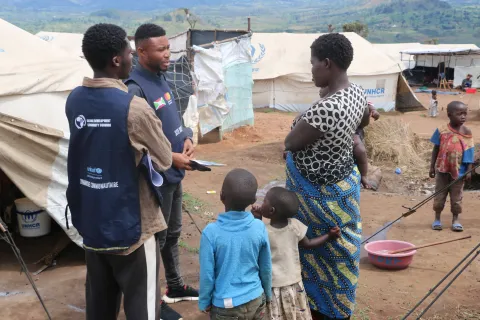
With the support of UNICEF and its partners, trained community health workers like Bukubiye Louis and Thérèse Ndabasabimana are doing their best to help prevent and treat malaria at the community level. "Based on the knowledge acquired during the training courses we receive from the Nzove health center, we raise awareness in the communities about malaria, its causes, symptoms, ways of combating this scourge, etc., and screen and treat cases at the community level when necessary," says Louis. Nevertheless, he laments the increase in the disease on their hill and the surrounding area, despite the efforts made. He attributes this to a lack of awareness. "During our follow-up visits to households, we discover that some families don't know how to use their mosquito nets properly, or sell them on the market to earn a bit of money. Others simply tell us that they can't sleep under the net," explains a disappointed Louis Bukubiye.


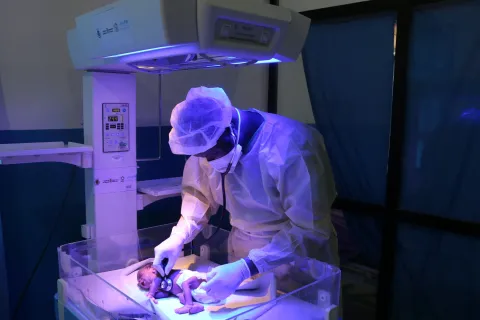
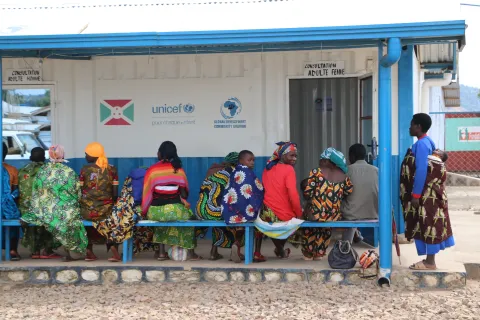
According to Hakizimana Déo, head of the Nzove health center, malaria is the leading cause of consultations at this facility, serving patients from four hills in the region: Nzove, Ngoma, Kidashi, and Kivoga, as well as from the hills of the neighboring province of Kayanza. "Malaria accounts for 40% of consultations here between January and April, a rainy season when mosquitoes proliferate due to stagnant water. We do our best to treat these cases, but sometimes we're overwhelmed," explains Deo, while regretting that there are also cases of relapse due to incorrect use of medication. "Out of 400 people treated in October, 17 relapsed, including 8 children," he laments. He believes that the integration of the malaria vaccine into the routine immunization programs of the Expanded Programme on Immunisation is the ideal solution.
In Burundi, despite numerous efforts by the government and its partners, malaria remains the leading public health problem and one of the main national health priorities. According to data from the National Health Information System (SNIS), malaria was the leading cause of morbidity and mortality in 2021, with an incidence of 537.6 per 1,000 inhabitants. It accounted for 44.1% of consultations and 59.4% of hospital deaths that year.
Children under the age of five are the most vulnerable segment of the population to malaria. Of the 6,286,888 cases of malaria reported in 2021, children under the age of 5 accounted for 2,489,178 cases or 40% of malaria morbidity. More than half of the health districts had crossed or even exceeded the epidemic threshold.
Burundi is one of 12 African countries to benefit from the very first malaria vaccine over the next two years. The introduction of this vaccine into its routine immunization programs raises hope that the country can intensify its interventions and even eradicate this scourge, which continues to claim lives, particularly among children under five.