A Summer Camp Where Students Turn Learning into Real-World Impact
The CREATABLE summer camp gave students an opportunity to apply what they had learned, gain autonomy, and get involved as active actors capable of mobilizing their skills for the good of their communities.

- English
- Français
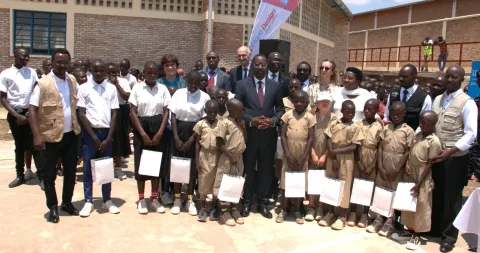
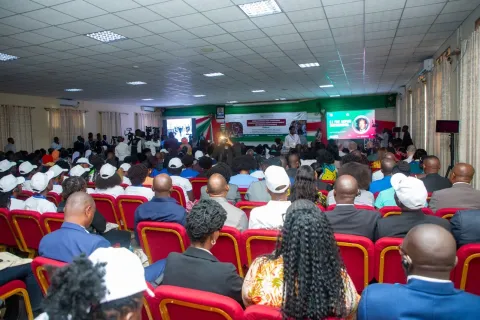
As part of the CREATABLE project—co-funded by the Australian Government and supported by the UNICEF Australia National Committee, and aimed at promoting innovation, creativity, and entrepreneurship among school-age adolescents—UNICEF, in collaboration with the Ministry of National Education and Scientific Research (MNESR), organized a summer camp from August 11 to 15, 2025. This initiative took place in 17 primary schools across five provinces of Burundi.
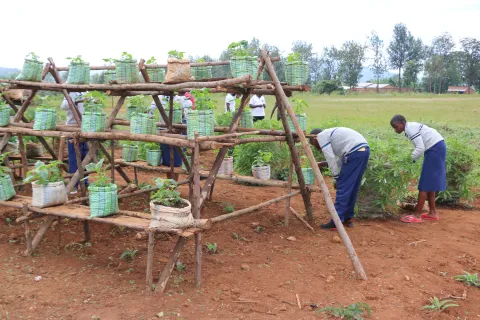
Led by 46 pre-trained teachers, the camp provided an opportunity for 3,898 students (including 2,296 girls) to put the CREATABLE modules into practice, particularly the construction of improved stoves and vertical farming systems. Practical sessions were complemented by awareness-raising activities for girls and marginalized groups, facilitated by role models from these communities. The aim was to offer flexible, inclusive learning pathways, enabling students to acquire useful skills to meet life’s challenges, prepare for the job market, and actively contribute to change within their communities.
A joint supervision mission by UNICEF and MNESR assessed the educational quality and impact of the camp in selected schools. The verdict was clear: high, inclusive participation and strong enthusiasm from both girls and boys to transform knowledge into practical actions and creative solutions that address their real needs.

At the Rurira Fundamental School in Butanyerera Commune, Kirundo Province, students impressed supervisors with their mastery of vertical farming techniques and the construction of improved stoves. Annonciate Manirankunda, a student with monocular vision, explained each step of the improved stove construction process with ease. She demonstrated the tangible impact of this training on her daily life, where she found a solution to common cooking challenges. She confided: “At home, the wood is not always dry and there is not enough of it, and you have to blow on the flame to revive it, which was tiring and painful for the eyes. With this stove, that problem is now solved.”
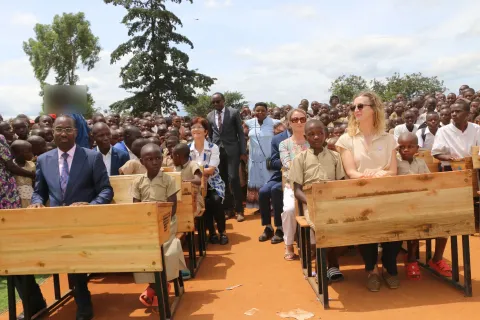
At the Bushaza Fundamental School, in the same commune, enthusiasm was just as high. An awareness session showcased inspiring career paths, with the presence of Dr. Rosine Ndayishimiye, professor at the University of Burundi, and Gérard Niyonsaba, an official at the Ministry of Justice and a member of the Batwa community.


Dr. Rosine shared her journey of resilience: coming from a modest background, she resisted the temptation of early marriage to pursue her studies, convinced that education opens the doors to the future. She encouraged young girls to focus on their education and be cautious of those who might deflect them from their goals. Gérard, meanwhile, spoke about the discrimination faced by his Batwa community and his own determination to pursue higher education. He earned a bachelor’s degree, which allowed him to secure stable employment, despite numerous obstacles including poverty and ridicule from other students. Their stories inspired the students to believe in themselves and their future, reinforcing the lessons learned through the CREATABLE project.
The following day, during a visit to Gitamo Fundamental School in Ngozi Commune, the mission observed the immediate impact of the summer camp: students were already building a shelf for vertical farming bags. Their science and technology teacher shared his pride: “Since Monday, they have been eagerly waiting to put what they have learned into practice. Some are even considering ways to earn income from these techniques, which is crucial as the school year approaches.”


Diane Nikunda, an eighth-grade student, expressed her enthusiasm and deep understanding of the bag cultivation techniques. She said, “At first, we didn't think it would be this exciting. But from day one, the atmosphere was great and the lessons very useful. At home, we didn't have enough land to grow crops, but now that won't be a problem anymore. I can’t wait to try this at home.”
This second phase of the CREATABLE project covers 24 schools—10 initially targeted and 14 new ones, mainly in Butanyerera Province.
Beyond knowledge transmission, CREATABLE is nurturing a generation of aware, skilled, and committed students ready to transform their communities with creativity, resilience, and hope.