Bujumbura Hosts Continental Push for Girls' Education
The 2nd Pan-African Conference on Girls' and Women's Education brought together over 400 policymakers and partners from some 40 countries in Bujumbura to accelerate girls' access to school.
- English
- Français
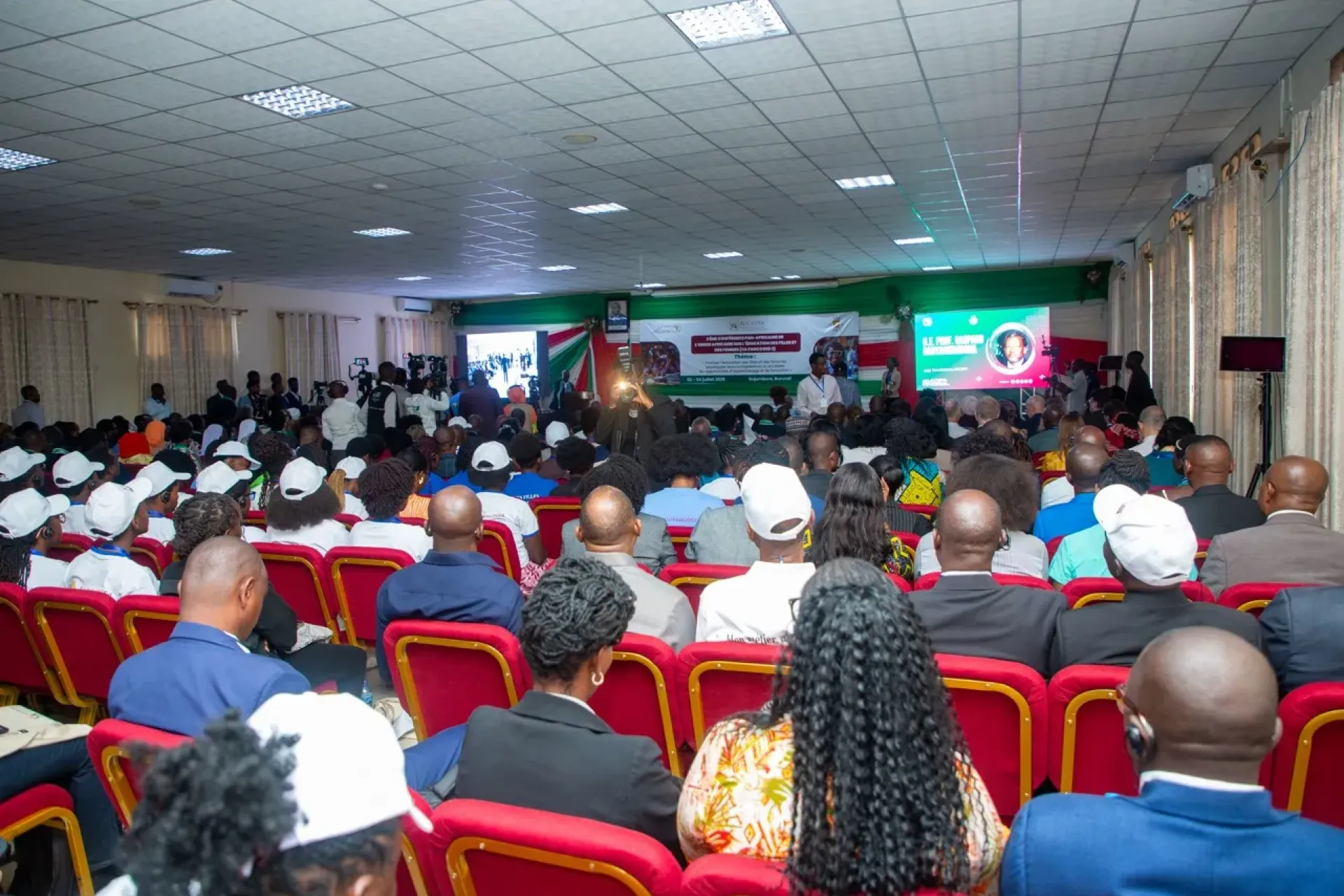
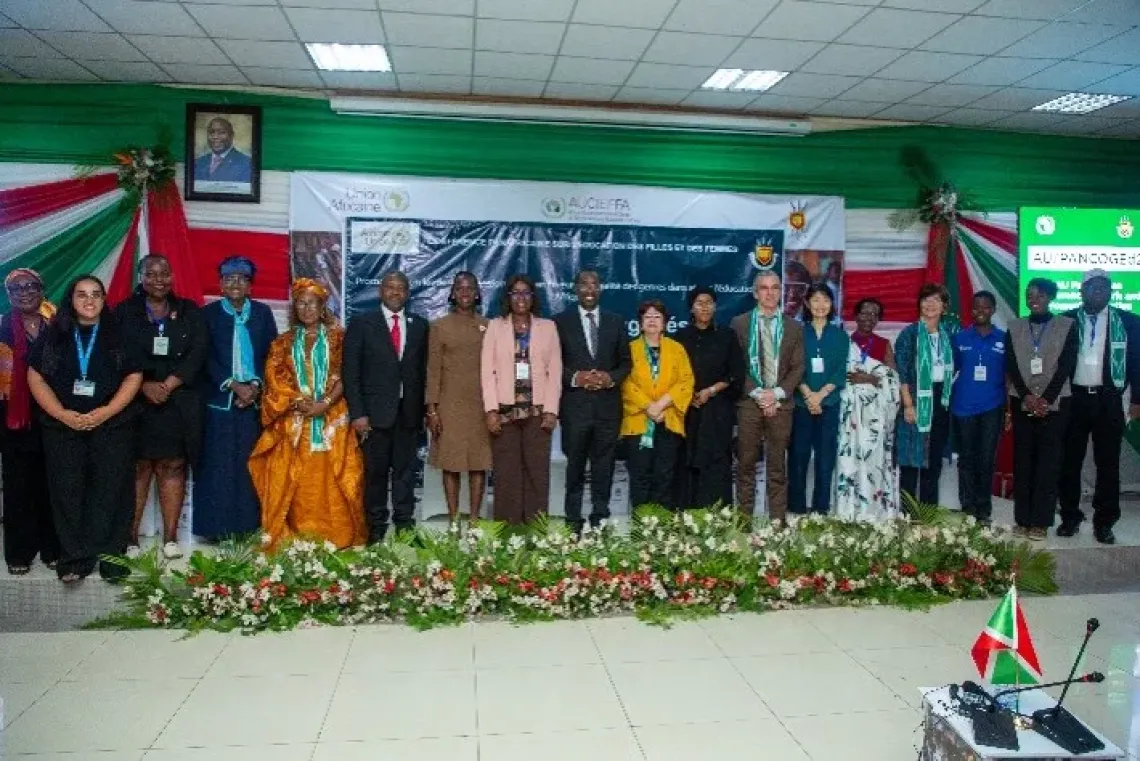
Hosted in Burundi, the second Pan-African Conference on Girls' and Women's Education (PANCOGEd2) brought together more than 400 decision-makers, young people, and partners from some 40 African countries to accelerate access to safe, inclusive, and quality education for every girl.
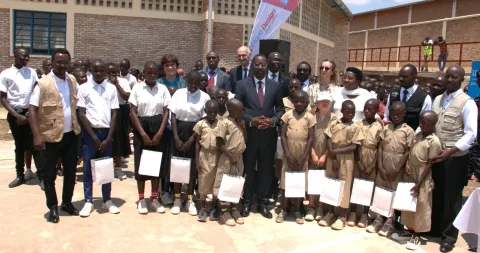
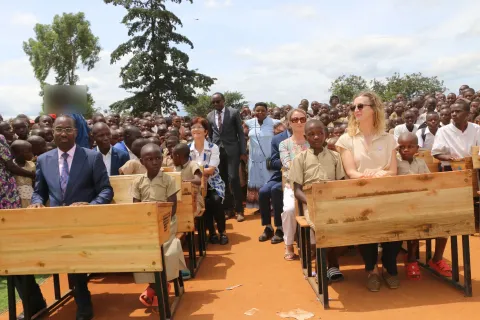
Organized under the auspices of the African Union International Center for Girls' and Women's Education in Africa (AU/CIEFFA), PANCOGEd2 brought together in Bujumbura ministers, government officials, development partners, United Nations agencies, researchers, civil society representatives, and young people from across the continent. Together, they reaffirmed their commitment to more inclusive, equitable, and quality education. Through rousing speeches, cultural performances, exchanges of experience and moving testimonies, notably from young people, Bujumbura became a true space for dialogue, reflection and action on behalf of Africa's girls.
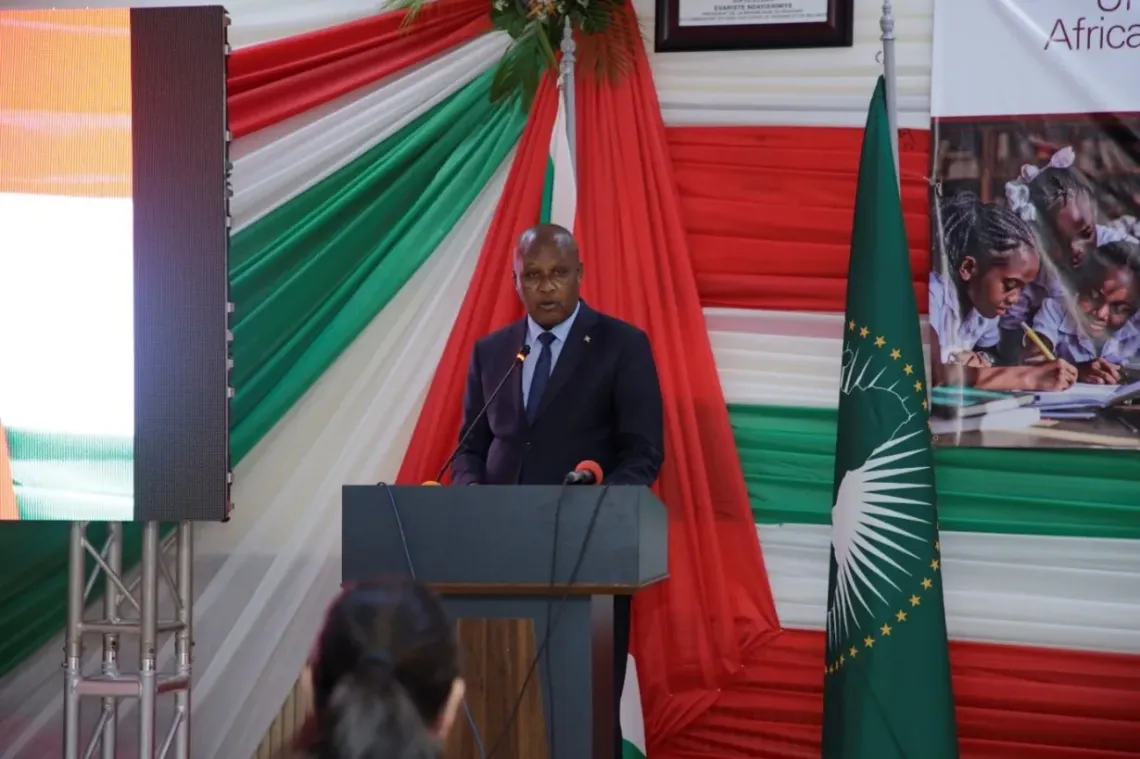
The conference was officially opened by the Vice-President of the Republic of Burundi, H.E. Prosper Bazombanza, representing the President of the Republic of Burundi and Chairperson of the African Union, H.E. Évariste Ndayishimiye.
Held under the theme "Prioritizing girls' and women's education, developing their skills and accelerating learning and training opportunities," this second edition aims to accelerate progress for girls' and women's education while strengthening their access to the skills needed to participate fully in Africa's economic and social development. It also feeds into the ambitions of the African Union's Agenda 2063, which recognizes education as an essential lever for economic and social transformation and for consolidating peace on the continent.
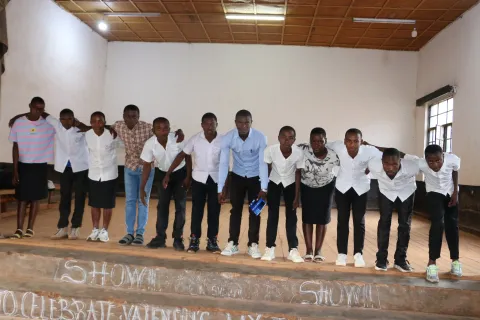
The opening ceremony featured inspiring testimonies from young people, cultural performances, and a powerful call for an Africa where every girl can learn, thrive, and reach her full potential. In a slam poem that drew a standing ovation, young Burundian Gaby Eliona Iwacu delivered a rousing call: "Educate me, educate us, educate Africa," a forceful reminder that education remains the most powerful lever for building the continent's future.
Turning Commitments into Results for Africa's Girls
In his opening address, the Vice-President of the Republic of Burundi, H.E. Prosper Bazombanza, stressed that "education is one of the most powerful weapons for social and economic transformation" and that "by investing in a girl's education, we invest in several generations." He called on African countries to guarantee girls a safe, inclusive learning environment conducive to their success, while strengthening their access to science, technology, digital skills and entrepreneurship. He also underlined the importance of the conference as a privileged forum for exchanging experience, mutual learning and developing solutions suited to the continent's realities.
Burundi's Minister of National Education and Scientific Research, H.E. Prof. François Havyarimana, presented the country's progress in girls' schooling. Girls now account for 50.5% of preschool enrollment and 51.5% of enrollment in basic education. However, significant gaps persist at higher education levels: women represent 44.6% of students enrolled in higher education, with a parity index of 0.80, and at the University of Burundi, they account for only 29.6% of students and just 11.5% of doctoral candidates. These disparities are driven by several factors, including early marriage, teenage pregnancy, gender-based violence, poverty and sociocultural stereotypes, all of which continue to hold back many girls' educational paths.
The Minister recalled that the Government is pursuing reforms to strengthen equity, inclusion and quality in education. These include mechanisms for reintegrating young mothers into school, promoting girls' enrollment in scientific fields, and reinforcing protection measures against violence in schools. He also highlighted psychosocial support programs for adolescent girls, along with initiatives to encourage more girls to pursue science, technology and digital fields.
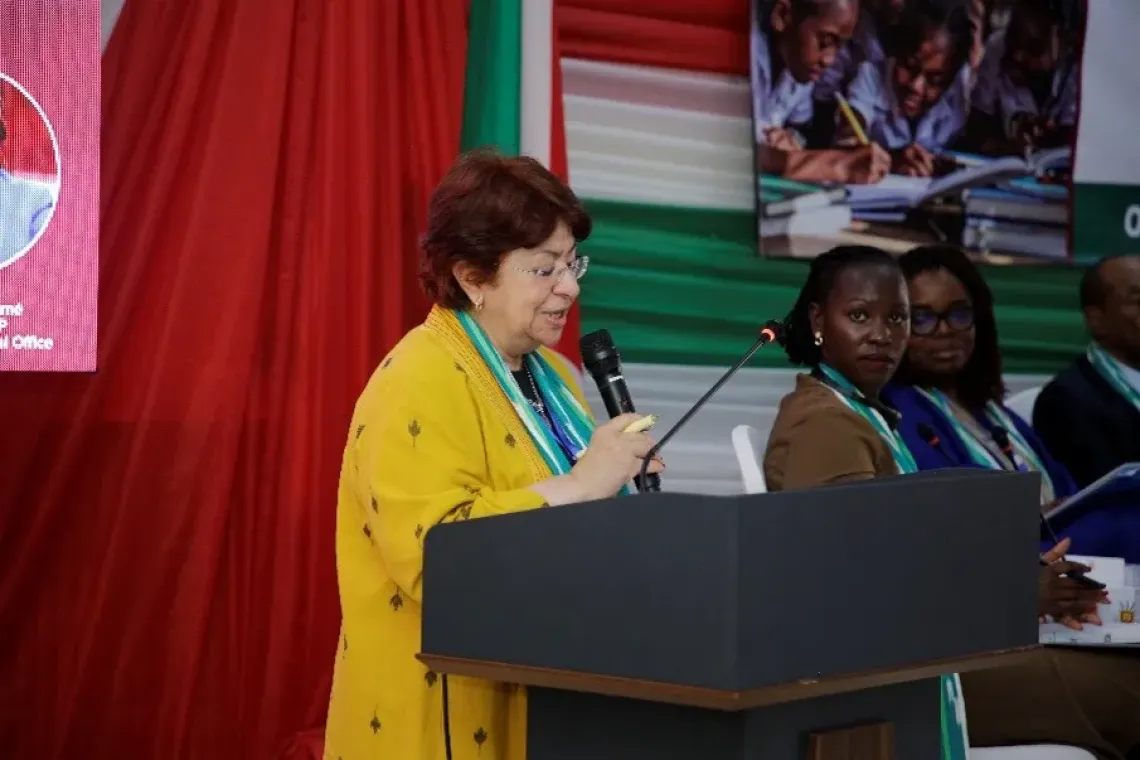
Remarks by the Deputy Chairperson of the African Union Commission, H.E. Selma Malika Haddadi, the UN Resident Coordinator in Burundi, Ms. Violet Kenyana Kakyomya, as well as representatives of the World Bank Group and other partners, converged on a single message: girls' education is one of the most strategic investments Africa can make. Beyond commitments, speakers called for accelerated action and investment to turn promises into concrete results for the continent's girls and young women.
"Africa's girls and women are not waiting for new promises. They are waiting for action and results," said the Deputy Chairperson of the African Union Commission, calling on Member States to translate their political commitments into concrete, sustainable and measurable investments.
In the same vein, Norway's Ambassador to the African Union recalled that millions of African girls still face obstacles that undermine their access to school, their retention in the education system and their academic success. He pointed, among other things, to the effects of poverty, conflict, forced displacement and unequal access to technology, while reaffirming that girls' education remains one of the most rewarding investments in the continent's future.
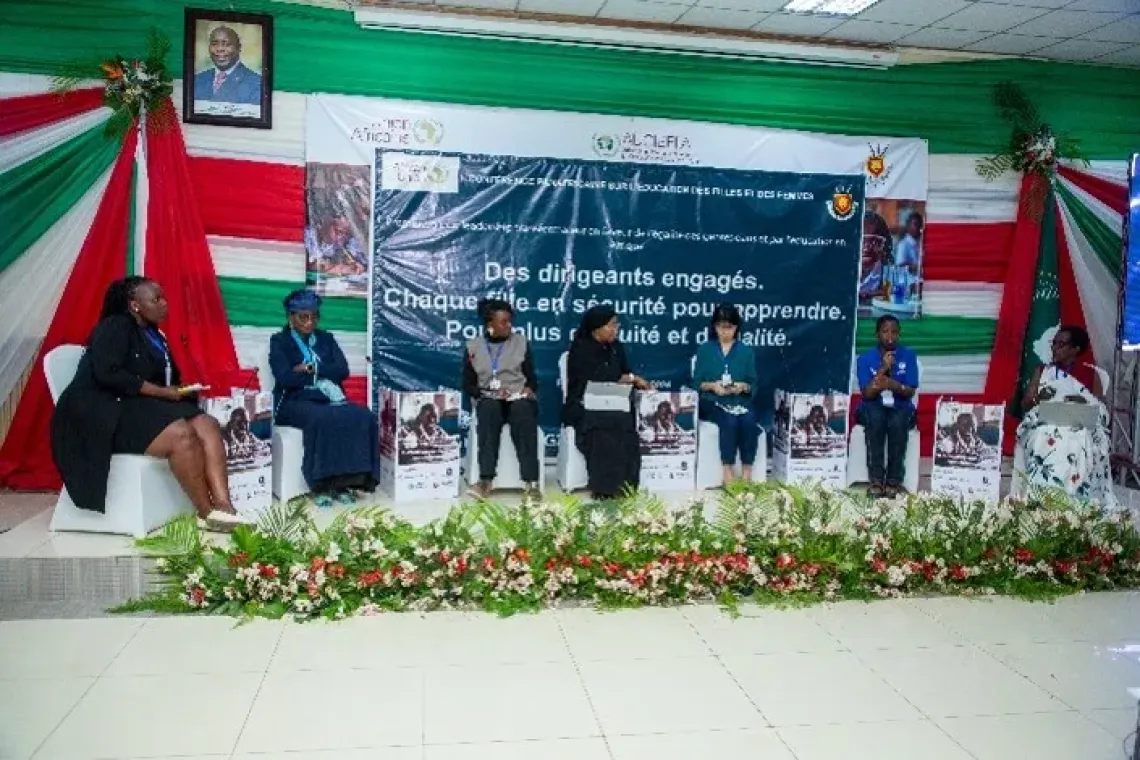
The first day of the conference also featured the 10th AU/CIEFFA High-Level Forum on Gender Equality in and through Education. Bringing together ministers responsible for education, gender, justice and social affairs, along with a young representative from Burundi, the panel highlighted the need for a multisectoral approach to removing the obstacles that continue to hinder girls' educational paths. Speakers from Botswana, Burundi, the Sahrawi Arab Democratic Republic, Togo and Tanzania shared experiences and initiatives aimed at preventing gender-based violence, combating early marriage, promoting safer and more inclusive learning environments, and strengthening girls' empowerment through quality education.
Closing the forum, Dr. Laila Gad, UNICEF Representative to the African Union, reaffirmed UNICEF's commitment to supporting African governments in their efforts to guarantee every girl an inclusive, equitable and quality education. She also stressed the importance of collective, coordinated action to accelerate progress and make girls' education a concrete development priority for the continent.
Safe Schools Today, Opportunities Tomorrow
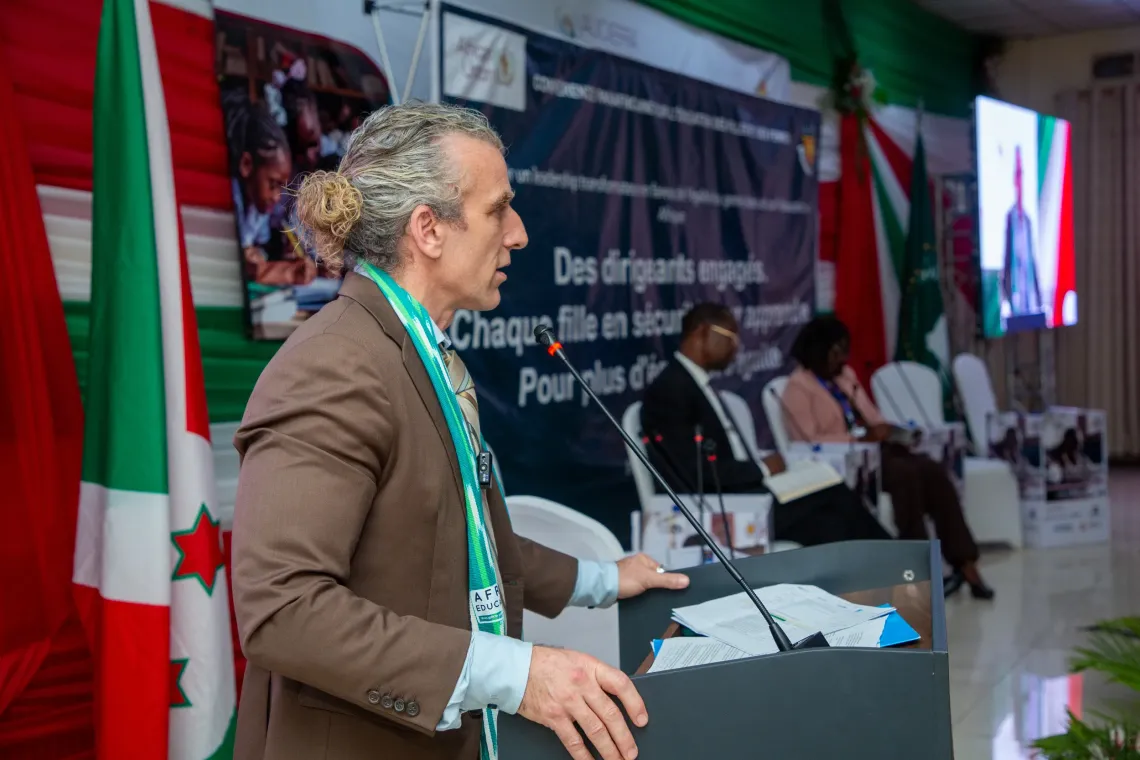
The afternoon of the first day was devoted to four side events covering, among other topics, gender-transformative leadership, digital education, teacher training and education in emergencies. Among them, UNICEF, alongside UNGEI, IIEP-UNESCO and the Safe to Learn coalition, co-hosted a high-level session titled "Advancing Gender-Transformative Leadership in Education in Africa." The session highlighted the potential of gender-transformative education to create safe, inclusive learning environments where girls can succeed.
The session brought together African education ministers, African Union representatives, young leaders, experts and development partners to discuss progress made and the actions needed to accelerate gender equality in and through education. Discussions underscored the positive effects of this approach on learning outcomes, skills development, economic prospects and the realization of children's rights across Africa.
A key moment of the session was devoted to the Safe to Learn Call to Action, led by Jeremy Hopkins, UNICEF Deputy Regional Director for Eastern and Southern Africa, on behalf of the coalition. This segment examined the gender-related barriers that undermine students' safety and wellbeing, while showcasing evidence-based solutions to prevent and address gender-based violence in schools. Participants called on African governments to strengthen their commitments to safe, inclusive and protective schools, including through endorsement of the Safe to Learn Call to Action and the Freetown Manifesto, to accelerate the elimination of violence in and around schools.
The second and third days of PANCOGEd2 were devoted to identifying concrete solutions to accelerate skills development and empowerment for girls and young women. Participants discussed digital education, entrepreneurship, STEM, and technical and vocational education and training (TVET). Discussions also addressed ways to narrow the digital divide and expand girls' access to the skills and jobs of the future.
Side sessions also showcased innovative approaches to building more inclusive and resilient education systems, including in crisis settings. Emphasis was placed on strengthening teachers' capacities, improving learning environments, and developing mechanisms to support the school reintegration of adolescent girls and young mothers.
The conference concluded with the adoption of the Bujumbura Declaration and the PANCOGEd2 Call to Action, reaffirming Member States' priorities and commitments to accelerate progress for girls' and women's education in Africa.
Through this conference, Africa reaffirmed a conviction shared by all participants: educating a girl means transforming a family, strengthening a nation, and building the future of the entire continent.