Rainwater harvesting systems at school improve pupil's lives in Kirundo
Thanks to a jointly-funded WFP Burundi and UNICEF Burundi project, 12 systems have been installed in schools in Kirundo province as part of the school canteen program to ensure hygiene and sanitation.

- English
- Français
At the Primary School (ECOFO) in Muyange, Bugabira commune, Kirundo province, we are welcomed with great joy by the teachers and students. They are pleased with the installation of a Rainwater Harvesting System at their school, less than a month ago; thus, facilitating access to water in their school.
"Like they say, water is life. So, we have life in our school! We use the water to clean the classrooms, latrines, and school canteen, which helps us avoid illnesses. It gives us life!" says Célestin Uwitonze, 17, one of the pupils who would like to become a doctor in the future.
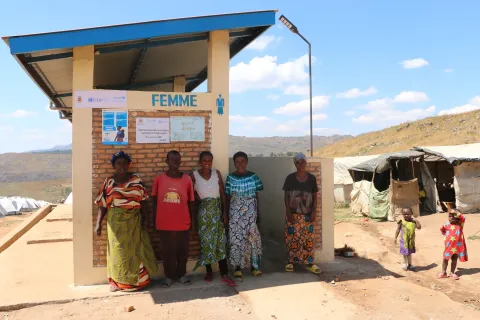
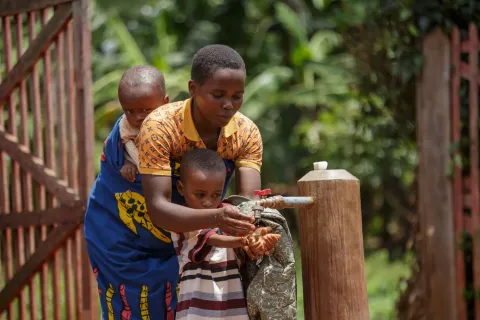
Thanks to WFP Burundi and UNICEF Burundi, 12 Rainwater Harvesting Systems like this one, including hand-washing facilities, have been built in various schools with school canteens in the province of Kirundo to facilitate hygiene in the school environment.


“Before, we had to bring water from home. I used to walk 30 minutes to school and bring a 7-liter container every day. As we had no water at home, I had to go and fetch water far from home every evening. It was tiring, and I didn't have time to go over my lessons at home", says 12-year-old Audreille Iteriteka.
At ECOFO Nakiganga, in Busoni commune, we also visit the installation of the Rainwater Harvesting Systems next to the school canteen and latrines. One of the teachers explains how having water at school is a great advantage for young girls, especially during menstruation: "Before, girls had to go home for hygiene, and came back to school the next day", says Ms. Jeanne Nimbona, 31.


With UNICEF's funding, hygiene committees have been set up in these schools, and they play an important role in promoting good hygiene and sanitation practices within the school.
School hygiene clubs have been set up by a group of student and teacher leaders. The teachers include a hygiene officer and a menstrual management officer, known as an "aunt". Ms. Florence Minani, 32, is one of the "aunties" at ECOFO Munazi, commune Busoni. "I give them advice, and as a woman it's easier for them to come to me with questions or share their concerns on this subject," she says.


Angélique Uwera, 15, a student at ECOFO Munazi and member of the school's hygiene club, is delighted with the training she received on school cleanliness, especially on the behavior to adopt when it comes to menstrual hygiene. "I'm going to share my knowledge with the other students," she says.
In all the schools visited, both teachers and students recognized that the time spent fetching water was wasting precious time. "Before, the children had to fetch water from Lake Nagitamo (almost 3 km from the school), which took them almost 2 hours round trip. Now we use this time for learning", says Ms. Aline Mukeshimana, 34, teacher at ECOFO Kigoma, where 2 Rainwater Harvesting Systems (SCEP) have been built.


Although rainwater harvesting systems are not a permanent source of drinking water daily, the construction of these water harvesting systems in schools with school canteens contributes to the promotion of good hygiene practices as part of the joint project "Strengthening food and nutritional security and health through school feeding" by WFP Burundi and UNICEF Burundi, funded by the Government of Monaco.