A trade exhibition showcases women's resourcefulness
Supported by UNICEF, the women of Kiremba and Marangara are making their mark in entrepreneurship and water management under the guidance of NGOs FIADI and Help Channel Burundi

- English
- Français
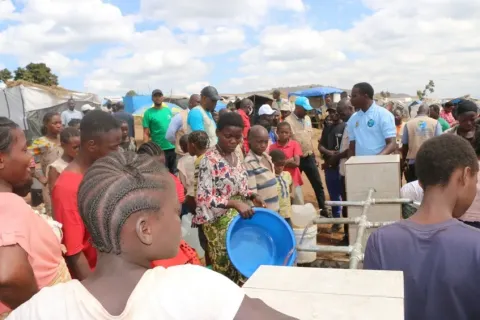
It is almost 9:00 a.m. Stalls have been set up, and a crowd — children, women, and men — is growing restless with anticipation. Amid songs and lively conversation, 130 women are ready to celebrate their transformation at a trade fair.
Held in March, the fair coincides with Women's Rights Month and National Water Week, highlighting the deep connection between these two issues. This strategic convergence allows women to draw a clear link between access to water and their own empowerment.
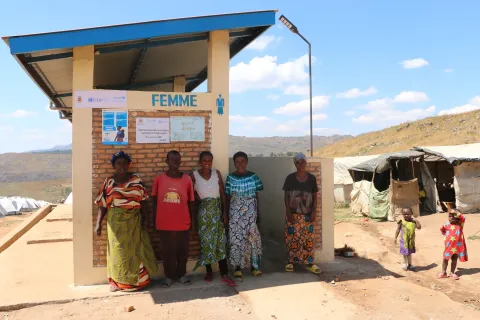
Organized into eight cooperatives across each zone, these women are all beneficiaries of the "Amazi Meza N'iterambere Ry'umukenyezi" project. From Marangara to Kiremba, they have chosen to transform their lives through their skills. Once marginalized and underserved by poor sanitation, water, and hygiene services, they are now builders, plumbers, and entrepreneurs — proud guardians and managers of water infrastructure and environmental protection.
The project was first launched as a pilot phase in Marangara with 50 participants, with the goal of promoting the economic empowerment of women and girls by involving them in water and environmental professions. Building on its positive results, it has since been scaled up to Kiremba, where 80 beneficiaries were trained in drinking water service management, water infrastructure maintenance, community entrepreneurship, and environmental protection.
The training program helped build a skilled female pool of workers in plumbing, basic masonry, and hydraulic maintenance, while also equipping participants with skills in soap-making and environmental practices — with particular attention given to marginalized women and people with disabilities.


Beside a stand lined with bars of shiny soap, Cécile was beaming with pride. Her hands, trained to master the chemistry of everyday life, held out a sample to a curious visitor.
"Today, I'm proud to meet all these people. We produce a lot of things that aren't well known yet. I'm certain that among these visitors are our future customers," she said, her eyes shining with hope.
Even the most skeptical visitors were won over. A local shopkeeper, leaving with his arms full, could not hide his delight: "I used to have to travel all the way to the market, far from home, just to buy soap. Now I'll be able to get it right here in my town — that's much less money spent on transportation!"
A little further along, Ariella tended to young avocado seedlings, packed tightly in black bags and laid out on a table. She patiently explained that each stem represents a promise of resilience in the fight against climate change. "These plants protect our land. And when the fruits begin to grow, our children will be better nourished and their health will be strengthened," she told a crowd hanging on her every word.
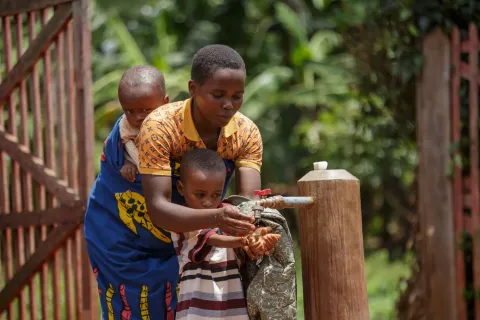
Nearby, a team of young women dressed in sturdy overalls and gloves handled tools and pipes with precision. Two of them drew the crowd's attention as they demonstrated how to connect a tap. "This is the first time I've ever seen a woman do plumbing!" one man exclaimed.


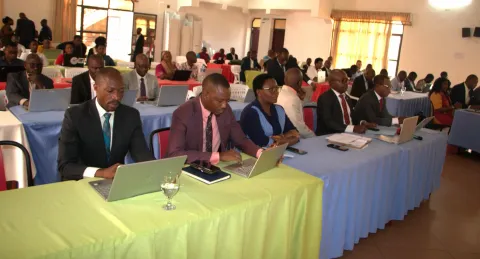
The fair was not only limited to the exhibition of cooperative work. On the sidelines, these women had the opportunity to meet with representatives of financial institutions and take part in a debate about future collaboration. The discussion aimed to help rural women strengthen their entrepreneurial skills, promote their economic independence, expand their access to financial services, and encourage innovation and leadership.
"Thanks to this project, we will boost our credibility with banks. Our money will be secure, and we will be able to take out small loans to grow our capital," said Yvette, a member of one of the cooperatives.
This opportunity could lead to concrete, income-generating projects that improve families' daily lives and drive sustainable change in local communities. By structuring these cooperatives by region, the project also creates an essential framework for coordination, operational performance, and community engagement.
Supported by the FIADI–Help Channel Burundi consortium, AHAMR, and UNICEF, the women of Kiremba and Marangara are no longer simply dreaming of change. They are making it happen.